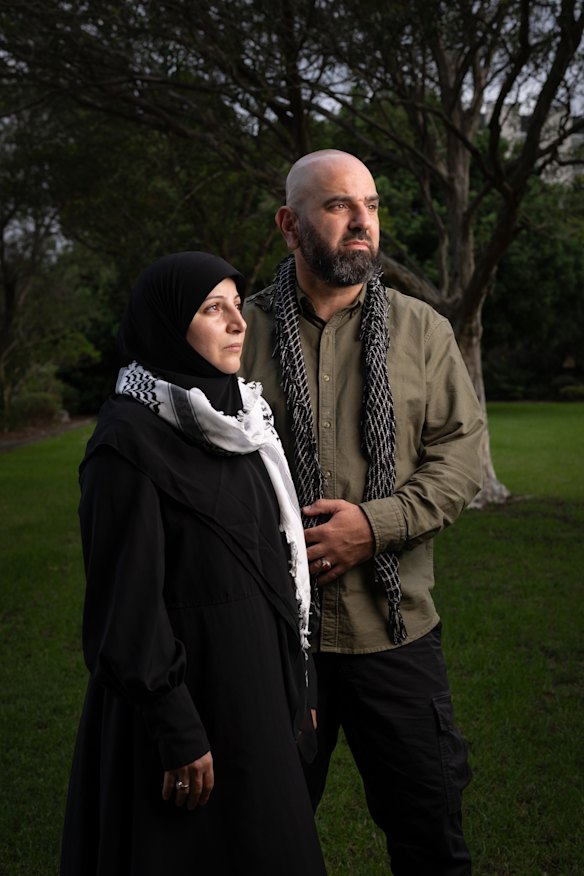

When Israel issued evacuation orders for their village in southern Lebanon earlier this week, Fatima Hassoun’s family decided that if they die, they will die together.
Three of her eight siblings have moved their families into their parents’ apartment in Ghaziyeh. Every day, they prepare for the worst.
“They say that if they hit the building, we’ll all go together. It’s gotten to that point, where instead of everyone living in their own homes and getting hit individually, [they say that] least we all leave this world together,” Hassoun, who lives in Casula, in Sydney’s south-west, said.
Hassoun is among the many members of Sydney’s Lebanese community who have been living on edge since Israel sent troops into Lebanon on Tuesday in an attempt to wrestle control of the border from Hezbollah, which had earlier this week launched an attack on Israel in a show of support for the Iranian regime.
Israel has also steadily been escalating air strikes over south Lebanon and Beirut, and Israeli Finance Minister Bezalel Smotrich said the campaign would make the southern parts of the city look like another Gaza Strip.
The Israeli military has issued evacuation orders for parts of the south and for certain areas of Beirut, forcing almost 500,000 residents to flee. But Hassoun’s family has decided to stay despite the danger.
“There is nowhere for them to go. One of my brothers tried: he slept in his car for four days and couldn’t find anywhere else to stay. They all came back to their homes,” she said.
“They are terrified every day, their children scream at every air strike.”
She describes her agony at having to rely on snippets of information she receives when her family has phone coverage, spending her time watching in horror as her family’s village is ravaged.
“I can’t sleep, I can barely function. I live in constant fear that I won’t hear from them again. I feel this big rock on my chest at all times, I cry all night. What happens if I never hear from them again? I can’t take it.”
The Lebanese community is one of Sydney’s largest and oldest migrant groups. Nearly 66,000 of Australia’s 87,000 Lebanese-born residents live in the city.
Teacher Salam Hussein said many had “heavy hearts” as the news continues to unfold.
Hussein’s parents and some of her siblings have all had to leave their homes in southern Lebanon due to the escalating violence, travelling over 26 hours to get to another family’s home.
“Everyone was told at the same time to leave, it was at night and it was cold. And the roads got full of people trying to find safety. And they got stuck, while the bombing was happening around them.
“And every time there was an air strike, they had to stop the cars and wait for it to be clear.”
The complex mix of anxiety and guilt is carried by most in the community who have had to watch the panic and desperation spread in Lebanon as the war on Iran continues to expand.
But for Amane, who asked for her surname not to be shared so she can speak freely, those feelings are compounded by layers of history. Her grandparents were expelled from Palestine as part of the Nakba – the mass displacement which occurred during the creation of Israel – in 1948, and forced into refugee camps in south Beirut.
While Amane’s parents were able to migrate to Australia, the rest of her family remain in the same area of Beirut, facing displacement once again, and forced to make heartbreaking choices.
“I spoke with my aunty a few days ago, and she has a dog and some cats. And she told me the strikes had started, and she said she couldn’t leave because she wasn’t going to leave her pets behind, and she couldn’t carry them all.
“She said, these pets have souls too, I can’t just leave them behind.”
Amane says the evacuation warnings have come suddenly, and some of her family could only leave on foot, abandoning meals and homes.
Many seek communal shelters at schools or halls, others try and stay with family outside Beirut, and some huddle in cars under bridges, praying.
“I’ve grown up in a family where this has been a constant, we are always glued to the news, this is our entire identity,” she said.
“And it’s horrible. I wish there were enough words to describe the tension, anxiety and heartbreak. How many times do we have to lose family members and our homes? There’s only so much hope you can hold on to.”
According to the Lebanese Health Ministry, the current death toll from the air strike has increased to 123. This does not include any deaths from the Thursday night strikes.
Get a note directly from our foreign correspondents on what’s making headlines around the world. Sign up for our weekly What in the World newsletter.
 Mostafa Rachwani is a Parramatta reporter at The Sydney Morning Herald. He was previously the Community Affairs reporter at Guardian Australia.Connect via email.
From our partners
Disclaimer : This story is auto aggregated by a computer programme and has not been created or edited by DOWNTHENEWS. Publisher: www.smh.com.au