When Anne Schofield looked out the window of her Woollahra antique jewellery shop and saw a group of men in balaclavas, she thought it was drama students doing some sort of film. They were no students, though. Armed with shotguns, the men crow-barred the door open and burst in, smashing the glass cabinets and taking hundreds of thousands of dollars worth of jewellery.
“They must’ve been on drugs or something,” Schofield recalls, more than 30 years later. The art dealer Rex Irwin, who had a gallery upstairs, came rushing down when he heard the commotion. “They screamed at him to get away or they’d blow his f—ing head off.”
While traumatising for Schofield and her longtime assistant, Jenny Maunsell, who’d endured another robbery there only a couple of years prior, what Schofield remembers most is how cross it made her. “I just got more and more angry as time went on,” she says. “How dare they? I was furious.”
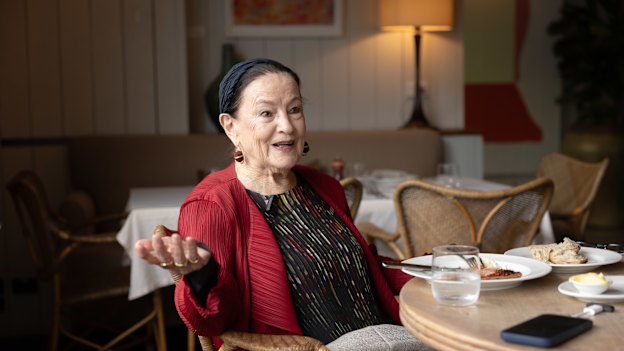
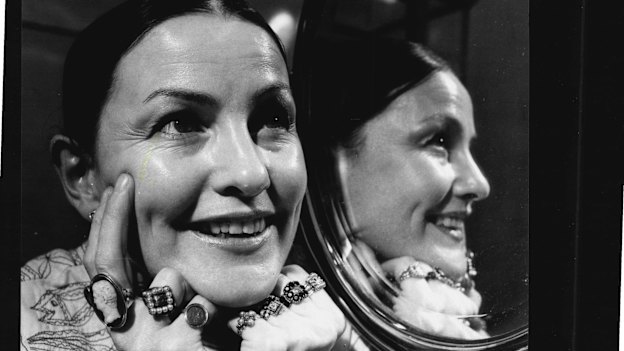
As the story suggests, there’s a quiet steeliness to this diminutive woman with dark eyes and pixie face, who wears headbands to make herself look a bit taller and has a ring on nearly every finger, no traditional diamond solitaire in sight.
Speaking of which, she has a delicious admission to make. “I think diamonds are overrated.” That bombshell dropped, she continues: “There are many other beautiful gemstones, precious ones like rubies, sapphires, emeralds and opals, and semi-precious stones which are much less expensive but equally beautiful.” Two of her favourites are in the latter camp: garnets, for their “deep, rich colour”, and amethysts, her birthstone.
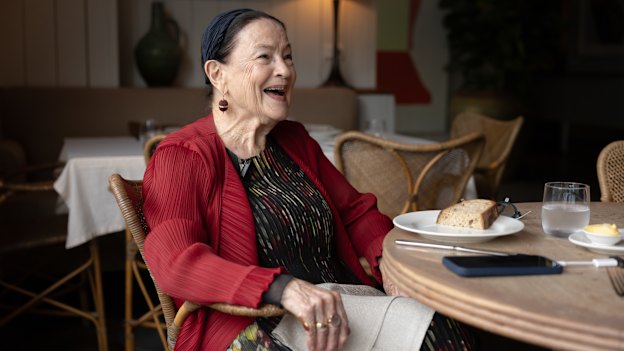
We’re speaking over lunch at Hotel Centennial, a short walk from Anne Schofield Antiques, where for more than five decades Schofield has sold rings, brooches, earrings, necklaces and the like to celebrities, politicians, business leaders, actors and anyone else who likes their jewellery wrapped in history, with the fine hand tooling of yesteryear.
Liza Minnelli, Cher, Barry Humphries, Paul Keating, Cate Blanchett, Toni Collette and Naomi Watts are just some of those who’ve bought from Schofield, long considered Sydney’s preeminent authority on antique jewellery, one with two books and countless exhibitions to her name.
But now, on the eve of her 86th birthday, change is afoot.
Schofield emailed her clients in late January with another bombshell – that she’d decided to shut up shop. Well, not fully; she will still open by appointment and retain her book-strewn office in the back of the shop. But the era which began in the late 1960s, when she started selling amber beads in a Woollahra shop called Kaleidoscope, and continued as she moved around the corner into Queen Street, first to No. 46, where she opened her eponymous shop in 1970, then up the street five years later to No. 36, where her shop remains now, has come to a close.
“I just realised the time had come,” Schofield says of her decision.
She’d been thinking for a while how quiet things had become and mentioned it to a jeweller in the CBD. He agreed that it was quiet everywhere, observing that those doing well tended to have a big social media and online presence. While Schofield has both a website and social media, she was not interested in doubling down on them. The things she’d always loved about the trade were the personal interactions. Helping men choose tokens of love for their wives, mothers, sisters and lovers, and women select the pieces they’ve increasingly had the funds to buy for themselves.
“The emphasis on technology is not what I want to do,” says Schofield, taking a sip of her sparkling water (neither of us broaches the idea of wine this Tuesday). “I don’t want to do everything online. It’s become a world that doesn’t particularly interest me. I like people.”
The world has changed in other ways, too. Robbers today are more likely to ram their car into a designer sneaker store, or one of the global luxury boutiques that have mushroomed here in recent decades, than an antique jewellery shop.
And Queen Street, once a renowned antique haunt filled with specialty furniture, clocks, rugs, silverware and jewellery shops, has only a handful left today, a victim of the decades-long shift away from the old and brown, towards the new and white. It’s fitting that Schofield, one of the first antique dealers to open in Queen Street, will go out as one of its last.
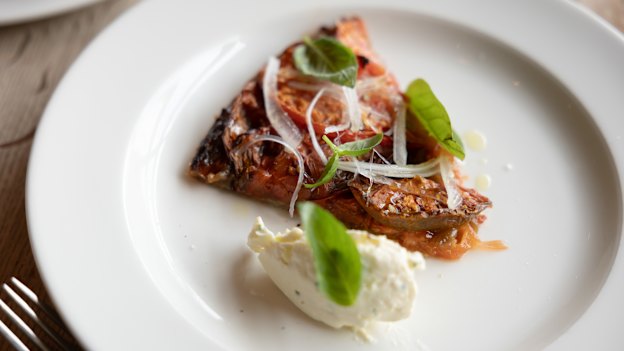
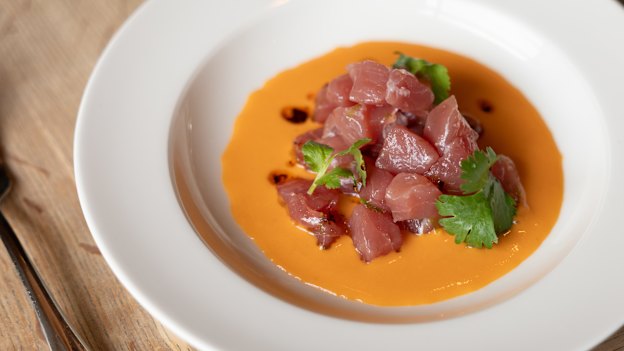
Neither of us is particularly hungry so we order simple fare – Schofield an heirloom tomato tart, me a yellowfin tuna tartare – and share a salad. I ask if she grew up around here. No, she says, she was raised in Strathfield, one of five children born to a milliner mother and public servant father. She remembers going into town at about age 10 to get ribbon, lace and other bits for her mother, then catching the train back to the inner west, proud to have transacted business. “Once a dealer, always a dealer.”
She won two scholarships to Sydney University, taking one of them up to study English and French. Here she joined the drama society, where she acted, painted sets, made costumes and did whatever else was needed. She also met Leo Schofield, a flamboyant director five years her senior who worked in advertising.
The two hit it off and after Leo moved to London he wrote asking her to join him there, and to marry him. At 21, she did just that. “We all thought Australia was a cultural desert at the time.”
It was in London that her education in collectibles began, through weekend visits to the antique shops of Portobello Road and Bond Street, and the city’s many museums and galleries. “I think of my time in London as my apprenticeship,” says Schofield, who befriended dealers including Geoffrey Munn of the BBC’s Antiques Roadshow fame, and slowly picked up the tricks of the trade.
I’m keen to know what she thinks we should look for in jewellery. Beauty, fine workmanship, good design and rarity, she says. But first and foremost, “you have to really love something to buy it”.
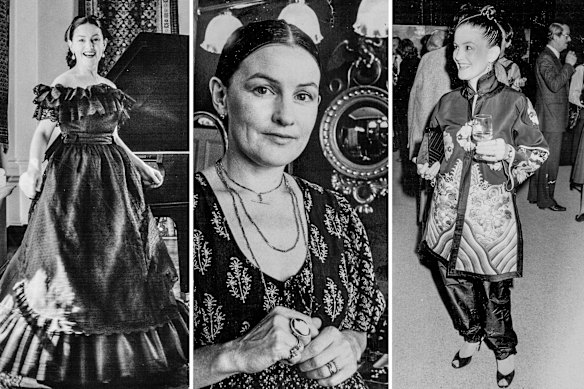
Jewellery is such a personal thing, “you wear it on your body”. If you don’t love it, what’s the point? Aside from the odd whopping diamond sitting in someone’s safe, she says, it’s not really an investment vehicle.
That said, businessmen like the late Trevor Kennedy, a one-time adviser to Kerry Packer, were regular visitors to her shop, Kennedy as the country’s foremost collector of Australiana, with a penchant for rare colonial pieces made during gold rush times. “He was a marvellous client,” Schofield says. “He would beat me down. That’s the thing about dealing, you can talk to people. You say maybe I’ll do a slightly better price, what do you think about such and such.”
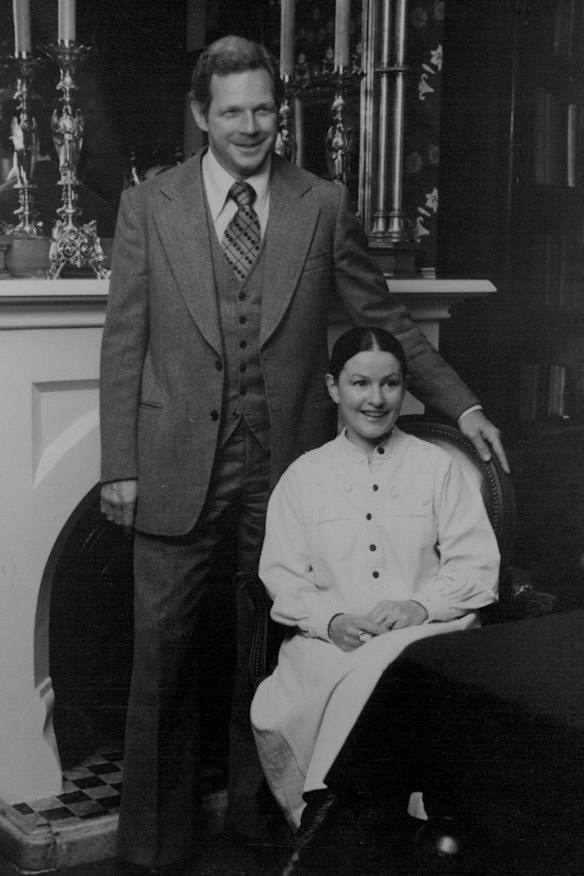
The Schofields had their first daughter, Nell, in London, returning to Sydney in the mid-1960s to have their second. “The midwife said ‘gee this one’s a bit small, I think there might be another one’,” says Schofield. “About 10 minutes later, another came out.” Thus their twins, Tess and Emma, were born. “The surprise of my life.” All three forged careers in the arts, Nell as an actor and TV presenter, Tess a costume designer and Emma an assistant director in film and television.
The Schofields became adept at buying and renovating derelict properties on Queen Street, not the chi-chi place in the 1970s that it is now. They lived with their little girls behind the shop at No. 46, and when No. 36 came up for sale, a former masonic hall then tobacco bond store filled with rats and rubbish, they grabbed it.
The marriage eventually broke up. That must have been hard, I venture, knowing that Leo is gay. Not really, Schofield replies breezily, “we were both having affairs at the time”. It was hard for perhaps a year or so, she clarifies, but the friendship and ability to laugh with each other saw them through.
“We share very similar interests and have a lot in common. Neither of us has remarried or paired up, so that’s quite interesting. We are still each other’s best friend, I suppose.”
While Leo went on to run arts festivals, Schofield became heavily involved with the Sydney Theatre Company, first as a volunteer guide, then helping raise donations. She’s dismayed at how the arts have become a battleground for the Israel/Palestine debate and was “basically on the side of the actors” who wore the keffiyeh for their curtain call at the 2023 production of The Seagull.
“All they did was wear the Palestinian scarf to show their support for the people of Palestine and it caused a terrible ruckus,” she says, describing herself as a bit of a libertarian. “I was appalled, actually.”
Schofield also has a long association with the Powerhouse, to which she donated 108 pieces from the 18th-early 20th centuries in 2022. Worth close to $2 million, it’s one of the most significant donations in the museum’s history.
In the mid-2010s she helped secure a loan of the Queen’s famed wattle brooch for an exhibition there, after the request to borrow it was initially rejected. The brooch was a gift from Australia during the Queen’s inaugural 1954 visit. “The Queen’s people said ‘she loves the brooch and is not prepared to lend it for a whole year’,” Schofield recalls. “I said ‘why don’t you write and ask if we can have it for a shorter length of time?’”
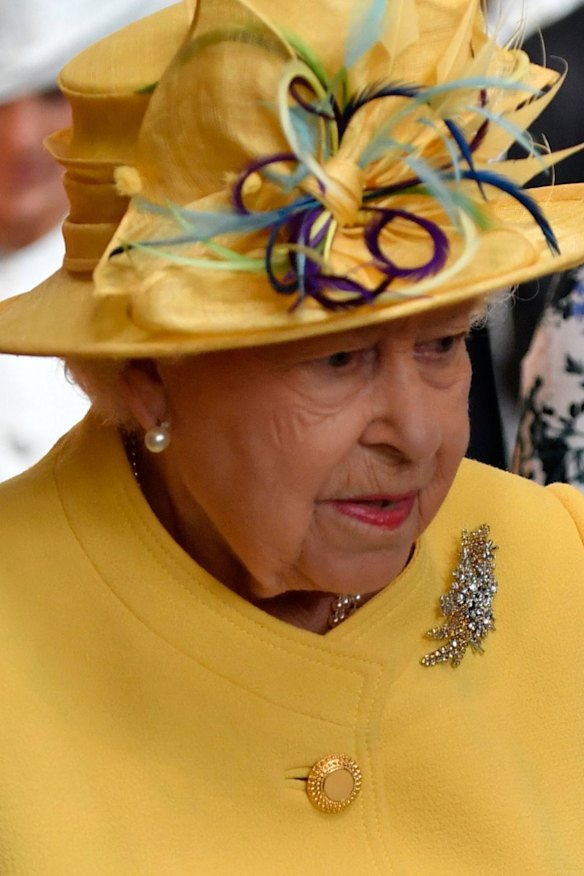
The Powerhouse director felt that inappropriate; the Queen had already said no. “I said, well, I will.” Schofield wrote back to the Queen’s people, who agreed to a six-month loan. There’s that steeliness again.
Finishing our lunch with coffee and peppermint tea, I ask Schofield what she plans to do now that she won’t be so locked into shop hours. She’s got a mid-year trip planned to Europe, she says, and wants to sort through her remaining stock and extensive jewellery book collection, to decide what to do with it all.
Might she consider selling the business? “I would if anyone put their hand up,” she says intriguingly. “Whether they will, I don’t know.”
Start the day with a summary of the day’s most important and interesting stories, analysis and insights. Sign up for our Morning Edition newsletter.
Disclaimer : This story is auto aggregated by a computer programme and has not been created or edited by DOWNTHENEWS. Publisher: www.smh.com.au