TEHRAN – “The essence of America is bullying, plundering the resources of other countries, and betraying its allies.” This proposition stands as one of the most vital pillars of the order currently dominating international affairs.
The United States presents itself as the architect of global order, and its conduct has defined the very rules of the international system since the immediate aftermath of World War II.
A survey of American history, saturated with war and interventionism, provides exhaustive proof for this claim.
At this current juncture, the statement uttered by U.S. President Donald Trump regarding Venezuela is one of those rare declarations that encapsulates a century of history in a few words.
When the American president explicitly asserts, “They took our oil rights—we had a lot of oil there, as you know, they threw our companies out, and we want it back,” we are no longer dealing with a standard political position. Instead, we are witnessing a moment where the hidden logic of power reveals itself—naked, raw, and unmediated.
These remarks by Trump should not be dismissed as a mere slip of the tongue or political indiscretion; rather, they constitute an official confession to a mindset that has steered U.S. foreign policy for decades and is now manifesting without a mask.
In this framework, the core issue is not Venezuela itself, but the definition the United States holds of the world and its own place within it.
When a nation’s leader asserts that another country’s natural resources were “ours” and must be reclaimed, he effectively negates the principle of national ownership over territory and wealth. He transforms the world into a mere arena for the division of spoils.
This is precisely the same logic that justified classical colonialism in the 19th century, driving imperialist powers to loot Asia, Africa, and Latin America. The distinction between today and that era lies not in the essence of the act, but merely in the tools and the language employed.
Here, what Trump expresses is the blunt, unvarnished form of a policy that was concealed for years behind euphemisms such as “smart sanctions,” “maximum pressure,” and “protecting the global order.”
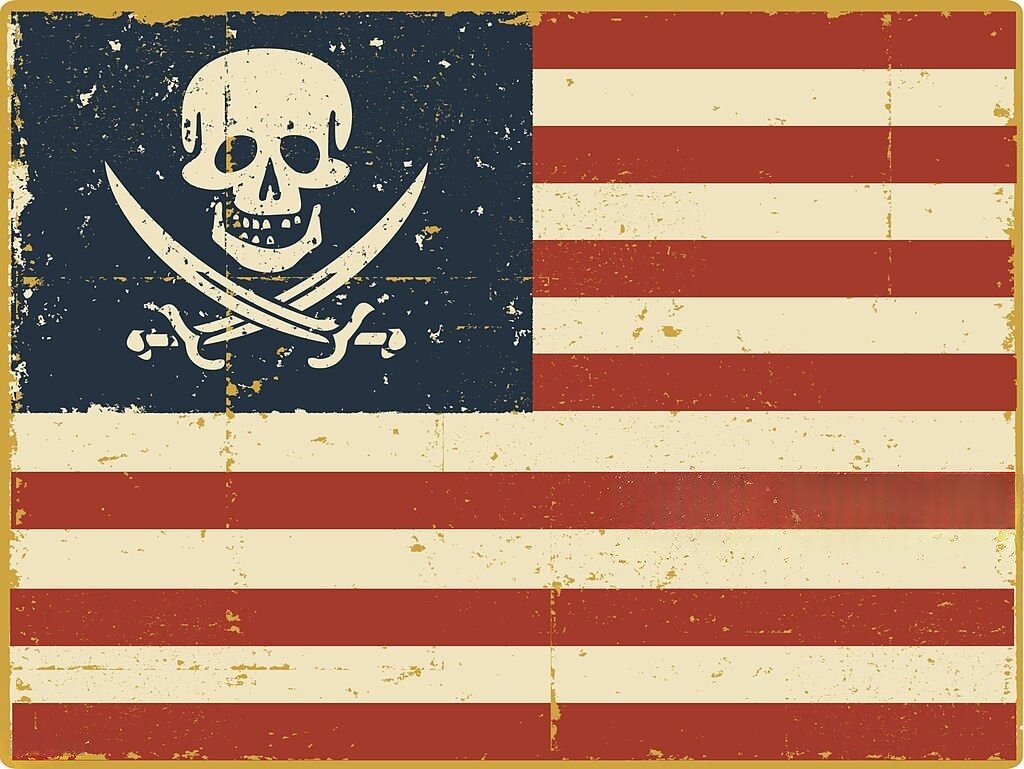
When the United States freezes the assets of nations, seizes oil shipments, and places energy corridors under military control, it is, in fact, practicing a modern iteration of the same “piracy” that once terrorized the high seas.
The concept of piracy is no longer a media metaphor or a political slogan; it is an accurate description of America’s structural behavior.
Classical piracy operated on the logic that whoever possesses superior power has the right to seize the vessel and its cargo. Today, that same logic is implemented in more formal attire.
The seizure of tankers under the pretext of sanctions, the confiscation of national funds in Western banks, and the deprivation of countries from accessing their own resources are all modern manifestations of the same behavior—only the method of execution has evolved.
Trump’s statements also broadcast a dangerous yet clear warning to the world. If Venezuelan oil is deemed an “American right” today, what guarantee exists that the natural resources of other nations will not be claimed under the same logic tomorrow?
More importantly, this logic must not be reduced to Trump’s individual personality. Contemporary history demonstrates that this approach is not restricted to a single president or party. Successive U.S. administrations, utilizing varied rhetoric but pursuing identical objectives, have followed this same trajectory.
From the invasion of Iraq and the control of its energy reserves to interventions in Libya and Syria, and the relentless pressure exerted against Iran and Venezuela, all are intelligible within a single analytical framework. Trump’s singular value to scholars and observers lies in his candid utterance of what predecessors shrouded.
Thus, any attempt to decouple Trump from the American power structure is a reduction of reality. Trump is not an exception; he is the explicit manifestation of the rule and the foundation governing Washington.
It is a rule by which the U.S. views itself as the potential owner of the world’s resources, regarding any resistance to this ownership as “usurpation,” a “threat,” or “instability.”
This perspective fundamentally challenges Washington’s own claims regarding international law and respect for national sovereignty, proving that these concepts remain valid only so long as they do not collide with the interests of the dominant power.
In sum, it bears repeating that America’s threats against Venezuela—including the plunder of its resources, the threat of military aggression, and the ongoing blockade—serve as yet another proof of the opening statement of this text regarding American plunder and bullying.
Today, Venezuela is not merely a country under pressure; it is a living case study of the logic of American hegemony.
Trump’s pronouncements on its oil reserves serve as a stark admonition to all peoples: In Washington’s eyes, independence equates to transgression, and national treasures to plunder ripe for seizure.
Source: Sedaye Iran, the online newspaper of the Institute of the Islamic Revolution of Iran — December 18, 2025
Disclaimer : This story is auto aggregated by a computer programme and has not been created or edited by DOWNTHENEWS. Publisher: tehrantimes.com