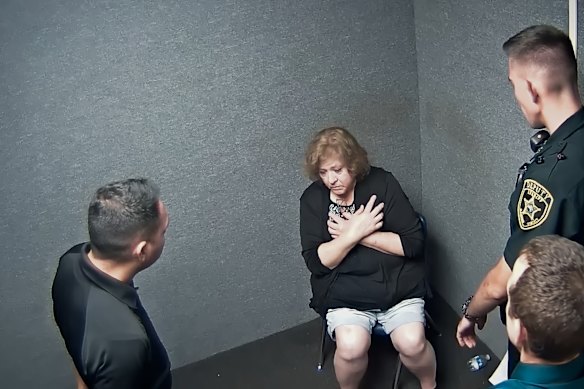
The Perfect Neighbour is composed almost entirely of footage shot on body-worn cameras – and now it’s up for cinema’s biggest prize.
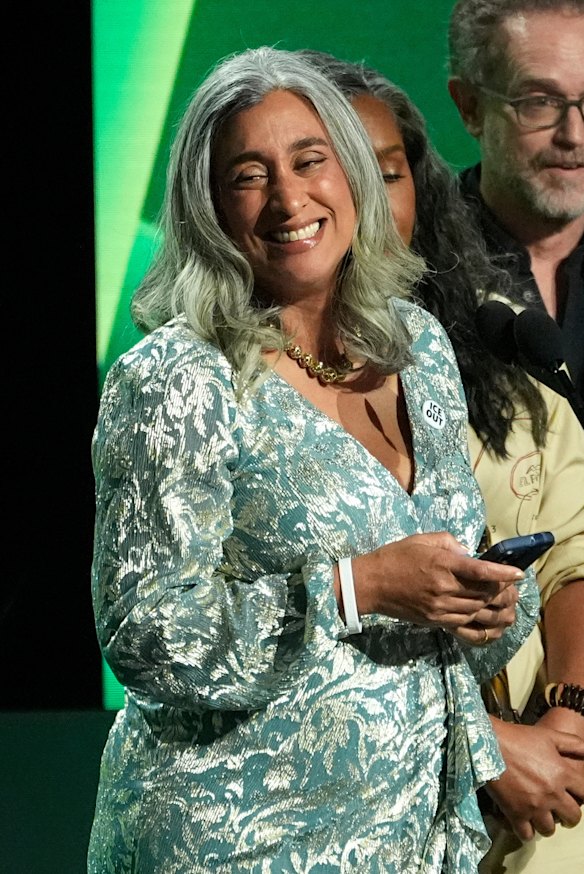
A week from now, Geeta Gandbhir could well be collecting an Oscar for The Perfect Neighbour. But when she started work on the documentary 2½ years ago, awards were the furthest thing from her mind.
“We were not even planning to make a film,” says Gandbhir, who was this week a guest speaker at the Australian International Documentary Conference at ACMI in Melbourne. She was, she says, merely responding to a family crisis.
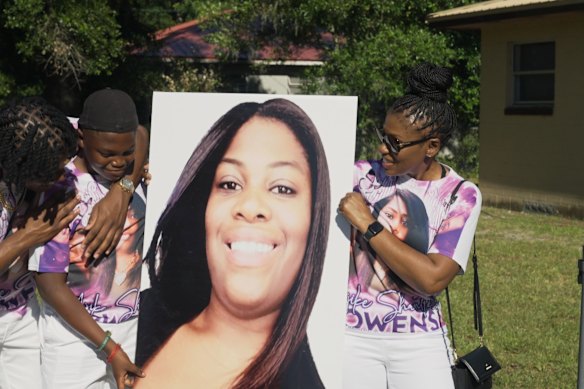
“Ajike Owens was my sister-in-law’s best friend, and on the night she was murdered we got a distress call from my family about it,” she explains. “We were just trying to help the family cope, and we became media liaisons trying to keep the story alive in the news.”
Owens was a 35-year-old black woman in Marion County, Florida, who died after being shot in June 2023 by her white neighbour, 58-year-old Susan Lorincz, over a neighbourhood dispute gone horribly wrong.
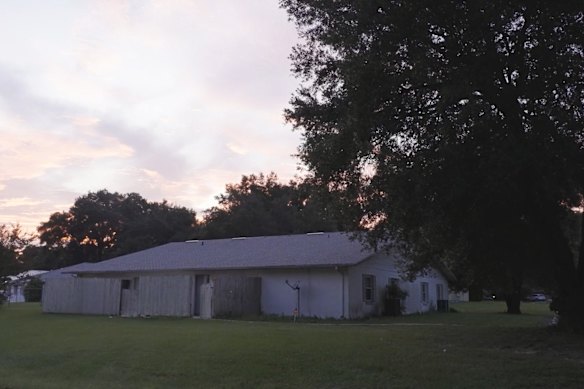
In her defence, Lorincz invoked Florida’s Stand Your Ground laws, which permit the use of deadly force when an individual “reasonably believes” they are at risk of death or bodily harm. What made the case a cause celebre was that Lorincz was inside her villa apartment at the time, and shot Owens through a locked steel front door.
About two months after the shooting, lawyers working for the family obtained a massive trove of footage recorded via police cameras, many of them body-worn, over many months. The footage showed repeated call-outs by officers in response to a litany of calls from Lorincz, complaining about neighbourhood kids “terrorising” her by playing football and hide and seek on the vacant lot next to her rented unit.
It captured the long-suffering neighbours wondering why this woman had such an issue with kids being kids, and cops grumbling about her nuisance calls but still duty bound to respond to them. It showed a multiracial community doing a pretty decent job of getting along, apart from the one curmudgeon in their midst. And it caught Lorincz acting in increasingly erratic ways.
Gandbhir spent a couple of weeks cutting this footage together chronologically, just to make sense of it.
“And that’s when we realised I could make a film out of the material that existed, and we wanted to get this story out,” she says. “We’re filmmakers, we had nothing else to offer the family, but we felt – and Ajike’s mother felt this way too – that justice doesn’t end in the courtroom. She wanted more for Ajike’s legacy, she wanted to turn pain into purpose, she wanted to make change in her name.”
The Perfect Neighbour consists almost entirely of this footage, shot on the chest and dashboard cameras police are meant to have turned on for all interactions. The quality wasn’t great, and the sound was often dreadful, but for Gandbhir the power of this raw footage “was undeniable”.
“No one could say there was a film team on the ground manipulating things, or a journalist on the ground directing anything,” she says. “It is just people’s interactions, with no one else there. We felt it was undeniable in that way.”
She also didn’t want to interview the neighbours because police had done that extensively already and “we didn’t want to retraumatise them”.
More than this, though, she felt that what emerged from the footage was a powerful portrait of something mainstream America rarely gets to see.
“There’s this beautiful multiracial community that is doing everything right, living together, loving each other, raising kids together, with this incredible social network,” she says. “And they were terrorised by this one outlier who weaponised racism, used manufactured fear, was emboldened by Stand Your Ground laws, and had access to weapons.
“All those things culminated in this terrible crime, you know? I think it was so important to showcase the humanity of this community, because oftentimes for people of colour, we are criminalised after terrible things happen to us.”
Four days after Owens was shot for knocking on her neighbour’s door to demand she stop harassing her kids, Lorincz was arrested. In August 2024, she was found guilty of manslaughter and sentenced to 25 years in prison.
Gandbhir began her career in narrative features, and worked for a time with Spike Lee, and in the arc of this material she saw the potential for a film that would resonate far more widely than the typical documentary.
“It felt to me like a scripted thriller or horror film,” she says. “My [points of comparison] were things like The Blair Witch Project and Paranormal Activity, even Stephen King’s book It. Just the concept of this idyllic little community, and there’s something here that’s malignant, and only the children could see it. It felt a bit experimental at times, but I knew I didn’t want to make what people think of as a traditional documentary.”
Gandbhir’s ambition was to have the film seen as widely as possible to drive support for changes to gun and Stand Your Ground laws. And in the first part of that equation, at least, she’s been wildly successful.
The Perfect Neighbour debuted at Sundance last January, won her the directing prize, and was picked up by Netflix. It dropped on the streamer in October, peaking at number two on the most-watched movies list globally, and racking up 45 million views in its first three weeks.
Right now, Gandbhir is focused on merely making it through the craziness of awards season, “all the anxiety, all the wonder of it, all the highs and lows, all the things”. But she’s looking forward to getting back to work soon.
There’s another soon-to-be-revealed documentary in the works, “a lighter topic, but equally wonderful and important”, and a couple of scripted projects too. And having worked in both fiction and non-fiction, she doesn’t see any need to privilege one over the other.
“What’s so interesting with The Perfect Neighbour is that we have shown documentary can have the same power as scripted storytelling,” she says. “They’re both narrative, it’s just that one is scripted and one is not. I love both, and I will gladly continue to work in both.”
The Perfect Neighbour is on Netflix. The Academy Awards will be held on March 16 (Australian time), and broadcast on Seven and 7Plus.
Must-see movies, interviews and all the latest from the world of film delivered to your inbox. Sign up for our Screening Room newsletter.
Disclaimer : This story is auto aggregated by a computer programme and has not been created or edited by DOWNTHENEWS. Publisher: www.smh.com.au