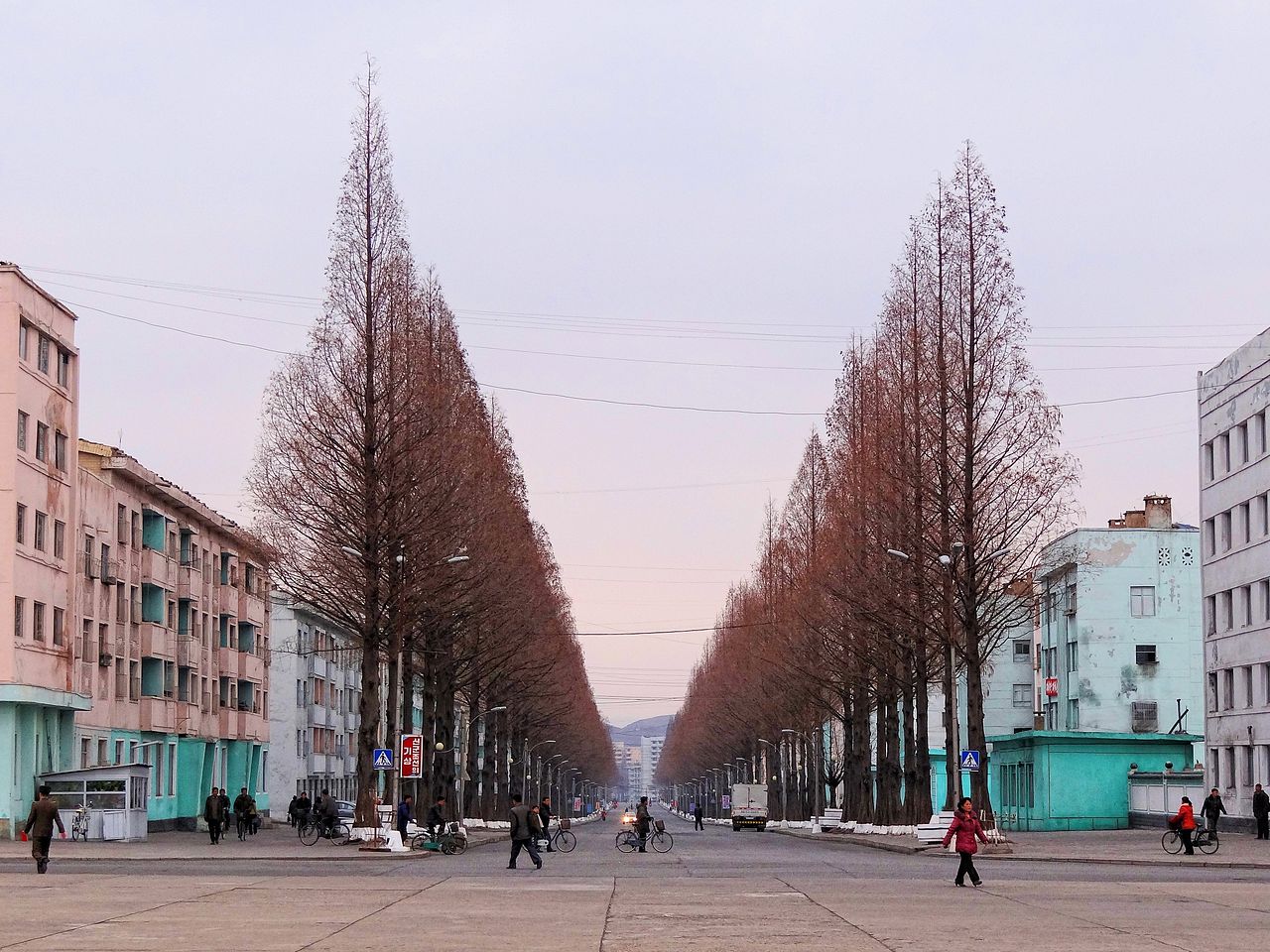
Several trials have been held in Pyongsong’s party committee square over the past two months, with authorities targeting contraband sales, unauthorized distribution and foreign currency transactions to instill “quiet terror” and reinforce discipline ahead of next year’s major political event.
“Several public trials have been held in the square in front of the municipal party committee building in Pyongsong over the past two months. People have been paying close attention to these public trials, which bring people on stage to confess their wrongdoing,” a source in South Pyongan province told Daily NK recently.
“The government describes the sale of contraband, the unauthorized distribution of controlled goods and the ‘non-socialist’ circulation of foreign currency as being ‘phenomena that undermine socialist discipline.’ For that reason, the authorities have been more strictly policing such activities and making more offenders confess their crimes in public,” the source went on to say.
Public trials for all kinds of crimes are regarded as an effective measure of fear-based public control. These trials send the message that such actions will not be tolerated.
As for the recent increase in public trials in Pyongsong, North Koreans generally think the regime is attempting to instill internal discipline before the Ninth Party Congress. Given the increase of social, including ideological deviation and economic discontent, the regime appears to be tightening the reins to keep the public obedient and orderly before this large-scale political event.
“The regime is obviously determined to reinforce discipline before the Ninth Party Congress and will keep up those efforts until the event. I get the feeling they’re deliberately holding public trials over minor infractions to spread ‘quiet terror,’” the source said.
Market vendors fear fines more than prison time
Pyongsong residents have recently been gossiping about the public trial of a market vendor of soybean oil. The vendor, who dealt in large quantities of oil, was nabbed for casually accepting foreign currency while selling oil at the market.
The regime appears to be strictly policing any individuals who accept foreign currency in exchange for goods at the country’s informal markets.
“It would be hard to find any big-time merchants who don’t have any dealings in foreign currency. Since pretty much all market business is tied to foreign currency, frequent arrests are another cause of concern at the markets,” the source said.
The crackdown on foreign currency transactions between individuals is reportedly continuing at marketplaces. Rather than criminal prosecution, enforcers are focusing on imposing financial pain by confiscating the cash in the transaction. Those forfeitures have serious consequences for the people involved, the source said.
But what market vendors fear the most is a fine. When their sales are already so meager, a criminal fine—which can run in the hundreds of thousands of won—can wreck their livelihood.
“A single fine can wipe out a couple months’ worth of earnings. Nowadays, vendors say they’re more scared of fines than prison time,” the source said.
The source noted that the number of instructions, guidance and warnings that vendors receive from the market management office has been gradually on the rise.
“The management office’s constant nagging is wearing out vendors,” the source said.
Disclaimer : This story is auto aggregated by a computer programme and has not been created or edited by DOWNTHENEWS. Publisher: dailynk.com