In the village of Kalakh, Rajasthan, Ganga Ram Sepat had been farming wheat, bajra, maize, and jowar, crops his ancestors had grown for generations. But after reading about rising health issues linked to pesticides, he knew something had to change.
“We decided to completely do away with fungicides and insecticides immediately,” he recalls, the conviction clear in his voice.
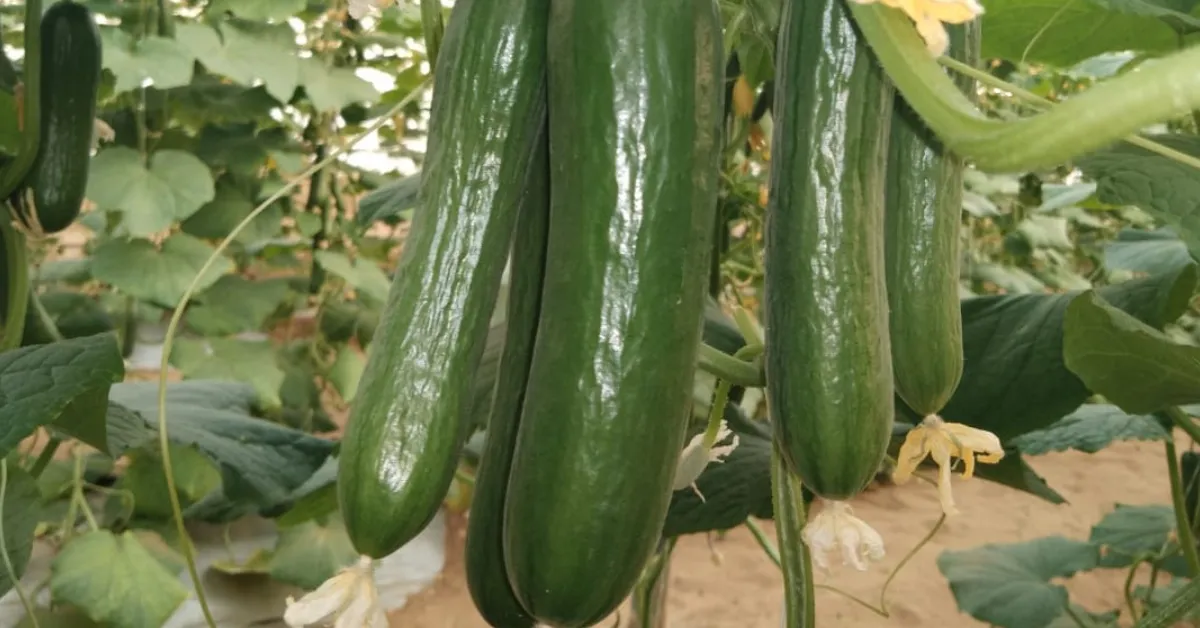
His journey from conventional farming to organic polyhouse cucumbers is not just inspiring but also practical. And the best part is that he is happy to share exactly how he does it.
1. Prepare your soil organically
Before planting, Ganga Ram enriches his soil with organic matter, including cow dung, vermicompost, neem cake, and seaweed granules.
According to him, healthy soil is the backbone of toxin-free produce. Never compromise on compost.
What to do:
- Mix organic compost evenly into your soil.
- Moisten the soil thoroughly to prepare it for solarisation.
2. Solarise the soil to remove pests naturally
Instead of chemical fumigation, the farmer uses solarisation, a method of using sunlight to sterilise soil.
How to do it:
- Lay a 25-micron polythene sheet over the moistened soil.
- Keep it covered for 15 days, making sure the soil stays warm and wet.
- Maintain temperatures around 40 degrees Celsius for best results.
After removing the sheet, gently turn the soil. The result is soil free from harmful pests, ready for healthy seedlings.
3. Use mulching and proper spacing
Mulching conserves moisture, controls weeds, and protects the plants. Ganga Ram uses black-and-silver sheets in his polyhouse.
What to do:
- Lay a mulching sheet over your planting bed.
- Poke holes two to three inches wide for seedlings.
- Sow seeds half an inch deep, spacing one and a half to two feet apart.
The farmer stresses that each hole must give enough space for the cucumber plant to grow and access nutrients.
4. Manage pests and diseases naturally
Instead of harmful pesticides, Ganga Ram uses bio-culture sprays and organic manure. One popular concoction is ‘Sampurna Jaivik Kadha’, made from jeevamrutha (made using cow dung, cow urine, jaggery, besan and soil), dried leaves, aloe vera, tobacco, garlic, neem leaves, and Datura Alba leaves (toxic against aphids).
What to do:
- Apply bio-culture sprays diluted in water (1:9 ratio) through drip irrigation.
- Regularly feed plants with natural composts like jeevamrutha (fermented cow dung and cow urine mix).
This helps keep pests away while guaranteeing the crop remains healthy.
/filters:format(webp)/english-betterindia/media/media_files/2026/02/16/natural-cucumber-farming-2026-02-16-19-45-39.png)
5. Harvest and reuse materials
The farmer emphasises efficient resource use:
Ganga Ram does not keep his methods to himself. Fellow farmers have adopted his polyhouse and organic techniques, showing that sustainable and profitable farming is possible even in harsh climates.
Disclaimer : This story is auto aggregated by a computer programme and has not been created or edited by DOWNTHENEWS. Publisher: thebetterindia.com