Aden, Yemen – Abu Amjad was shopping with his two children last week, finally able to take them out and buy them new clothes – a cherished Ramadan tradition in Yemen.
The 35-year-old is a teacher, and he had just received his salary. That payment was a sign things are improving in Aden – the salaries are funded by Saudi Arabia as a way of backing the Yemeni government, which has recently arrived to take control of Aden after the defeat of secessionist forces.
Recommended Stories
list of 3 itemsend of list
But problems and instability are never far away in Yemen.
Just as soon as the children, Amjad, 10, and Mona, 7, began trying on their outfits, the sound of gunfire erupted. Shoppers froze. Amjad and Mona clutched their father, asking to leave.
About 3km (2 miles) away, security forces had opened fire on protesters who attempted to breach the gates of al-Maashiq Palace, where members of the Yemeni government have been based since they arrived from Riyadh a week ago.
The gunfire shattered the family’s moment of joy.
“It ruins your joy when you see a person bleed and robs you of peace when you hear prolonged gunfire,” Abu Amjad told Al Jazeera.
After years of operating from exile, Yemen’s Saudi-backed, UN-recognised cabinet is spending Ramadan in Aden, a move that has coincided with improvements in basic services and a renewed sense of relief. Yet that relief was overshadowed by the deadly confrontation between security forces and antigovernment protesters, in which at least one person was killed.
“That was the first clash after the return of the government to Aden. Our concern is that it may not be the last,” said Abu Amjad.
Government wins
Yemen’s new Prime Minister Shaya al-Zindani has said that stabilising Aden and other areas under government control was among the new government’s main priorities.
Advertisement
The Yemeni government is currently in its strongest position for years. An advance by the separatist Southern Transitional Council (STC) at the end of last year in eastern Yemen ultimately was a step too far for the United Arab Emirates-backed group.
Saudi Arabia considered the STC advance the crossing of a red line, and lent its full military backing to the Yemeni government, allowing it to take territory it had not controlled for years.
Now, the Yemeni government and Saudi Arabia are focused on attempting to improve conditions in the southern and eastern areas of Yemen under government control, to attract more public support. That would in turn weaken support for both the STC and the Houthi rebels, who have controlled northwestern Yemen, including the capital, Sanaa, since the country’s war began in 2014.
Lit city and busy markets
Abdulrahman Mansour, a bus driver and resident of Khormaksar in Aden, said Ramadan this year feels different.
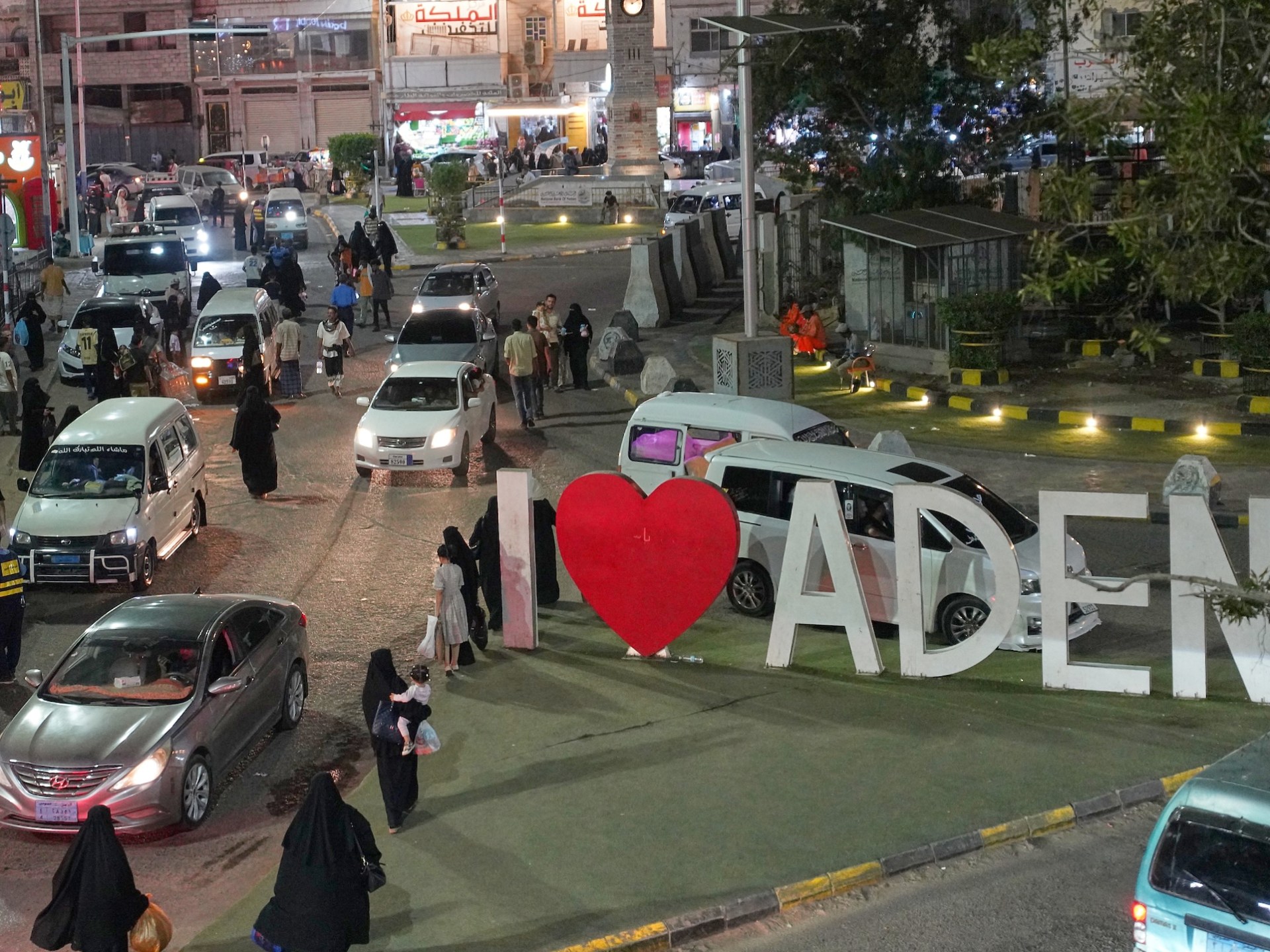
“When I see the lights on and the markets busy on Ramadan nights in Aden, it feels like a different city. The improvement is undeniable,” Mansour, 42, told Al Jazeera.
He noted that one distinct difference this Ramadan is the stable provision of electricity. “This reminds me of the pre-war time. We used to take that service for granted,” said Mansour.
“When the city is dark at night, it appears gloomy, and families prefer to stay home. The movement of people brings life to the city and helps small businesses keep afloat, especially in Ramadan,” Mansour added.
Yemeni Electricity Minister Adnan al-Kaf said last week that efforts to improve electricity services in Aden and other provinces continue, noting that Saudi support had contributed to improved service over the past two months.
Wafiq Saleh, a Yemeni economic researcher, said the improvement in the living standards of citizens in Aden and southern Yemen, in general, was obvious, particularly after Saudi Arabia’s payment of public sector salaries and the supply of basic services such as water and electricity.
Saleh told Al Jazeera, “The recent Saudi financial support has been very generous, and it can help the government during this period by enabling it to work on reactivating dormant resources, resuming oil exports, combating corruption, and improving the efficiency of revenue collection with transparency and good governance.”
But Saleh emphasised that the progress achieved so far is not the result of economic reforms by the Yemeni government, but rather because of Saudi support.
Advertisement
Therefore, according to the economist, the improvement in the living situation and the currency’s value may not be sustainable, even if it is a positive indicator and may be the first step towards promised economic reforms in the country.
“There must be a comprehensive vision for developing revenue collection so that the government can implement sustainable economic reforms,” Saleh said.
Search for cooking gas
While the distribution of electricity has improved in Aden, other essential services remain strained. Cooking gas shortages remain a major concern. The search for it remains a daily struggle for families in the port city, and the crisis has intensified in Ramadan.
Lines of vehicles queue at stations, while residents wait with cylinders for a few litres (quarts) of gas.
“Going from one station to another in search of cooking gas while fasting is exhausting,” said Fawaz Ahmed, a 42-year resident of Khormaksar district.
Fawaz describes the shortage of cooking gas as a cause of hunger in the city. “If I stay in [my home] village, I would resort to firewood. But in the city, that option is not available, and if we find firewood in the market, it is expensive.”
Gas distributors say the quantity of cooking gas supplied to them is not adequate, citing this as the root cause of the crisis. Supplies are transported from Marib province in northern Yemen.
Tensions to continue
The cooking gas shortage is a sign that it will not be plain sailing for the Yemeni government in Aden.
And opponents will likely seize on any ongoing problems to foment more unrest.
Majed al-Daari, editor-in-chief of the independent Yemeni news site Maraqiboun Press, described the situation in Aden as “very worrying”.
“What happened to the demonstrators at the start of Ramadan underscores the fragility of the political and security situation. Tensions are set to continue,” al-Daari said.
“The STC will continue mobilising its supporters against the government. This is its last card that it will use to restore lost political interests,” al-Daari added.
The STC said in a statement last week that raids and arbitrary arrests had targeted people who had participated in the recent protests. These attacks, the statement emphasised, would only increase the determination of the southerner secessionists.
For Abu Amjad, demonstrations in Aden give space to chaos, which he resents.
“At least, Ramadan should pass without protests. Political actors should spare us this month so we can fast and share some joy with our children,” he said.
Disclaimer : This story is auto aggregated by a computer programme and has not been created or edited by DOWNTHENEWS. Publisher: aljazeera.com