An offshore gas well owned by billionaire businessman Kerry Stokes’ Seven Group Holdings conglomerate has been leaking methane into the ocean off the Victorian coastline for more than two years.
The Longtom gas field lies 30 kilometres south-west of the Gippsland town of Marlo. It’s been mothballed since 2015 but is seeping gas from a minor leak detected at one of its shut-in wells and reported to the regulator in 2023.
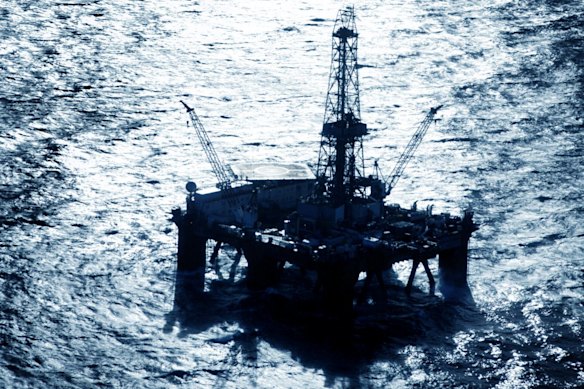
The Bass Strait’s Longtom gas field, mothballed by Seven Group in 2015, has been leaking methane.Credit: Jessica Shapiro
Seven Group, the gas field’s owner, pledged at the time it would fix the leak. However, the National Offshore Petroleum Safety and Environmental Management Authority (NOPSEMA) last week issued a notice saying the company has failed to comply with key commitments it gave in 2023 that required it remediate the leaking well and conduct monitoring of the field.
Fugitive leaks from oil and gas infrastructure, such as wells and pipelines, are major sources of methane emissions that are driving dangerous climate change. Methane is a potent greenhouse gas that warms the planet up to 80 times more than carbon dioxide over two decades, and is responsible for roughly a third of all planetary warming.
The failure of the ASX-listed company, which is 51 per cent owned by the billionaire Stokes family, to conduct monitoring or install mechanical barriers at its leaking well demonstrated an “erosion of good industry practice,” fell short of industry standards and was a potential violation of regulations, NOPSEMA’s notice said.
The regulator has given Seven Group until March 31 to assess its gas well barrier conditions and stop the leak. It must then reinstate continuous monitoring of the integrity of both gas wells in the Longtom field and submit technical studies to NOPSEMA.
Conservationists said the company’s lack of compliance with its agreed obligations was “not an isolated problem” in the offshore oil and gas industry. Freja Leonard, a campaigner at the Australian Conservation Foundation, called for the regulator to pursue penalties against non-compliant oil and gas producers instead of merely asking them to act more responsibly.
“We urge NOPSEMA to pursue penalties to the extent of the law and regulations to send a clear message that our shared environment isn’t the gas industry’s plaything,” she said.
Companies “know they can dodge their obligations,” added Stan Woodhouse from environmental advocacy group Friends of the Earth. “This is what happens when violations are repeatedly met with meek requests to do better,” he said.
A spokesperson for the regulator said the leak identified at the Longtom gas well was minor, “but even at minor levels, NOPSEMA takes these issues seriously and requires titleholders to identify, manage and remediate”.
“Due to some requirements not being complied with, enforcement action has been taken,” the spokesperson said.
A Seven Group Holdings spokesman said the company will comply with the order, and had “actions already under way across each directive”.
Seven’s Longtom gas field in Victoria’s offshore Gippsland Basin stopped producing natural gas in 2015 after a significant depletion of its reserves and major electrical faults led the company to indefinitely put off plans to invest in new drilling programs. Seven has since begun collaborating with Amplitude Energy, to investigate a potential restart of Longtom production using existing infrastructure to help bring on more supply to meet domestic east-coast demand as larger legacy fields start running dry.
The Australian Energy Market Operator has warned Victoria and NSW are headed for winter gas shortfalls by 2029 because ExxonMobil and Woodside Energy’s 50-year-old gas fields in the Bass Strait are being rapidly depleted, with not enough new gas projects available to replace them.
Households are increasingly switching from gas stoves and heaters to electric alternatives, aided by state government incentives and policies banning gas hook-ups in new homes. Residential gas demand is on track to fall 30 per cent over the next 10 years. However, that shift is not happening fast enough to offset a supply crunch, the market operator says.
Last week, the Victorian and Commonwealth governments opened up new areas of the Otway Basin off Victoria for oil and gas exploration, and invited gas companies to bid for drilling rights.
The Market Recap newsletter is a wrap of the day’s trading. Get it each weekday afternoon.
Most Viewed in Business
Disclaimer : This story is auto aggregated by a computer programme and has not been created or edited by DOWNTHENEWS. Publisher: www.smh.com.au