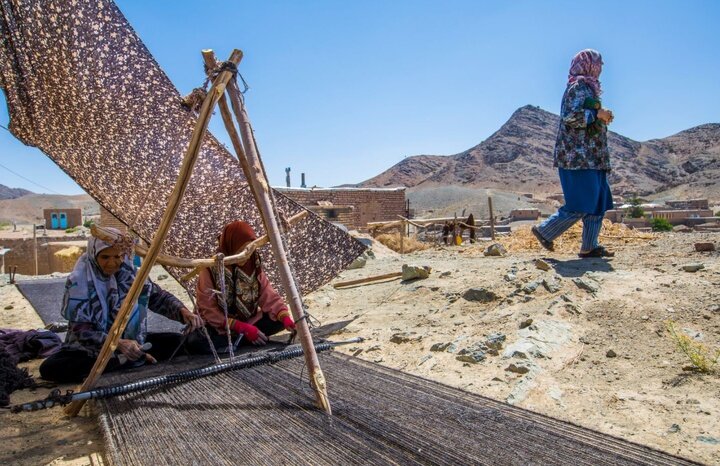
TEHRAN–In the vast deserts of eastern Iran, where life is tied to the harsh climate, a long-standing art still breathes; an art that not only creates shelter, but also narrates the history, identity, and sustainability of a culture. Siah-Chador weaving (weaving the black tents) by the nomads of South Khorasan province is on verge of a new development today; a development that can link this indigenous heritage from nomadic habitats to national and even global markets.
According to Miras Aria, for the nomadic community, the black tent is not just a consumer product; it is a symbol of a nomadic lifestyle and intelligent adaptation to nature. A weave of goat hair that contracts in the rain and prevents water from penetrating, and in the heat of the desert, the fibers expand, allowing air to circulate; a mechanism that is perfectly in harmony with the arid and semi-arid climate of the east of the country.
This indigenous knowledge has been passed down through generations, and nomadic women have played a key role in preserving and transmitting it.
Siah-Chador production cycle is a perfect blend of livestock farming and handicrafts:
* Shearing goat hair in the spring
* Washing and separating fibers
* Hand spinning with a spindle
* Spinning durable threads
* Weaving on traditional horizontal looms
Each Siah-Chador sheet, depending on its size, takes between 20 and 45 days to make, and its weight can sometimes reach 60 kilograms. This process requires not only technical skill, but also patience and years of experience.
In Nehbandan county, dozens of nomadic households are still engaged in this profession. Annual Siah-Chador production in these areas reaches several hundred sheets, some of which are consumed by the nomadic community and some are sold on the market.
Experts in the field of handicrafts believe that if a coherent marketing chain is created, production capacity can increase significantly.
For nomadic women, Siah-Chador weaving is not just an art; it is part of the household economy. Many of them learned the skill from their mothers and continue weaving alongside their daily responsibilities.
One of the weavers in the region says: “Each row of black tent is like a line of life. If the market improves, our daughters will continue this work.”
In a situation where job opportunities in nomadic areas are limited, this art can be a supplementary and sustainable source of income and enhance the role of women in the local economy.
Despite its cultural and economic potential, black-tent weaving faces obstacles:
• Lack of a single brand and a specific geographical indication
• Weakness in packaging and marketing
• High transportation costs due to the weight of the product
• Competition with cheaper industrial products
Many producers are dependent on limited local markets and do not have direct access to major buyers.
Siah-Chador weaving is no longer just a nomadic shelter. In recent years, new uses have been defined for it:
• Use in eco-tourism lodges
• Setting up traditional booths at exhibitions
• Designing tourist and rustic spaces
• Production of ancillary products such as awnings, bags, and decorative elements
This diversity of uses can create higher added value and expand the target market.
Experts believe that the development of nomadic tourism can be the driving force behind the revival of this art. Live demonstrations of the weaving process, local festivals, and the experience of staying in a black tent for tourists transforms black tent weaving from a product to a cultural experience.
If institutional support, education of the younger generation, participation in specialized exhibitions, and targeted online sales are pursued simultaneously, this art can become a cultural-economic brand for South Khorasan.
Today, Siah-Chador weaving is at a historical turning point. On the one hand, it is an ancient heritage rooted in the nomadic lifestyle, and on the other hand, it has economic potential for the sustainable development of less-privileged areas. Preserving this art means preserving indigenous knowledge about adapting to nature, strengthening the economy of nomadic households, and preserving the cultural identity of eastern Iran.
The fabric of black tents in South Khorasan, if accompanied by planning and support, can become more than a traditional shelter, a vast shadow on national and even global markets; a shadow of culture, skill, and permanence.
KD
Disclaimer : This story is auto aggregated by a computer programme and has not been created or edited by DOWNTHENEWS. Publisher: tehrantimes.com