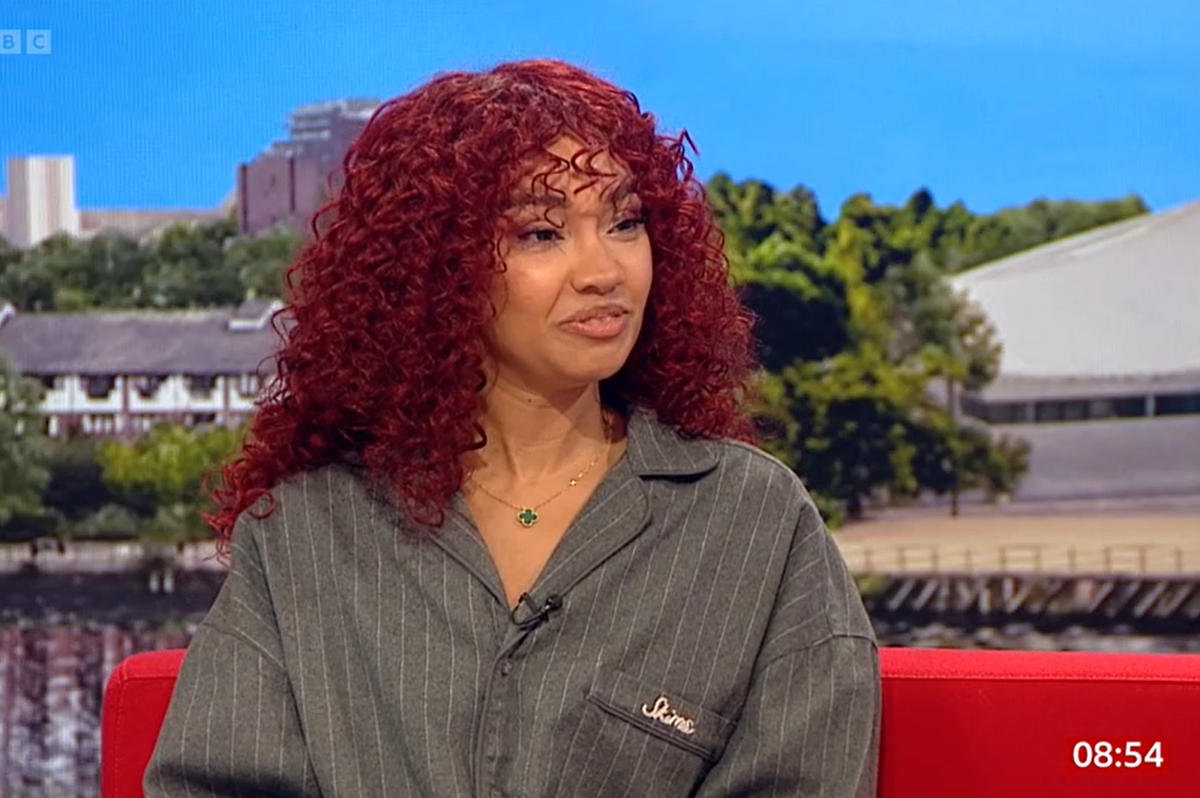
The star talked about her own experiences and how the change is needed
Pop star Leigh-Anne Pinnock has backed a major ban she believes could shield young people from the “really damaging” reality of social media. She thinks that the problem of “hiding behind a screen” to spread hateful comments needs to end.
The 34-year-old was on BBC Breakfast to promote her new album ‘My Ego Told Me To’, her first solo collection of hits since leaving Little Mix. When talking about her new debut album, Leigh-Ann touched on the “rife” nature of online trolling – especially towards women.
She said: “It’s like people are out for blood. It is a lot to deal with, but surrounding yourself with your tribe, people who believe in you, see your vision, get you, and understand you. Also, just giving yourself breaks from social media and putting the phone down. It can be so intense and scary.”
BBC Breakfast host Sally Nugent claimed that, although these hateful comments are sadly almost to be expected by people in the public eye, it is everyday women and girls who are also targeted online. She asked: “What about young women just going to school every day?”
Leigh-Ann backed the idea of banning under-16s from social media platforms. She said: “I think it should be banned. I’ve really seen the toxicity of it as well, and it is hardcore [online]. People are hiding behind a screen, so they can essentially say anything, and that is really damaging to young girls and people in general.”
The mum-of-two admitted that the thought of her children growing up in a world with unrestricted social media “scares her”. She added: “I have a niece as well, and I’ve seen some of the things that she’s been through at school – people can be nasty.”
What are the rules already for social media?
The minimum age to join most social media platforms in the UK is currently under 16, with common platforms like Facebook, Instagram, TikTok, and Snapchat allowing people to sign up from 13 – the typical age of a year nine pupil.
WhatsApp requires users to be at least 16, though people can bypass these age restrictions by providing false information when signing up online. Until recently, this self-declaration method was the only way platforms used to verify users’ identities.
In recent months, the UK’s Online Safety Act (effective from July 2025) have an Ofcom-enforcable rule in place to implement “highly effective” age verification for users. For example, Instagram requires verification if a user attempts to change their age from under-18 to over-18.
Some sites use AI-based face-scanning (age estimation) or ask people to submit a photo ID (such as a passport) to verify their age. However, some think this isn’t far enough, as people already exploit flaws in the system to work around these new measures.
In 2026, the UK government is actively considering a ban on social media access for children under 16, following a House of Lords amendment to the Children’s Wellbeing and Schools Bill. The proposal requires “highly effective” age-assurance measures to restrict access, aimed at curbing addiction and protecting young users from harmful content.
The ban covers major social platforms (Instagram, TikTok, etc.), messaging apps like WhatsApp, and social features in online games. The government is expected to announce the results of the consultation by summer 2026.
Ensure our latest headlines always appear at the top of your Google Search by making us a Preferred Source. Click here to activate or add us as your Preferred Source in your Google search settings.
Disclaimer : This story is auto aggregated by a computer programme and has not been created or edited by DOWNTHENEWS. Publisher: mirror.co.uk