
Keir Starmer has been forced to abandon plans to delay local elections with less than three months’ notice in another policy U-turn that has prompted anger among his own MPs and scorn from opposition leaders.
The prime minister is under fire after ministers said on Monday they were abandoning plans to delay local elections in 30 places in England – a decision that will cost taxpayers millions of pounds in administrative costs.
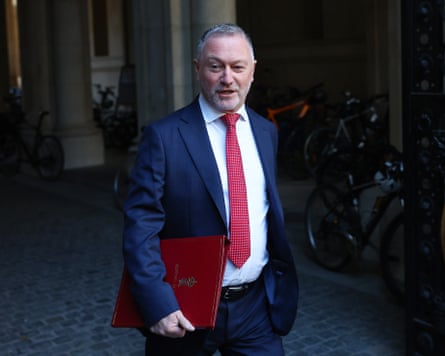
Steve Reed, the local government secretary, announced the reversal after officials decided they were likely to lose a legal challenge brought by Nigel Farage, the leader of Reform UK.
The announcement has left the government facing a £100,000 legal bill from Reform, has prompted a scramble among councils to organise elections in the next 12 weeks, and has infuriated Labour MPs, many of whom opposed the decision to delay elections in the first place.
It also adds to the pressure on the prime minister, who narrowly hung on to his job last week after losing two key officials and the support of Anas Sarwar, Labour’s leader in Scotland.
Reed told local government leaders on Monday: “The government can confirm that all local elections in May 2026 will now go ahead. I recognise that many of the local councils undergoing reorganisation voiced genuine concerns about the pressure they are under as we seek to deliver the most ambitious reforms of local government in a generation.”
Farage said Reed should resign as a result, while Kemi Badenoch, the Conservative leader, called the move “predictable chaos from a useless government that cannot make basic decisions”.
Several Labour MPs also voiced anger at the decision, which they said showed there should never have been plans to delay the elections. “Most councillors feel devastated,” said one Labour MP for an affected area. “Many didn’t want to cancel the elections. They felt pressurised into it and didn’t feel they had the resources to deliver the planned local government reorganisation too.”
Reed said on Monday that the government would give affected councils an extra £63m to cover the administrative costs, promising further support should they request it.
Local leaders say they will now have to rehire venues as polling stations and find returning officers at short notice to be able to carry out the elections as demanded.
“This most recent announcement means that 30 councils will now have to run elections within an even more constrained timetable,” the Local Government Information Unit said. “This risks the successful delivery of elections in all of these places, not to mention the additional strain it will needlessly add to the workloads of dedicated staff.”
Officials said the decision had been taken because they received legal advice warning they were likely to lose the case against Farage, which was due to be heard on Thursday and Friday. The Reform leader was expected to argue that the delays were “patently irrational” and contravened democratic and individual rights.
Reed announced earlier this year that he had accepted applications from 30 local authorities to delay their elections because of the resources required to carry out the government’s planned local government reorganisation. That reorganisation will result in district and county councils being merged into unitary authorities in some areas, and neighbouring councils merged in others.
One government source said the local government secretary was warned at the time the decision was likely to face a legal challenge. Only in recent days, however, did lawyers decide ministers were likely to lose that challenge.
With days to go until the high court was due to hear Farage’s case, Reed turned the decision over to the housing minister, Matthew Pennycook, who advised the policy should be dropped. Government aides said this was a normal way for legally sensitive decisions to be taken. Those close to the prime minister say he was not involved in making the decision, but say he retains faith in Reed, one of his closest allies in government.
The Conservatives are putting pressure on the government to publish the legal advice that prompted the U-turn, the latest in a series of policy reversals that also includes abandoning cuts to benefits and dropping plans for higher taxes for farmers. They are also demanding to know how much it could end up costing taxpayers beyond the additional funding announced by Reed on Monday and the expected legal costs.
James Cleverly, the shadow housing secretary, wrote in a letter to Reed on Monday: “There are now serious questions about your personal propriety as a minister … If you are unable or unwilling to answer these questions, you should resign.”
That message was echoed by Farage, who told reporters at an event in Essex on Monday: “If a minister acts in a way that’s illegal and tries to cancel people’s democratic rights to vote whilst they’re still being charged their council tax, I personally think that it really is a resignation matter.”
Reform believes it will be the biggest political winner from the decision, with the party targeting many of the areas in which elections will now be held in May. Farage said on Monday he believed voters in those parts of the country would “punish” the government when they got a chance to vote in May – a sentiment shared by some on the Labour benches.
“Councillors they feel like the rug has been taken from underneath them,” said one Labour MP. “Now they will have to face angry electors.”
Disclaimer : This story is auto aggregated by a computer programme and has not been created or edited by DOWNTHENEWS. Publisher: theguardian.com



