Parts of the Mediterranean have been lashed by Storm Erminio this week. Heavy rain, thunderstorms and occasional bursts of hail affected much of Greece throughout Wednesday and Thursday, with the most severe conditions across south-eastern parts of the mainland and several islands in the southern Aegean Sea, including Crete, with streets flooded and vehicles stranded.
Some of the heaviest rain fell on Wednesday across Attica, a region encompassing Athens, with one weather station near the city’s international airport recording 132mm (5.2 in) in 24 hours. The most intense downpours were overnight, when the coastal town of Nea Makri was particularly badly affected; an unofficial weather station recorded about 50mm falling within just two hours. One person died in the town; a man found beneath a car was believed to have been swept away as he escaped his flooding basement home.
Additional disruption came from gale-force winds funnelling through the Aegean, downing several trees and forcing the cancellation of several ferry services. These winds, which travelled to Greece from northern Africa, also brought with them a significant amount of Saharan dust, blanketing Crete in thick orange-red clouds.

South-eastern Italy has also seen significant rainfall, causing several rivers to burst their banks. At higher altitudes across the southern Apennines, rain fell as snow, causing unusually significant accumulations for the time of year. Some areas recorded 1.5 metres (4.9ft) of fresh snowfall, with strong winds contributing to the formation of large snowdrifts. Avalanche warnings are in place for mountains in the Marche region.
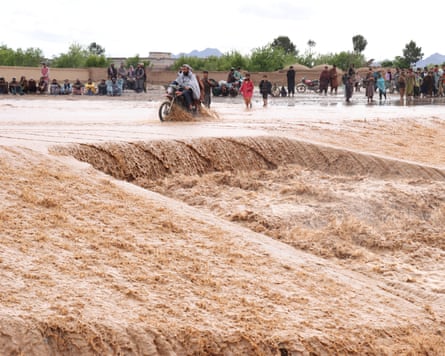
Prolonged heavy rainfall has also been affecting parts of central southern Asia over the past week, leading to widespread flooding. In Afghanistan, more 100mm of rain has already fallen in some eastern provinces since the start of April, with more heavy rain expected.
More than 50 people are reported to have died, with many more having suffered major injuries, alongside widespread damage to property and infrastructure. About 400 homes have collapsed and many hundreds more were severely damaged. More than 405 hectares (1,000 acres) of agricultural farmland has also been destroyed and about 400km (249 miles) of the road network badly damaged.
Afghanistan is particularly susceptible to flooding at this time of year owing to the common occurrence of heavy rainfall events combining with snowmelt after the winter season.
Neighbouring Pakistan has also had intense rainfall, hail, thunderstorms, and strong winds, particularly in the north-west of the country. More than 30 districts experienced flash flooding in the past two days, with highways cut off, vehicles abandoned and several deaths, including that of a 12-year-old girl struck by lightning.
Disclaimer : This story is auto aggregated by a computer programme and has not been created or edited by DOWNTHENEWS. Publisher: theguardian.com