

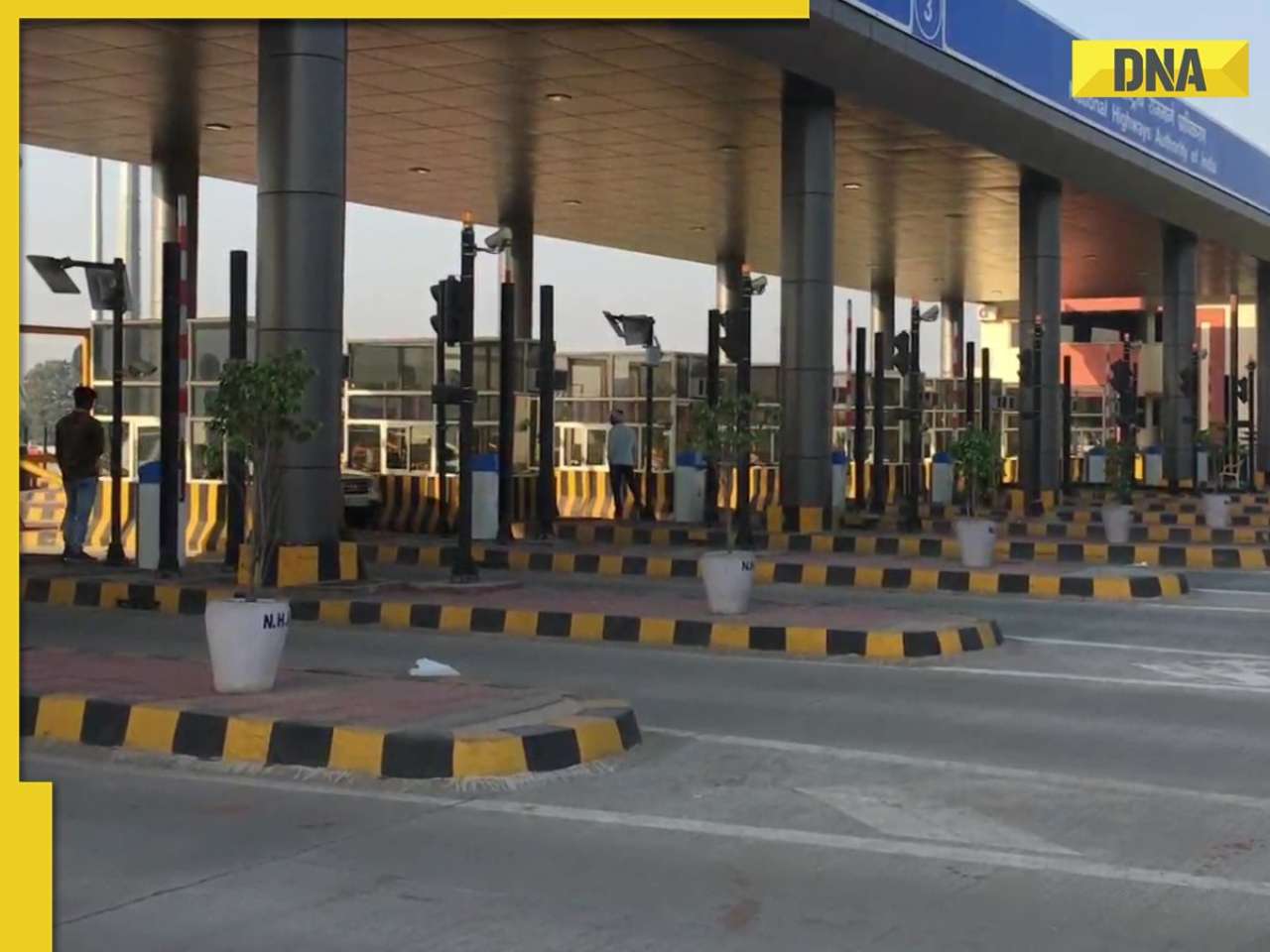
The Supreme Court on Wednesday ordered to close or relocate nine toll plazas to decongest Delhi’s border areas and reduce high levels of air pollution. The order has come amid the ongoing hearing on air pollution. The closure is temporary till January 2026.
The SC has ordered NHAI to close down 9 toll plazas on Delhi border till January
The Supreme Court on Wednesday ordered to close or relocate nine toll plazas to decongest Delhi’s border areas and reduce high levels of air pollution. The order has come amid the ongoing hearing on air pollution. As the air pollution is rising in Delhi-NCR with AQI nearing 500, the hearing is seen as a significant action towards a solution.
The courts noted that long queues of vehicles at these toll points were deteriorating air quality. A bench, led by Chief Justice of India Justice Surya Kant, gave a week’s time to the Municipal Corporation of Delhi (MCD) to decide on the matter and asked highway authorities to look for alternative arrangements.
What did the Court say on air pollution?
During the hearing, the bench questioned why toll plazas could not be shut temporarily to reduce traffic bottlenecks at Delhi’s entry points. “Why can’t the officials says that till January, there will be no toll plaza?” The CJI questioned.
While giving the order, the court also asked the National Highways Authority of India (NHAI) to also think about the possibility of shifting nine toll collection booths, run by the MCD, or closing them on temporary basis. It, however, refused to interfere with the Delhi government’s decision to close schools for students from nursery to Class 5, holding that no further tinkering was required as the winter break was already approaching.
The bench highlighted the need for effective implementation of current measures instead of just planning protocols that remain on papers. “Let us think of pragmatic and practical solutions of the menace,” the Chief Justice commented, implying the fact that even with various existing mechanisms, their enforcement has been consistently weak.
Disclaimer : This story is auto aggregated by a computer programme and has not been created or edited by DOWNTHENEWS. Publisher: dnaindia.com





