
The video opens with a school superintendent lip-syncing a love song, but he’s not the only performer.
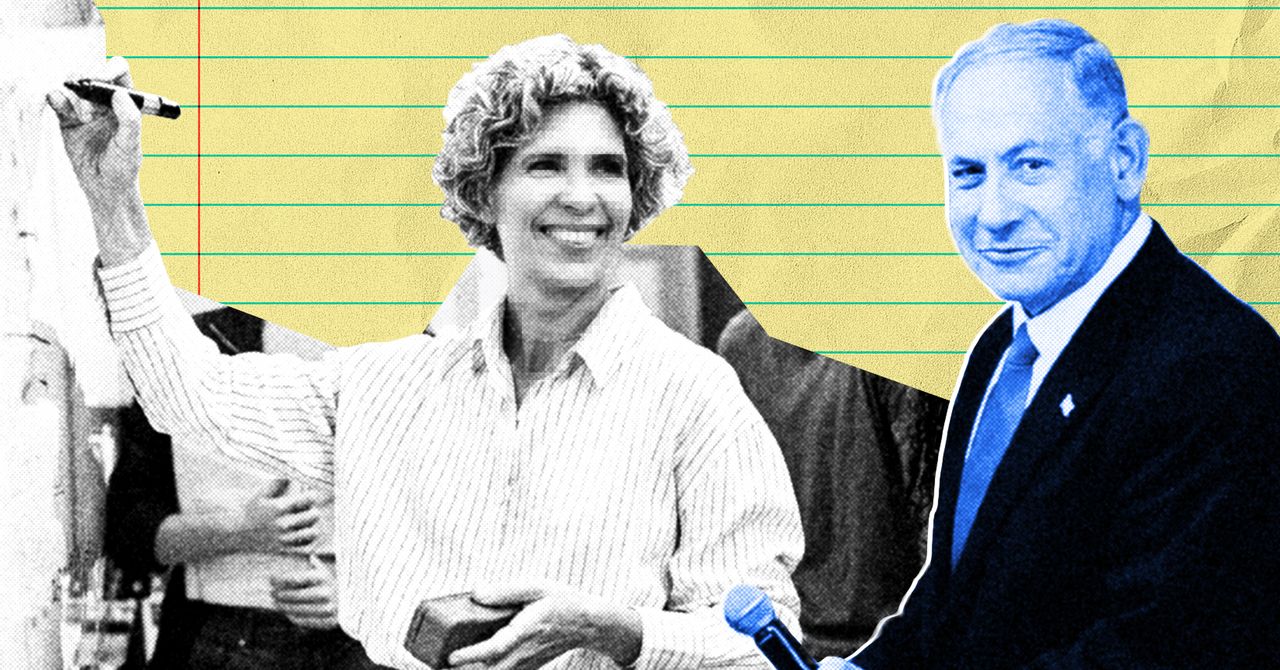
AI-generated versions of Israeli prime minister Benjamin Netanyahu and deceased sex offender Jeffrey Epstein join him on the ballad—a splice between Will Joseph Cook’s “Be Around Me” and a rewrite of the song by Beth McCarthy on TikTok—with Epstein mouthing the words, “Oh my god, did he call her baby, maybe?”
The clip, posted to the Instagram account @thewyliefiles, has been liked more than 107,000 times. Its caption reads like a large language model’s overview of the Wylie Independent School District in Collin County, Texas, where the singing superintendent was formerly employed, boasting about its “strong academics” and “wide range of extracurriculars.” A top comment reads, “Gem alarm!” suggesting that passersby have struck gold in their daily scroll.
The skit is just one example of a new AI-video meme trend on Instagram and TikTok that students have invented to mock the school’s faculty and sometimes attack their reputations, seemingly for the sake of virality. These largely student-run accounts have earned the nickname “slander pages” online. They’re a digital mutation of the average high school prank, but with potentially much higher stakes.
The “slander page” posts use slang terms that originate from unsavory parts of the internet. “Looksmaxxing” lingo, which comes from manosphere forums that teach men how to be more attractive, is commonly used in these memes, including words like “mog,” which means to dominate another man with one’s looks, and “sub5,” which was coined to refer to people who are subhumanly ugly.
Some “slander” videos use the AI image-to-video tool Viggle AI, which gives creators the ability to insert any photographed person into any reference video, as well as animate a static image into a lip-sync video format. Viggle AI was described as “a new frontier in the creation of spontaneous extremist propaganda” by the Global Network on Extremism and Technology, an academic research arm of King’s College London, in a recent blog post. The platform boasts over 40 million users as of February. Viggle AI did not respond to a request for comment.
In one since-removed “slander” video using Viggle AI that was posted on TikTok, a teacher’s face was superimposed over someone twitching in a bathroom. The text overlay caption read, “Take fent or be useless,” labeling the seizure as a fentanyl high.
The posters behind these pages also use morphed extremist symbols. In one example, some teachers are let into the fictional realm of Agartha, which is a key setting in neo-Nazi occultism where everyone is white and blond. The faculty in the edit are depicted with glowing white eyes to indicate that they’re allowed into Agartha or given red eyes to show that they’re denied.
In the case of Crandall High School in Crandall, Texas, the situation has gotten more extreme. Memes by a viral TikTok account called @crandall.kirkinator have broken containment from the local Crandall user base, inspiring TikTokers with hundreds of thousands of followers—and no discernible ties to the school—to amplify “slander” against Crandall teachers. Viral video skits have even acted out scenarios in which administrators chastise students making these posts.
Administrators at Crandall High School declined to comment on the situation, but at the end of January, all of the content on the @crandall.kirkinator TikTok account was wiped and replaced with a statement acknowledging that the coinciding Instagram account had been deleted. “My Instagram account was not banned, it was deleted by me voluntarily … Some teachers were being harassed, spam-called, or emailed by random people, which was never my intention … The account was created as a joke and was never meant to escalate this far,” the statement read. Days after the statement was posted, the account started posting again on TikTok. Last week, it was deleted entirely.
Tracy Clayton, a spokesperson for Meta, which owns Instagram, told WIRED its platforms don’t allow hateful conduct or bullying and harassment and that Meta reviewed and removed some related “slander” content that violated its policies. A TikTok spokesperson said the platform’s policies prohibit harassment and that it has removed content violating its community guidelines and implemented rules to automatically catch similar content when it’s posted.
The admin behind @thewyliefiles, a male student at Wylie High School who requested anonymity due to fears of being reprimanded, describes most of the content—which includes videos that label teachers “cucks” or “Netanyahu”—as “satirical slander.”
In one video, a teacher is labeled as a “predator and a cuck,” paired with two AI-generated images depicting him chasing children at a playground and sitting in a so-called “cuck chair,” a nickname for a chair used to watch one’s partner have sex with another person.
In @thewyliefiles’ view, cuck is a more serious insult than Netanyahu. “It’s a bigger thing because it’s, like, not a joke as much,” he says. But he also says he’s noticed that name-dropping Epstein and Netanyahu results in the videos getting more traction. “I’ve seen people actually put IDF soldier and @thewyliefiles in their Kahoot names now,” he says, referencing an online learning game platform. Even the account’s name is a “play on the Epstein files,” he adds.
İdil Galip, who researches memes at the University of Amsterdam, says creators like @thewyliefiles are benefiting from the fact that Israel and the Epstein files are generating a large volume of internet discourse. “It’s a sad state of affairs that these are the nodes of popularity that people can hook their content creation on.”
@thewyliefiles says that his goal is to grow the page “as big as possible.” But at the same time, he says he’s worried about the safety of his teachers. “If you’re just trying to harass someone for the sake of harassment; that’s just not cool,” he says. “We don’t want them to be doxed. We don’t want them to be stalked. We don’t want them to be prank called.”
April Cunningham, chief communications officer for the Wylie Independent School District, said in an emailed statement that the district is aware of the account. “While we understand that some students may be exploring AI tools or engaging with social media trends, this should never come at the expense of our educators’ reputations or create content that is misleading or disruptive to the learning environment … If we identify the student(s) responsible, they will face disciplinary action and possible legal consequences,” the statement reads.
Cunningham also confirmed that the district is aware of the aforementioned @thewyliefiles videos, including the one labeling a teacher a “cuck” and a “predator.”
“If an individual has a legitimate concern about a district employee’s conduct, there are clear and responsible ways to report it,” the statement reads, citing the district’s anonymous tip line, among other procedures. “No such report has been made through those channels regarding the allegations portrayed in these videos.”
The teacher dubbed a “predator” and a “cuck” in the video did not respond to a request for comment, nor did the former Wylie ISD superintendent, portrayed in the lip-sync video with Netanyahu and Epstein.
@thewyliefiles says he’s been very secretive and hasn’t told anyone that he owns the account. “I actually enjoy whenever people are talking about it and, like, saying that the page is funny, and they have no idea that the owner of the account is sitting right next to them.”
Geert Lovink, director of the Institute of Network Cultures and professor at the University of Amsterdam, says that while students’ desires to rag on their teachers is “all too human,” there is a “deep technological disconnect” between what they might view as harmless fun and the ramifications of posting these types of memes online.
The young admins of slander pages are from generations that have a different understanding of privacy and the importance of identity, Galip adds.
“They’ve kind of been socialized into this culture, this constant churn of content, [where] your face isn’t yours, it’s the viewer’s, it’s the commenter’s to laugh about,” she says. “We’re seeing these knock-on effects of what happens when people are socialized through the internet and also see themselves reflected through the internet rather than a mirror.”
Disclaimer : This story is auto aggregated by a computer programme and has not been created or edited by DOWNTHENEWS. Publisher: wired.com



