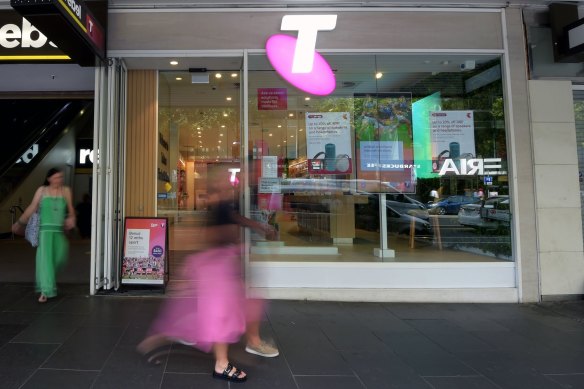

Telstra has reported a $1.2 billion half-year profit, up 8.1 per cent, as the telco giant reaps the rewards of aggressive cost-cutting that has shed more than 2300 jobs in six months, while warning consumers may face higher mobile bills over a $7.2 billion government spectrum charge.
The results, released to the ASX on Thursday, showed underlying earnings rose 5.5 per cent to $4.2 billion for the half-year ended December 31, driven by strong mobile performance, with services revenue up 5.6 per cent. Earnings per share climbed 11 per cent to 9.9 cents, and the board declared a 10.5 cent interim dividend, up from 9.5 cents a year earlier.
Chief executive Vicki Brady said there was strong momentum across the business, and that Telstra had delivered “strong cost control and disciplined capital management”. She pointed to the mobiles division as the standout performer with “more customers continuing to choose our network and the value it provides”.
But the earnings growth has come at a significant human cost. Total direct roles fell by 2356 to 29,520, with redundancy expenses surging $63 million as Telstra continues a sweeping reset of its enterprise division. Last week, the company proposed axing a further 442 positions, including 209 from its $700 million Accenture data and AI joint venture, with some work to be offshored to India via a new Infosys partnership.
Underlying operating expenses fell 2.4 per cent, or $179 million, delivering the positive operating leverage Brady has promised investors.
The telco tightened its full-year guidance to $8.2-8.4 billion in underlying earnings, and boosted its share buyback from $1 billion to $1.25 billion after completing $637 million of repurchases at an average price of $4.90.
Hanging over the result is Telstra’s escalating fight with communications regulator ACMA over spectrum pricing. In a pre-budget submission, the company warned the regulator’s proposed $7.2 billion licence renewal fee – of which Telstra’s share would be $2.7 billion – could flow through to consumer bills.
Brady has previously stated the additional cost would either reduce network investment or be passed on to customers.
 David Swan is the technology editor for The Age and The Sydney Morning Herald. He was previously technology editor for The Australian newspaper.Connect via X or email.
From our partners
Disclaimer : This story is auto aggregated by a computer programme and has not been created or edited by DOWNTHENEWS. Publisher: www.smh.com.au