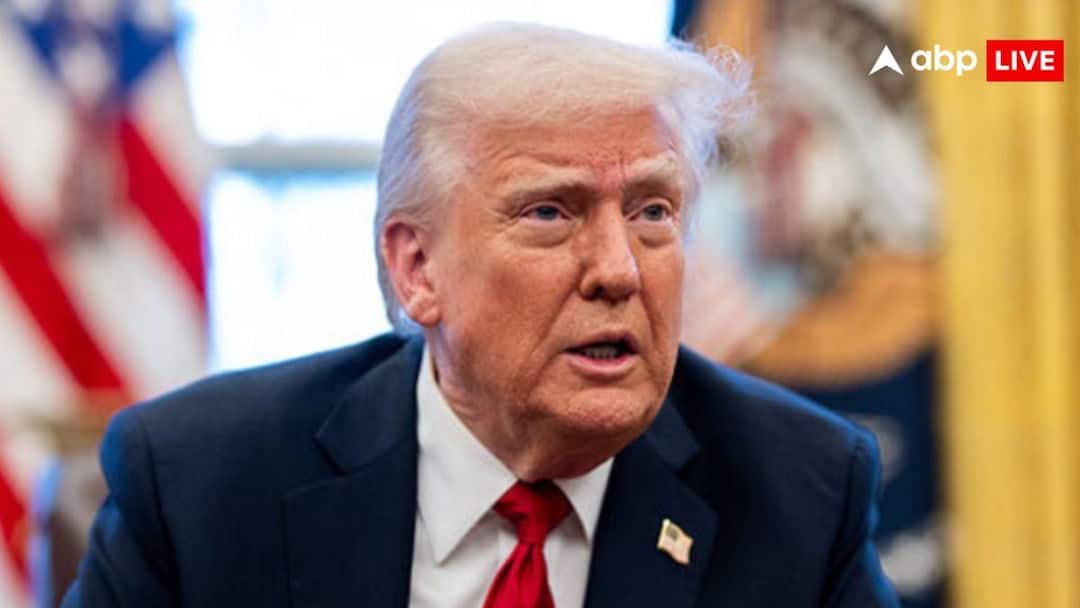
US President Donald Trump has sharpened his warning to Iran, saying he believes 10 to 15 days is “enough time” for Tehran to reach a “meaningful deal” with Washington, failing which “bad things happen.”
“It’s proven to be, over the years, not easy to make a meaningful deal with Iran, and we have to make a meaningful deal. Otherwise, bad things happen,” Trump said Thursday.
He indicated that negotiations must show results within the next 10 days, adding that the United States “may have to take it a step further” if progress stalls.
Military Build-Up In The Region
The warning comes amid a visible expansion of American military assets in the region. The USS Gerald R. Ford aircraft carrier has moved near the mouth of the Mediterranean Sea and could transit through Gibraltar to the eastern Mediterranean. It would likely take more than a week for the carrier to be off Iran’s coast.
Earlier this week, another 50 U.S. combat aircraft, F-35s, F-22s and F-16s, were ordered to the region, supplementing the hundreds already deployed at bases in Arab Gulf states.
A senior U.S. official said top national security officials met Wednesday to review Iran, and were briefed that the “full forces” needed to carry out potential military action are expected to be in place by mid-March.
The additional deployments do not guarantee a strike, but they enhance Washington’s capacity should Trump decide to act.
Talks Deadlocked, War Fears Rise
Indirect nuclear talks in Geneva have made little visible progress. While Washington is seeking to prevent Iran from acquiring a nuclear bomb, Iran has refused to negotiate over its missile programme and its ties to armed groups, maintaining that discussions should focus solely on its nuclear activities.
Iran has agreed to draw up a written proposal addressing U.S. concerns raised during recent talks, though no timeline has been given for its submission.
A senior regional government official said he has privately urged Iranian officials to take Trump’s rhetoric seriously and advised Washington to focus first on nuclear concessions rather than missile and proxy issues. The official cautioned that even a limited strike could prompt Iran’s Supreme Leader to withdraw from negotiations altogether.
Iran Signals Deterrence
In a letter to the U.N. Security Council, Iran’s ambassador to the U.N., Amir Saeid Iravani, said that while Iran does not seek “tension or war and will not initiate a war,” any U.S. aggression would be met “decisively and proportionately.”
“In such circumstances, all bases, facilities, and assets of the hostile force in the region would constitute legitimate targets in the context of Iran’s defensive response,” he said.
Earlier this week, Iran conducted a live-fire drill in the Strait of Hormuz, the narrow passage through which roughly a fifth of the world’s traded oil flows.
Joint Drill With Russia
Iran also held annual naval drills with Russian forces in the Gulf of Oman and the Indian Ocean, aimed at “upgrading operational coordination as well as exchange of military experiences,” according to state-run media.
Footage showed naval special forces boarding a vessel during the exercise. Iran additionally issued a rocket-fire warning to pilots in the region, indicating plans to launch anti-ship missiles as part of the drill.
Regional And Global Concerns
Polish Prime Minister Donald Tusk urged Polish citizens to leave Iran immediately, warning that within “a few, a dozen, or even a few dozen hours, the possibility of evacuation will be out of the question.”
The German military confirmed that it had relocated “a mid-two digit number of non-mission critical personnel” from a base in northern Iraq, while maintaining some troops at a multinational camp in Irbil.
Israel On Alert
Israeli Prime Minister Benjamin Netanyahu said Israel is preparing for any Iranian retaliation.
“We are prepared for any scenario,” Netanyahu said, adding that if Iran attacks Israel, “they will experience a response they cannot even imagine.”
Netanyahu has long advocated tougher U.S. action against Iran and insists any deal must curb both Tehran’s nuclear programme and its missile arsenal.
Mounting Pressure On Tehran
Iran maintains that its nuclear programme is peaceful and says it has not enriched uranium since U.S. and Israeli strikes last summer, which Trump claimed had “obliterated” Iran’s nuclear sites. The extent of the damage remains unclear, as Tehran has barred international inspectors.
As diplomatic efforts continue alongside escalating military deployments, both Washington and Tehran have signalled readiness for confrontation if talks collapse, leaving the region on edge as the stated 10–15 day window narrows.
Related Video
2018 DEFAMATION CASE: Court Directs Congress Leader to Record Statement
(This is a breaking news story and is being updated. Please refresh for the latest updates.)
Disclaimer : This story is auto aggregated by a computer programme and has not been created or edited by DOWNTHENEWS. Publisher: abplive.com