From the race for Melbourne’s “hot seats” and a massive search for Dezi Freeman to a nostalgic taste of Australiana and a glimpse behind closed doors of AFL clubs, here is a small selection of The Age’s best stories of the year.
By Staff writers
December 22, 2025
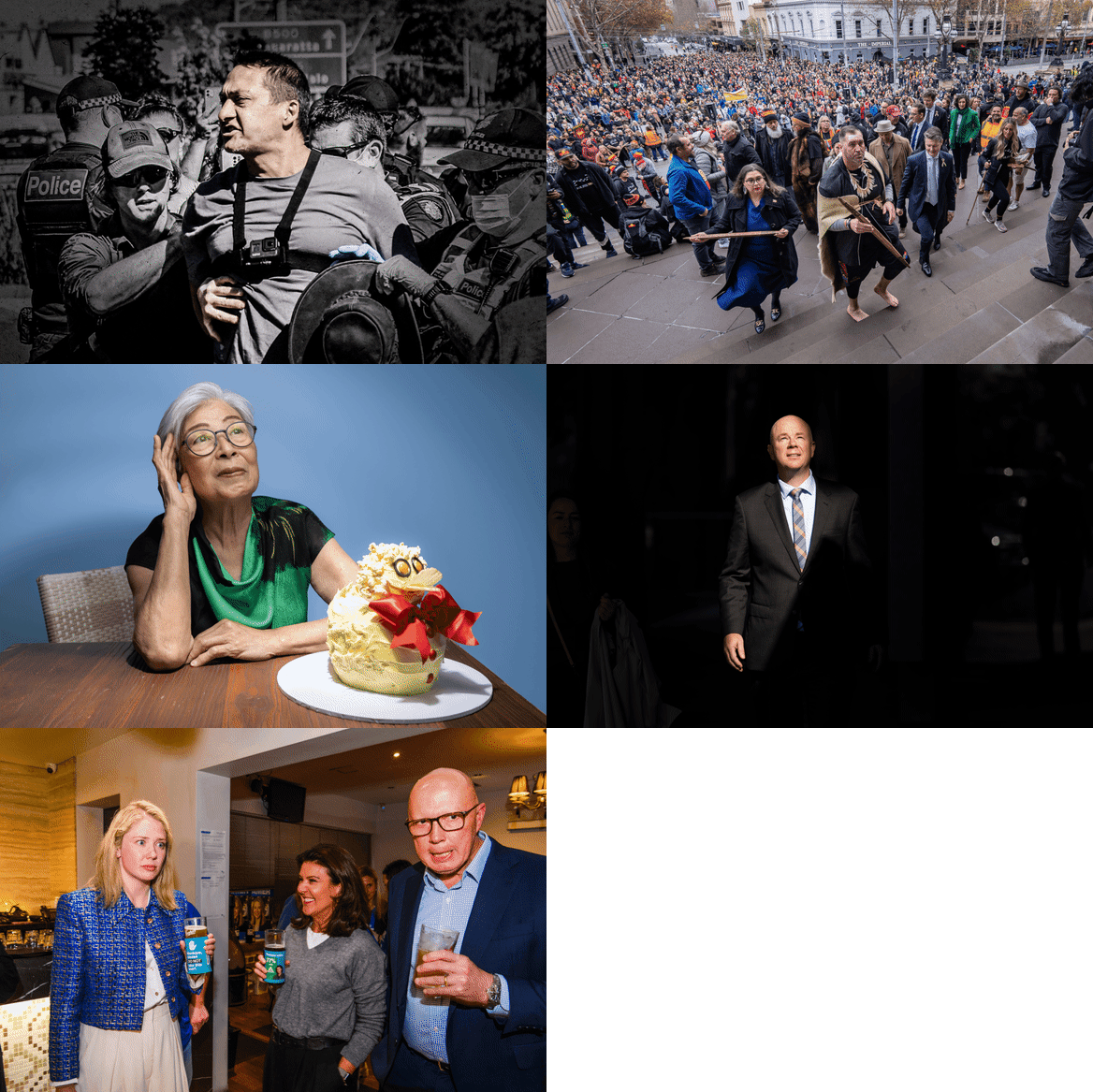
The Age staff share their favourite stories of 2025.Credit: The Age
This was the year a double police shooting in Porepunkah had Victorians glued to their screens, child abuse charges levelled against workers in the childcare industry became nightmare fuel for parents, and a historic, world-first social media ban came into effect to protect children from online damage.
Attention also turned to the small town of Morwell, where the trial of mushroom cook killer, Erin Patterson, stretched over weeks and ended in her being found guilty of three counts of murder and one of attempted murder, after poisoning her in-laws with beef Wellington.
From the race for Melbourne’s “hot seats” to a nostalgic taste of Australiana, here is a small sample of The Age’s best stories of the year, as selected by newsroom staff.
Hanna Mills Turbet, chief producer
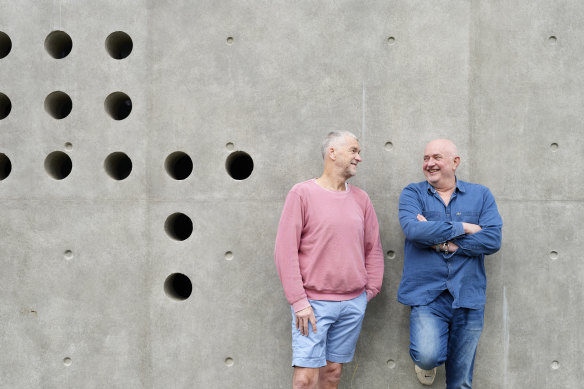
Ian Forsyth (left) and Scott Follows. “This relationship – two guys having a coffee every Sunday at 8am – is unique,” says Follows. “I hope it lasts another 30 years.”Credit: Peter Tarasiuk
On The Age breaking news desk, we’re surrounded by death and destruction, tobacco wars, dodgy businessmen, and kids behaving badly. So come the weekend, I’m looking for a little light relief to accompany my coffee and blueberry bagel.
Unwrapping the weekend papers onto the kitchen table, I turn straight to the Two of Us in the Good Weekend mag.
Among the stories of friends reunited after 50 years, the private lives of public faces, the relationships forged through grief and the migrant brothers working side by side on trains, one particular friendship stood out for me: the two men who catch up for a coffee every Sunday morning at South Melbourne market and just chew the fat.
Fifteen years ago, Ian Forsyth and Scott Follows started bumping into each other. Over the years, their conversations have ranged from fish prices and exercise to politics, parenting challenges and health scares.
A little bit of humanity in the midst of an uncertain world.
Eliza Sum, digital producer
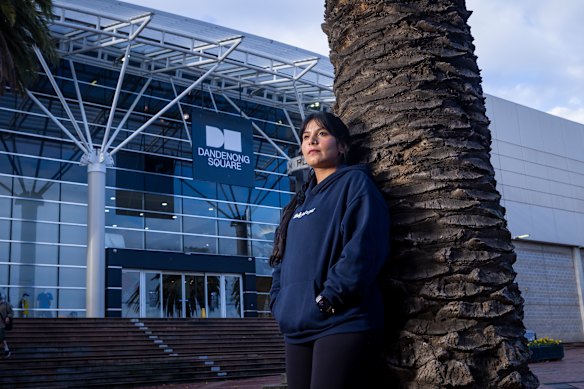
Shefali Batta at Dandenong Square, where a customer attempted to stab her in 2023. Credit: Wayne Taylor
Some stories stay with you for their depictions of unimaginable heartbreak, like Konrad Marshall’s devastating piece on death knocks in our Behind The Headlines series.
Others lift the lid on scenes that unfolded behind the biggest headlines; for example, Marta Pascual Juanola’s behind-the-scenes look at the attempt to save a poisoned grandmother, whose final words will forever remain etched in her doctor’s memory. Meanwhile, the Members Only series was also a tantalising insight into the inner workings of the city’s most exclusive private clubs – and their struggles to stay alive.
For me, Cassandra Morgan’s eye-opening miniseries was a stand-out as she took us on the beat at a common, yet unlikely spot: the humble supermarket – in this case, one of Victoria’s most targeted Coles stores for petty theft. Her visceral descriptions – one story literally details a Woolworths worker leaking bile from a stab wound – conjure a vivid visual image that’s impossible to shake.
Both stories shone a light on the daily dangers experienced by Victoria’s often-forgotten and taken-for-granted retail workers, many of whom are working in overdrive while most of us prepare to wind down for the year.
Maher Mughrabi, producer
I thought the tone of this perspective piece by David Swan was so well-judged, the exposition so clear, and the voices so interesting that I had to read it all the way to the end twice. It was full of information but not in an overwhelming way.
I don’t have to agree with a piece to like it; I just have to feel its author is digging in the right spot and telling me things I didn’t know. This story did that.
Orietta Guerrera, deputy editor
As we approach the final week of 2025, I can hardly believe the federal election was actually earlier this year.
While our Canberra colleagues focused on Peter Dutton and Anthony Albanese’s national campaigns in the lead-up to the May 3 election, The Age newsroom took an in-depth look at several Victorian seats – Wills, Bruce, Kooyong and Goldstein – in the form of a series of weekly “hot seats” blogs.
I loved reading and working with journalists Clay Lucas, Charlotte Grieve, Rachael Dexter and Cara Waters as they reported on the local contests. There was high drama, humour and serious revelations.
Many Age readers enjoyed the blogs over the five-week campaign, and even more so in the aftermath, as three of the four seats we focused on were too close to call on election night; in the case of Goldstein, the winner was only confirmed a fortnight later!
Daniella Miletic, chief content director
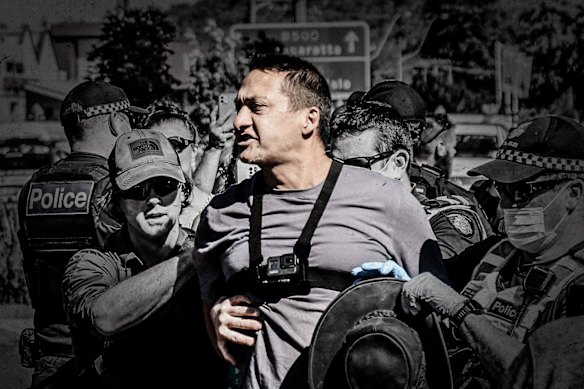
Police arrested Dezi Freeman outside court in Myrtleford in 2021.Credit: Michael Howard
Melissa Cunningham is a writer who knows how to press the bruise, consistently finding the human ache at the heart of the crime story.
She has a signature ability to elevate tragic narratives, from the wrenching silence when a magistrate asks an absent mother’s whereabouts for a teen criminal in court, to honouring the life of a murdered woman who lived — and died — beneath the veil of violence.
In her feature, Oh my god, it’s Uncle Des, Cunningham explores the life and descent of alleged police killer Dezi Freeman. The piece masterfully charts a man’s collapse from a loving, electric figure to an anti-authority conspiracist.
This top-to-bottom read paints a compelling portrait of passion, paranoia, rage and profound mental deterioration. It elevated our coverage of the fugitive manhunt in a way no other outlet did: telling the story of a man who loved, who hated, who descended, and who fled.
Cassandra Morgan is a force in breaking news — fast, sharp and accurate — yet what I admire most is her gift for returning to the scene long after the sirens have faded to uncover the deeper human narrative.
In this piece, she revisits a night at the Palais Theatre, weaving a fleeting moment of chaos into a call for change. It catches the lingering heart of a story that the frantic pace of the breaking news cycle so often leaves behind.
Elizabeth Flux, arts editor
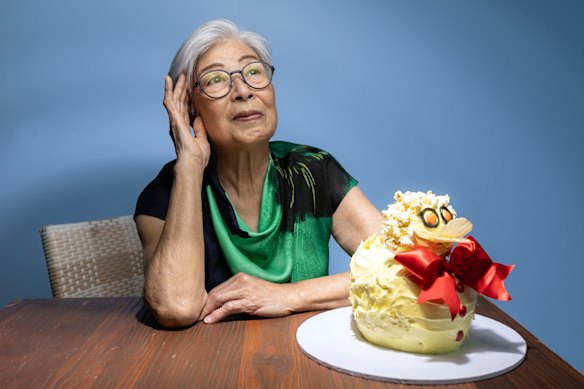
Agnes Lee, the creator of the famous rubber ducky cake – now world-famous from Bluey.Credit: Sam Mooy
The best culture stories are the ones that take either something you think you understand or something that has faded into the background of everyday life and makes you look at it in a new way. Meg Watson’s interview with Agnes Lee does both of these things. Lee is the mind behind the Australian Women’s Weekly “ducky cake”, and this article delves into how an icon came into being while also offering a look at a very specific moment in time.
In the same way, a collaboration between Nell Geraets, Gabriela Sumampow and the Visual Stories Team delved into the Labubu phenomenon – even before most of us had started to notice the growing number of strange furry monsters clipped onto the handbags and backpacks of people around us, work was beginning on a piece that not only explained a growing mania, but that let you experience a piece of it through clever use of interaction.
Michael Bachelard, senior writer
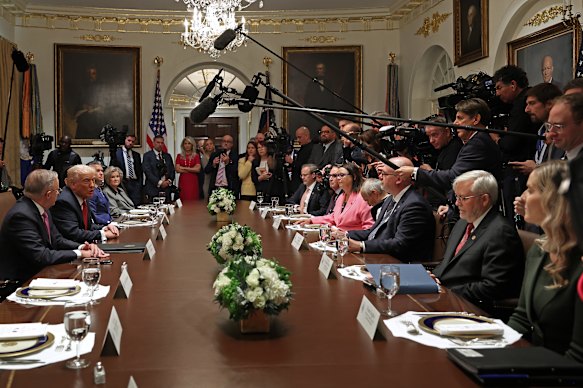
The awkward moment in the White House between Trump and Australia’s ambassador Kevin Rudd (at right).Credit: Getty Images
There is no sharper skewer to pop the pretensions of a puffed-up politician or public figure than the prose of Tony Wright. Given his vast longevity and prodigious memory, his attacks are always delivered with a lacing of history.
This year, I loved his take-down of Clive Palmer’s “magnificently flatulent” new undertaking, Trumpet of Patriots. His account of Kevin Rudd’s mortification by Donald Trump – “I don’t like you … and I probably never will” was almost as delicious.
Tony also has an uncanny ability to recall and distill the history of pretty much any country town in Victoria.
His portrait of Porepunkah – the scene of Dezi Freeman’s shooting of two police officers in August – was as fascinating as it was timely. The town, he recalled, had a “dark history” – of murderous white supremacist gold miners and a deviant conman called “Brother Ron”. Decades in the service and still at the top of his game.
Also, Mel Fyfe’s Good Weekend feature about forced marriage in Australia was pitch-perfect. Her opening line grabs you from the start: “Before escaping out the window, Miriam waits for her parents to doze off”.
She builds the drama of the impending, unwanted wedding, as she describes her subject chipping away at the glue her parents used to jam her window shut. Chilling.
Cassandra Morgan, breaking news reporter
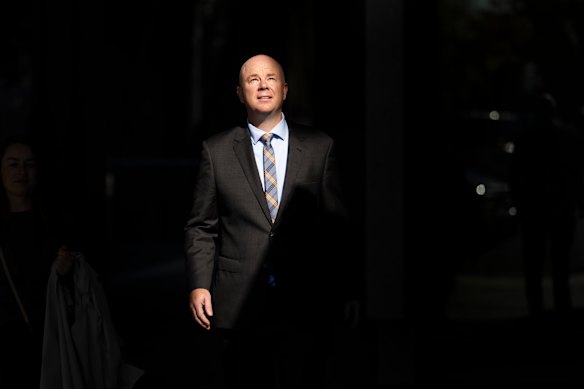
Mushroom killer Erin Patterson’s estranged husband, Simon. Credit: Jason South
A slew of Erin Patterson stories come to mind when I think about the best journalism of the year. But this piece, from Erin Pearson and Chris Vedelago, is one that I found myself sharing with family and friends to illustrate the cruel deception of the case. The lede, accompanied by Jason South’s incredible photograph of Simon Patterson looking skyward, sets up a horrible and compelling tale of secrets, needless suffering, and a family’s faith – in God and the good nature of people.
“It was a gathering born of dread, not devotion. On August 2, 2023, the close-knit Patterson and Wilkinson clans converged at the Austin Hospital’s 24-hour chapel. Just down the corridor, four of their loved ones lay desperately ill in hospital beds. Amid constant distressing updates from doctors, Simon Patterson had a secret to share – a chilling explanation and a story of hidden hate.”
Catherine Chisholm, homepage editor

Prince Harry may have his passion projects, but Kate Halfpenny reckons Meghan is the practical one.Credit: Pool picture.
Just like clockwork, I can rely on Kate Halfpenny to make me smile every Friday. As a homepage editor, my daily grind is a tsunami of politics, crime and breaking world news.
While we work hard to keep the homepage dynamic, offering a mix of journalism at The Age, to me, especially come Friday, Halfpenny’s column feels like a necessary exhale. Her pieces are consistently well-read, honest, and delightfully amusing.
She has a knack for cutting through the noise and delivering an insightful, yet often biting, perspective on the hot topics of the week.
Take, for example, her hilarious takedown of Meghan’s show. This column made me laugh out loud.
Roy Ward, sports writer
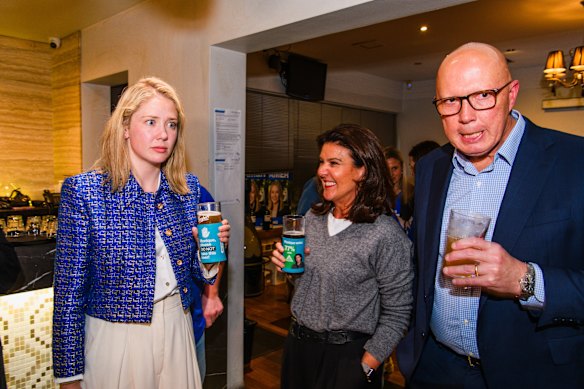
The now infamous photo of Amelia Hamer (left) with Senator Jane Hume and then opposition leader Peter Dutton in Kooyong.Credit: James Brickwood
I love this time of year and remembering so many great stories from the year gone by. Our election hot seats slow blog looking at a couple of key Victorian seats was such a winner and, perhaps because I live in Kooyong, I loved Rachael Dexter’s reporting, especially when she caught out Amelia Hamer on a pretty huge omission after calling herself a renter – despite owning property in Australia and the UK. Brilliant legwork from Rach to get Hamer’s UK property records. Also loved coverage of the other seats and the snapshots of those corners of the state.
I also have to give Carla Jaeger a shout-out on her investigation into sickening child abuse in home-based daycare. It was a five-month investigation and so heartbreaking, but an essential read. Such a breach of trust and one that really should never have been allowed to happen.
Finally, I’m not the biggest racing fan, but Danny Russell put on a tour de force during the Spring Carnival. He filed heaps of excellent stories and also teamed up with all and sundry across sport and news on other key stories, including some cracking investigative work on the chaotic tenure of MRC chair John Kanga, who resigned after some questions from our reporters.
He also came up with stellar reporting from the track for our blogs and post-race reports, including Jamie Melham’s historic Caulfield Cup win. His stories had something for the hardcore fans and those who mostly tune in at springtime.
Ashleigh McMillan, breaking news reporter
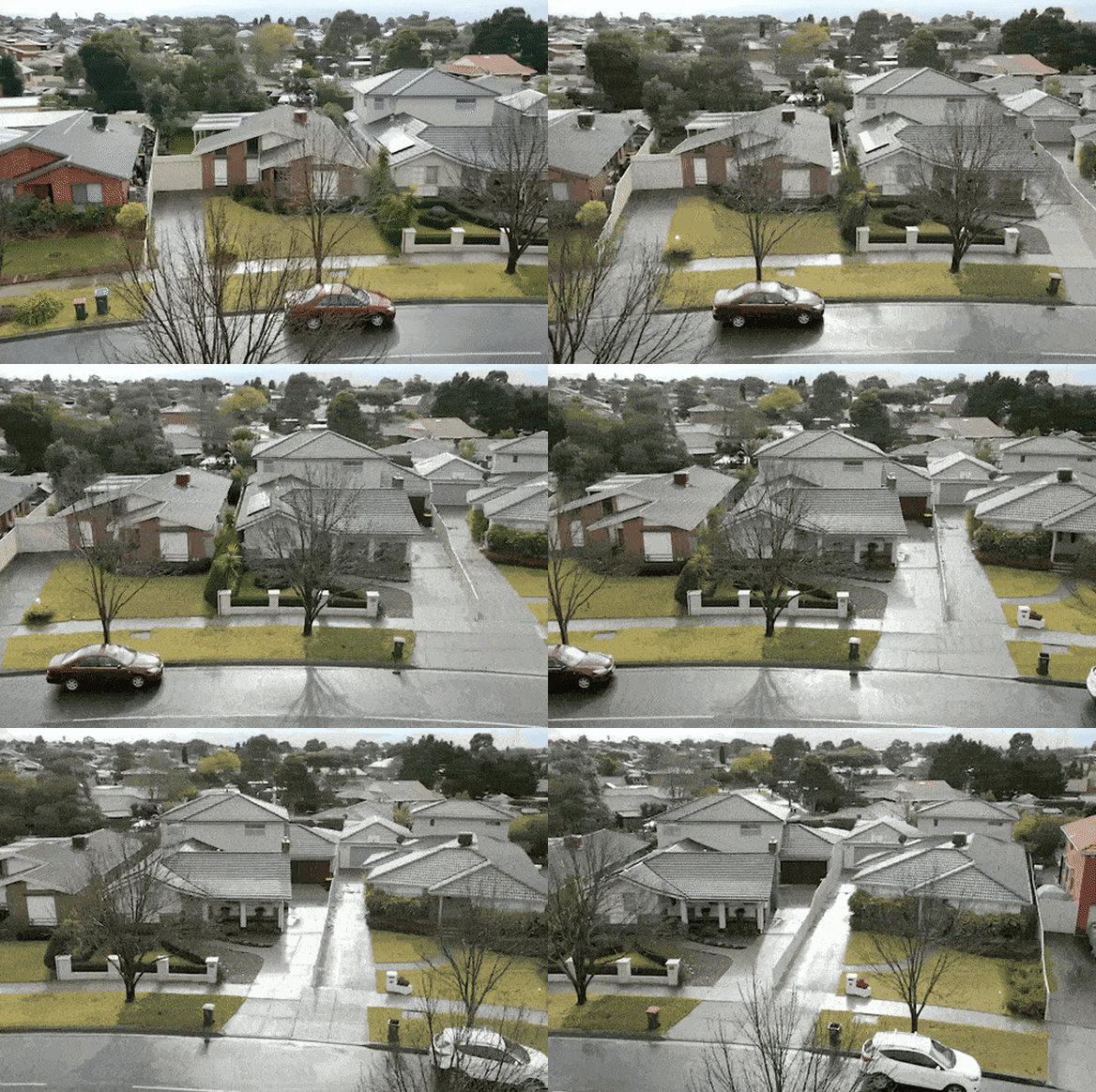
Veronica Crescent in Mill Park – one of Melbourne’s underquoting hot spots.Credit: Justin McManus, Bella Ann Sanchez
Sometimes the best stories are built around a piece of information that seems obvious, but no one has done the hard yards to dig out the statistics and prove it.
Everyone knows properties in Melbourne are going for hundreds of thousands more than they are advertised for. Go to any dinner party with a bunch of 30-somethings desperately trying to pull themselves up onto the property ladder, and you will hear manifold stories about the termite-infested “fixer-upper” that sailed past a million dollars on auction day, or the boxy two-bedroom apartment fought over by retirees, foreign investors and young families alike.
The Bidding Blind series by Aisha Dow, Nigel Gladstone and the visual stories team proved that underquoting is at epidemic levels, through a detailed investigation of 26,000 auctions. Even better, they managed to effect real change – landmark legislation will be introduced in Victoria next year requiring properties to have a minimum sale price listed before they go to auction.
Debbie Cuthbertson, culture news editor
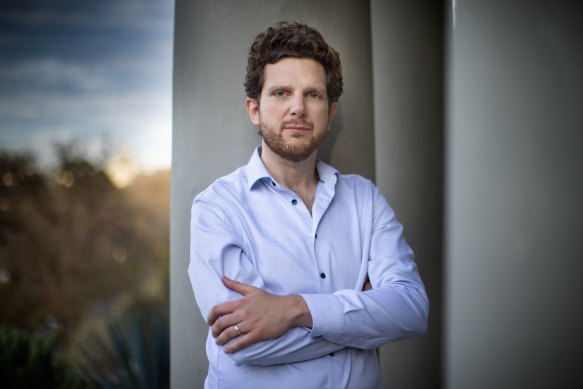
Pianist Jayson Gillham.Credit: Simon Schluter
Senior culture writer Kerrie O’Brien has had a bumper year, leading the coverage of major stories from the Bendigo Writers Festival walk-out to the MSO cancelling pianist Jayson Gillham’s concert and the shock closure of long-running Australian literary magazine Meanjin.
She capped that off with an exclusive in November, revealing the State Library of Victoria’s proposal to significantly cut staff. In December, its chair announced exclusively to Kerrie that the library was abandoning its restructure plan.
One of the biggest responses we’ve had to a culture story this year was to senior culture writer Karl Quinn’s gripping, in-depth look at the changing of the guard at Netflix in Australia. His deep dive into the events behind the departure of its local content chief Que Minh Luu was months in the making, and had a big impact, especially in terms of readership when it was published in September.
Karl was also responsible for one of the funniest interviews of the year – when he himself was overcome with laughter while interviewing the cast of Spinal Tap II: The End Continues (be sure to watch the accompanying video), directed by the incomparable Rob Reiner, who sadly died this month.
Shelby Garlick, homepage editor

St Kilda powerbrokers Gerry Ryan, president Andrew Bassat and Lindsay Fox, who celebrated his birthday aboard the Seabourn Quest.Credit: Artwork: Nathan Perri
The entire AFL powerbroker series was an intriguing glimpse into the tangled web of Melbourne’s elite and our footy clubs. All profiles were meticulously researched and expertly produced by the sports team. The 11-part series managed to capture the soul of each club, but for me, one was a particular standout.
As a LSSF (Long Suffering Saints Fan), I’ve never really understood how St Kilda has some of Australia’s wealthiest men as die-hard fans, yet the club has been stuck on welfare support for what feels like eternity. Finally, it feels like I got an explanation: the money men leave their chequebooks at home and wield their power in other ways.
The detail of Gerry Ryan calling Ross the Boss “in his hour of need” isn’t just a catchy headline; it’s a powerful illustration of the personal, often invisible support systems that keep clubs afloat.
Sam McClure cleverly portrayed a drought-stricken club desperate to shake its financial woes at the same time it’s going on a multimillion-dollar recruitment spree. Maybe I’m just a hopeful fool, but there was a glimpse of hope that things are slowly turning around – at least, financially. But the question begs, which will come first: the Saints getting off welfare or finally getting that drought-breaking premiership?
I’m also going to highlight Jake Niall’s series, The 30-year Blues. My favourite time of year is the week before footy starts, where hopes for footy fans are sky-high, perhaps none more so than Carlton supporters.
Jake beautifully illustrated – thanks to the willingness of former coaches to speak out – the internal dysfunction, pressure, and heartbreak the club has experienced. Overall, it painted a grim portrait of a club that has often gone from crisis to crisis – on and off the field.
The series was the ultimate scene setter for Round 1 and what (if you asked my fiance) was going to be the year it all turned around for the Baggers. But in typical Carlton style, that came crashing down spectacularly when Richmond, a team nobody thought was going to even win a game this season pulled off a glorious come-from-behind win.
Things went from bad to worse for Carlton from there. If the Carlton faithful needed answers on why 2025 went so horribly wrong, Jake’s series was a good place to start.
Paul Pennay, deputy content director
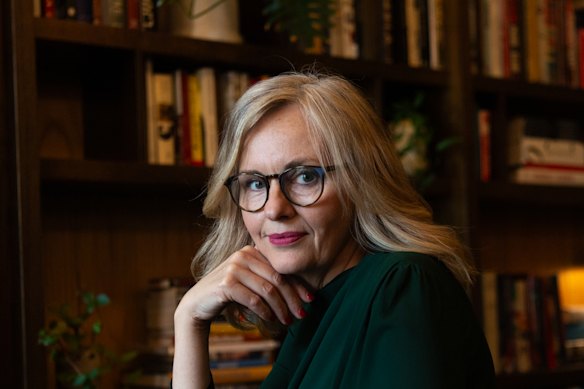
Tomorrow Funerals co-founder and funeral director Kate Morgan.Credit: Justin McManus
I’ll be honest, half the yarns that popped into my head when contemplating this brief actually turned out to be from 2024 – and I still think Lachie Abbott and Sophie Boyd’s man v Metro Tunnel train video is a thing of joy.
However, this clear but nuanced piece by Cassandra Morgan about the pitfalls around finding the words to talk about trauma and grief hit a nerve for me. Cass manages to weave together the heartbreak and tragedy of individual stories with clear-headed advice and piercing analysis. It amazes me that she can pull together such a wise, practical and human piece while juggling her regular breaking desk workload with its roll call of crime, violence, death and destruction.
In the shadow of the horrors we saw in Bondi this week, I recommend it to you.
Aisha Dow, investigative journalist
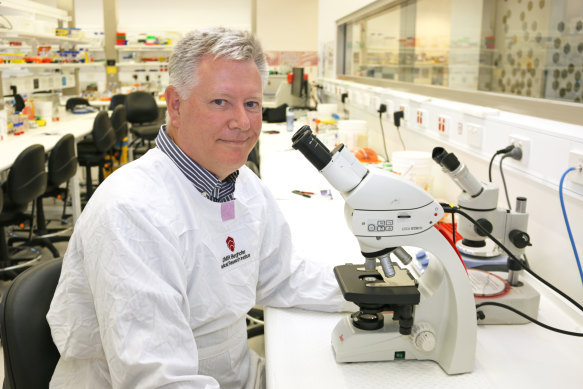
Professor Mark Smyth, the former head of immunology in cancer at the QIMR Berghofer Medical Research Institute.
Reflecting on the year that was is a reminder of the impressive coverage that this newsroom produces day in and day out. My colleagues are often at their very best when big news breaks, and unfortunately, this year has had its share of horrific crime and tragedy. Not long ago, I was speaking to a workmate, Melissa Cunningham, who was at the scene of a high-profile alleged crime. She was still wearing the same clothes from the previous day, after leaving the office 24 hours earlier and driving to the scene many hours away, without even a toothbrush. And of course, she still manages to file with accuracy and flair.
Then there was our gripping and Walkley-winning coverage of the mushroom trial, our innovative coverage of local seat battles in the federal election, and so much more.
However, the story that sticks with me most from 2025 is the two-part investigative series Follow the mice by Liam Mannix, documenting an extraordinary case of scientific fraud by Mark Smyth, once one of the nation’s most lauded scientists. I read every word. If you missed it, make sure you add it to your summer reading list.
Paul Rovere, deputy picture editor
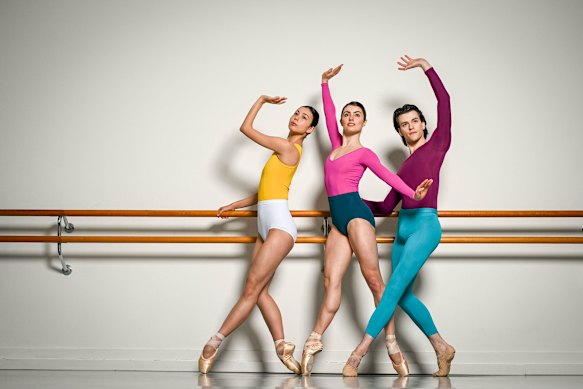
The Australian Ballet reveals its 2026 season.Credit: Eddie Jim
Utilising the vibrant colours of the Australian Ballet dancers’ costumes, a rhythmic composition and a playful use of light and shadow, Eddie Jim delivers a masterclass in the core pillars of photography.
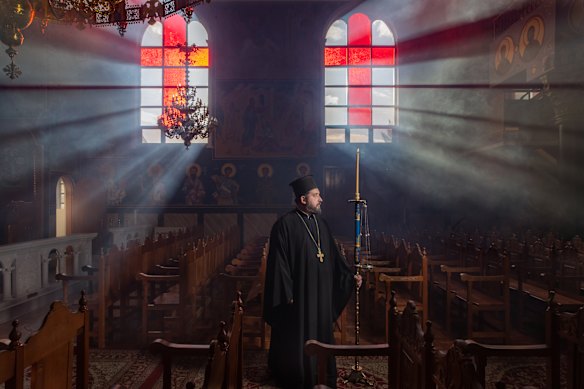
Reverend Father George Frangos at the Greek Orthodox Church in Thomastown.Credit: Simon Schluter
The “Jesus rays” streaming through the high windows and the strong contrast between light and dark elevate this simple portrait of Reverend Father George Frangos by Simon Schluter into something transcendent.
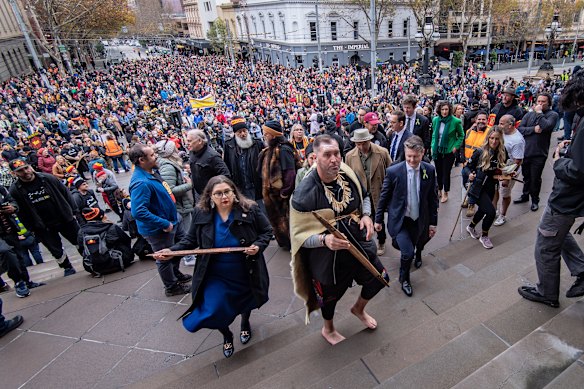
Travis Lovett arrives at the state parliament after his 500-kilometre walk across western Victoria in June this year.Credit: Justin McManus
Photographer Justin McManus captured the magnitude of the 500-kilometre Walk for Truth in a single frame, documenting the journey led by Yoorrook commissioner Travis Lovett. The image distills the profound gravity of this moment for First Nations people, reflecting both the powerful momentum towards Treaty and the enduring hope it creates for the future.
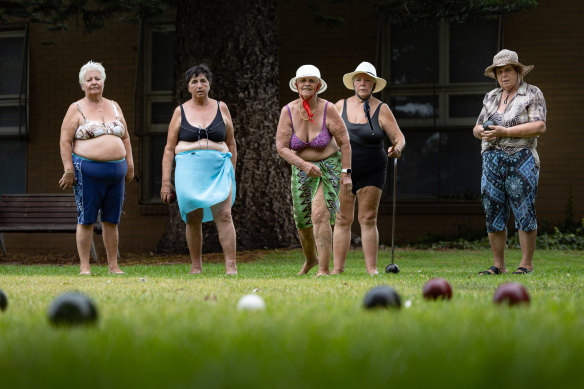
Women play bowls in Altona on a hot day exceeding 40 degrees in Melbourne.Credit: Jason South
When we ask our photographers to shoot for a hot weather story, they invariably come back with sunbathing beachgoers at St Kilda. Jason South’s iconic photo of these women dressed for the 40-degree heat playing lawn bowls in Altona was so far removed from the typical shot that it’s now the official benchmark for all future hot-weather assignments.

Police searching a plantation in Porepunkah in September.Credit: Joe Armao
Emerging almost supernaturally from the mist and mud of Porepunkah in winter, Joe Armao’s photo captures the despondency of the Victoria Police Special Operations Group members following their fruitless search for Desmond Freeman. The image documents a sombre moment in the hunt for the man linked to the August shooting of two police officers.
Start the day with a summary of the day’s most important and interesting stories, analysis and insights. Sign up for our Morning Edition newsletter.
Most Viewed in National
Disclaimer : This story is auto aggregated by a computer programme and has not been created or edited by DOWNTHENEWS. Publisher: www.smh.com.au