Marc Jocum
When Australians invest in global markets, they are essentially making two decisions at once. The first is an investment call on the underlying asset. The second, which is often overlooked, is a currency bet.
For many investors, it’s this hidden currency exposure that can come as a surprise. Movements in the Australian dollar can quietly add to or erode returns from international investments and have the potential to overwhelm the performance of the asset itself.
If the Australian dollar rises by 10 per cent against the US dollar, the value of that investment falls by roughly 10 per cent when converted back into Australian dollars, even if the underlying shares have not moved. The opposite is also true: if the Australian dollar falls, unhedged offshore investments receive a boost.
Currency moves can work for you or against you, but they are separate from how well your investment is performing. You can be right on the investment and still be disappointed by the return.
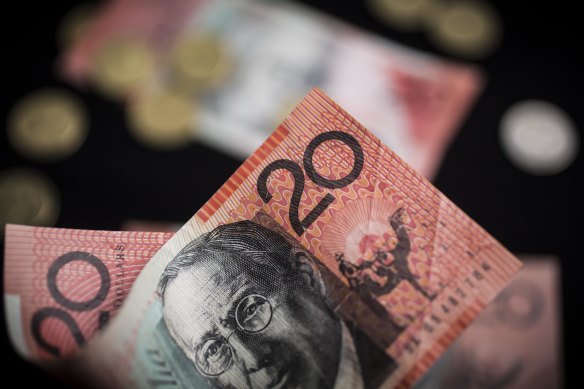
The Australian dollar has staged a notable recovery, rising around 8 per cent through 2025 and over 6 per cent so far in 2026. Now trading around US71¢, levels not seen in over three years, this strength has been driven by a combination of broad US dollar weakness and shifting interest rate expectations.
At its first meeting of the year, the Reserve Bank unanimously decided to lift rates by 25 basis points. At least one more hike is expected in 2026, putting further upward pressure on the Aussie dollar.
Currency risk is not something investors need to fear, but it is something they should understand.
For Australian investors with unhedged offshore exposure, a strengthening currency can quietly act as a headwind. Even when global markets are performing well, gains can look far more modest once translated back into Australian dollars. For those uncomfortable with that volatility, currency risk deserves closer attention.
This is where currency hedging comes in. Hedging is best thought of as a form of insurance. It aims to neutralise the impact of currency movements, so the return you receive reflects only the change in value of the underlying asset, rather than swings in the exchange rate.
Currency-hedged ETFs do this automatically using financial contracts that offset movements between currencies. Whether to hedge, however, is not a one-size-fits-all decision. It depends on an investor’s risk tolerance, objectives and time horizon.
For short-term tactical investors, hedging can make a lot of sense. Currency movements can be volatile in the short run, and sharp moves in the Australian dollar can quickly wipe out gains from offshore markets. Hedging helps reduce that uncertainty and can make outcomes more predictable.
Conservative investors may also find hedging appealing. If your priority is capital preservation or lower volatility, reducing exposure to currency fluctuations can help ensure that returns are not derailed by factors unrelated to the performance of the investment itself.
Income-focused investors should also pay attention to currency risk. Without hedging, currency swings can cause income payments to fluctuate, which may be undesirable for retirees or those relying on regular cash flow.
Over longer time frames, however, the case for hedging becomes more nuanced. Historically, currency movements can be cyclical. What goes up often comes down, and vice versa.
There is also an important diversification trade-off. The Australian dollar has historically behaved as a “risk-on” currency, often weakening during periods of global market stress. When this occurs, unhedged international investments can receive a natural boost, helping to offset equity market declines.
By fully hedging currency exposure, investors give up this potential upside and with it, a useful shock absorber when markets become turbulent.
For this reason, many investors choose not to make an all-or-nothing decision. A common approach is to split exposure between hedged and unhedged investments. This can reduce overall currency risk while retaining some potential benefit if the Australian dollar depreciates.
Investors who want to manage foreign exchange risk tactically may prefer a higher allocation to currency-hedged funds, while those with greater risk tolerance or longer time frames may lean more heavily toward unhedged exposure.
The good news is that this choice is becoming easier. ETF providers have increasingly responded to investor demand by offering global equity funds in both hedged and unhedged versions, allowing investors to tailor their portfolios to their own comfort levels and currency outlook.
It’s also worth noting that hedging typically comes with a small additional cost compared to unhedged investments. Like any insurance, that cost may be modest relative to the value of the protection it provides, particularly during periods of sharp currency movements.
At its core, currency risk is not something investors need to fear, but it is something they should understand. By recognising how exchange rates affect returns, Australian investors can better protect their portfolios and invest globally with greater confidence.
Marc Jocum is a senior investment strategist at Global X ETFs.
- Advice given in this article is general in nature and is not intended to influence readers’ decisions about investing or financial products. They should always seek their own professional advice that takes into account their own personal circumstances before making any financial decisions.
Expert tips on how to save, invest and make the most of your money delivered to your inbox every Sunday. Sign up for our Real Money newsletter.
From our partners
Disclaimer : This story is auto aggregated by a computer programme and has not been created or edited by DOWNTHENEWS. Publisher: www.smh.com.au