
If you’re still getting your head around everything from registering your address in Germany to getting a residence permit to learning the language, here are the basics about what you should know, and a list of articles that may help.
Moving to a new country is never easy, but starting a new chapter in Germany involves navigating a number of bureaucratic hurdles and adapting to a way of life that can leave many newbies frustrated and confused.
If you’re feeling a little overwhelmed by all the challenges, don’t worry – almost everyone who has ever moved to Germany has felt the same at some point (and many of us still do from time to time).
From the paperwork to start on to beginning with German language studies, here’s what you should know as well as a number of helpful articles that offer more detail:
Paperwork
It’s not the most fun topic to begin with, but anyone who has just touched down in Germany (or plans to soon) will need to get their documents in order to ensure they can legally stay in the country.
Starting at the top, if you’re coming from outside Europe, you’ll probably be surprised to learn that you need to register your place of residence with the authorities — at your local citizen’s office (Bürgeramt). The registration certificate you’ll need is called a Meldebescheinigung, but you’ll often hear people refer to this a getting your Anmeldung.
In some cities, like Berlin, there is an online portal to apply for or change your registration but if you aren’t an EU or EEA citizen with a working electronic ID card, you’ll need to get an appointment and pay a visit to the Bürgeramt anyway.
Once you’re registered in Germany, you’ll receive a tax ID number in the mail — save that, it’ll be needed when you start a job.
You’ll also receive some information about the broadcasting licence fee (Rundfunkbeitrag), also called the radio tax or tv tax. If you live in a shared apartment that payment is most likely already being paid by your roommates, but if you live alone you’ll need to start paying promptly.
If you don’t yet have a European bank account with an IBAN, you’ll also want to get that set up. And you may want to get a German phone number as well — data plans in Germany are quite cheap, usually far cheaper than the cost to maintain an international number with an international data plan.
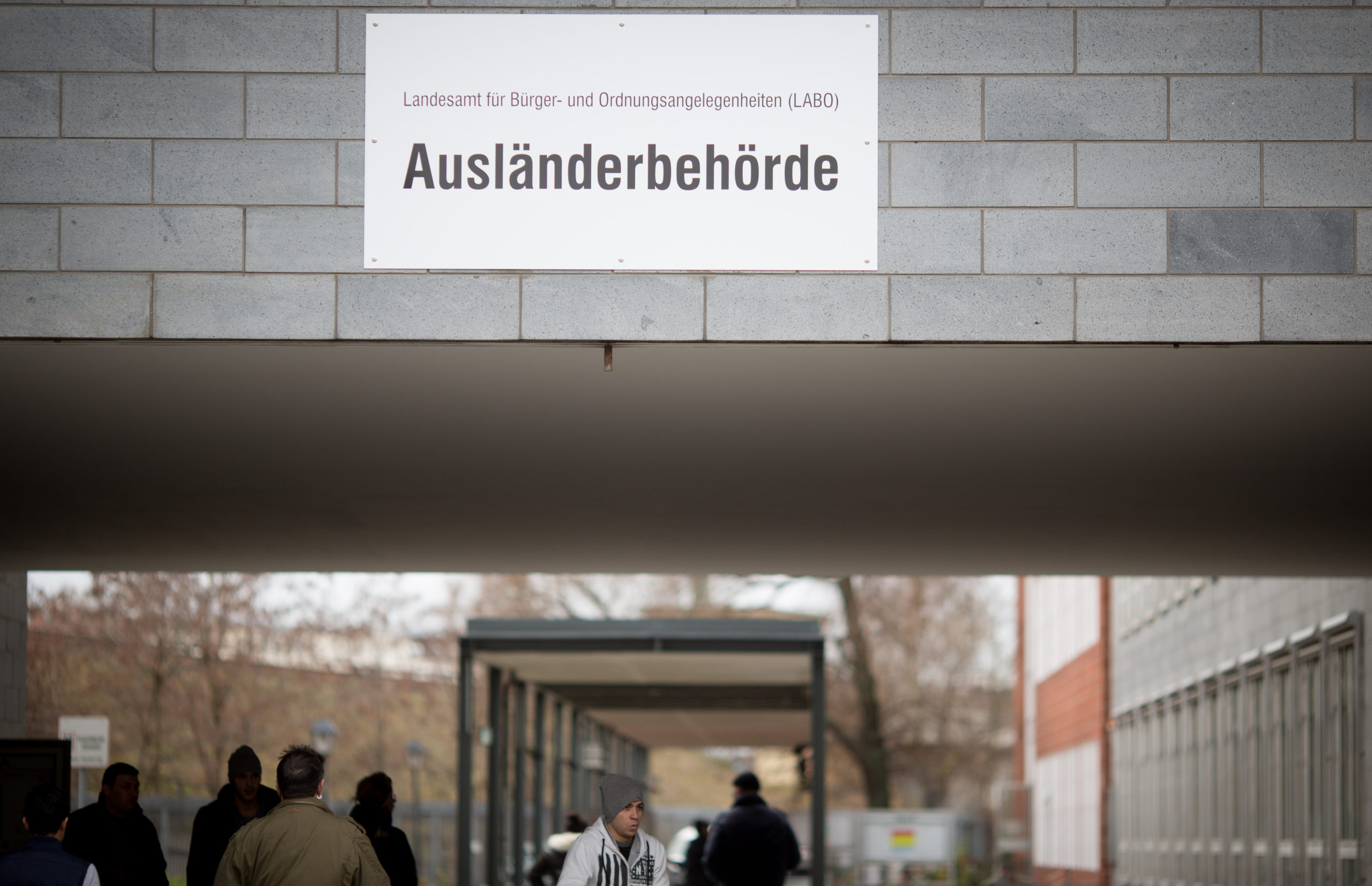
The entrance to the Foreigner’s Office (Ausländerbehörde), which has become a symbol of red tape in Germany. Photo: picture alliance / Kay Nietfeld/dpa | Kay Nietfeld
We’ve rounded up all the essential items you’ll want to get in your first weeks and months in Germany below.
CHECKLIST: The most important paperwork you need to settle in Germany
And for any readers coming from the United States, we’ve compiled some of the helpful things to know as you prepare for your move HERE.
Healthcare
Everyone living in Germany must have health insurance (Krankenversicherung). You’ll need to secure either public or private health insurance that meets Germany’s basic requirements before you can obtain a residence permit.
Health insurance in Germany is not free, but if you take up regular employment the monthly cost to maintain it will be deducted from your pay check, and you’ll find that most required medical care including doctor’s visits and many medications are completely covered.
The vast majority of people in Germany have public health insurance, which is usually cheaper.
However, if you earn a high salary (above €73,800 per year as of 2025), you may find that your monthly contribution is cheaper with some private health insurance plans. Additionally, people who move to Germany later in life may find that they’re too old to register for a public insurance plan in Germany. Generally it is difficult to get on a public health insurance plan in Germany after the age of 55.
If your currently wondering whether public or private insurance is better for you this article sums up some of the key points to consider.
You can find more useful explainers and keep up with the latest updates on the topic on our ‘health insurance’ news page.
READ ALSO: The check-ups you can get in Germany with statutory health insurance
Residence permits
If you belong to a country that does not have a visa liberalisation agreement with the Schengen states, then you’ll need a Schengen visa or another residence permit for Germany before you can enter the country.
But if you come from a country that is freely allowed to enter the Schengen zone — such as citizens from the UK, USA, Australia, Canada and Korea, for example — then you can enter Germany and stay for up to 90 days before you’ll need a longer-term residence permit.
You’ll need your address registration document and health insurance coverage before you can apply, as well as a few more documents, depending on the type of residence permit you’re seeking.
Gather all of these, make copies of any official documents, and then make an appointment with your local foreigner’s office (Ausländerbehörde) to hand in your application.
In some places, like Berlin, you can submit your application online but you’ll still need to present your documents in person at the immigration office before you are granted a residence permit.
READ ALSO: Expert tips for your next appointment at a German immigration office
Applying for a residence permit in Germany can be an exercise in patience, as many immigration offices are known to be extremely slow to process applications and issue permits. But don’t worry, as long as you’ve submitted your application for a residence permit, you retain the right to remain in Germany until your application has been processed. In this case you’ll get a temporary stay permit, called a Fiktionsbescheinigung.
Unfortunately, the immigration fun does not stop there. In fact, it basically never stops as you have to regularly renew your residence permit. The only way to be free of it is to gain German citizenship or permanent residence, both of which are massive administrative tasks as well.
If you’re planning to settle in Germany for the long-term it’s better to simply accept this fact now — your life is going to feel at times like an unending battle against a bureaucratic machine. Arm yourself with knowledge, patience and ideally some friends who are German speakers and/or veterans of the process.
READ ALSO: What’s the difference between German citizenship and residency?
Learning German
If you haven’t already started, then now, rather than later, is always the best time to start making an effort to learn some German.
The good news is that this can, at times, be a fun and rewarding experience. Being able to understand and speak any level of German will undoubtedly improve your experience in the country to an enormous degree. If you have the time to enrol in in-person language classes, it can be a good way to make new friends in your community.
If you’re just starting out, taking at least a few classes is recommended. More good news here is that there are some free or cheap resources to help kick-start your language learning journey. You may may be able to enrol in classes at your local Volkschule, for example.
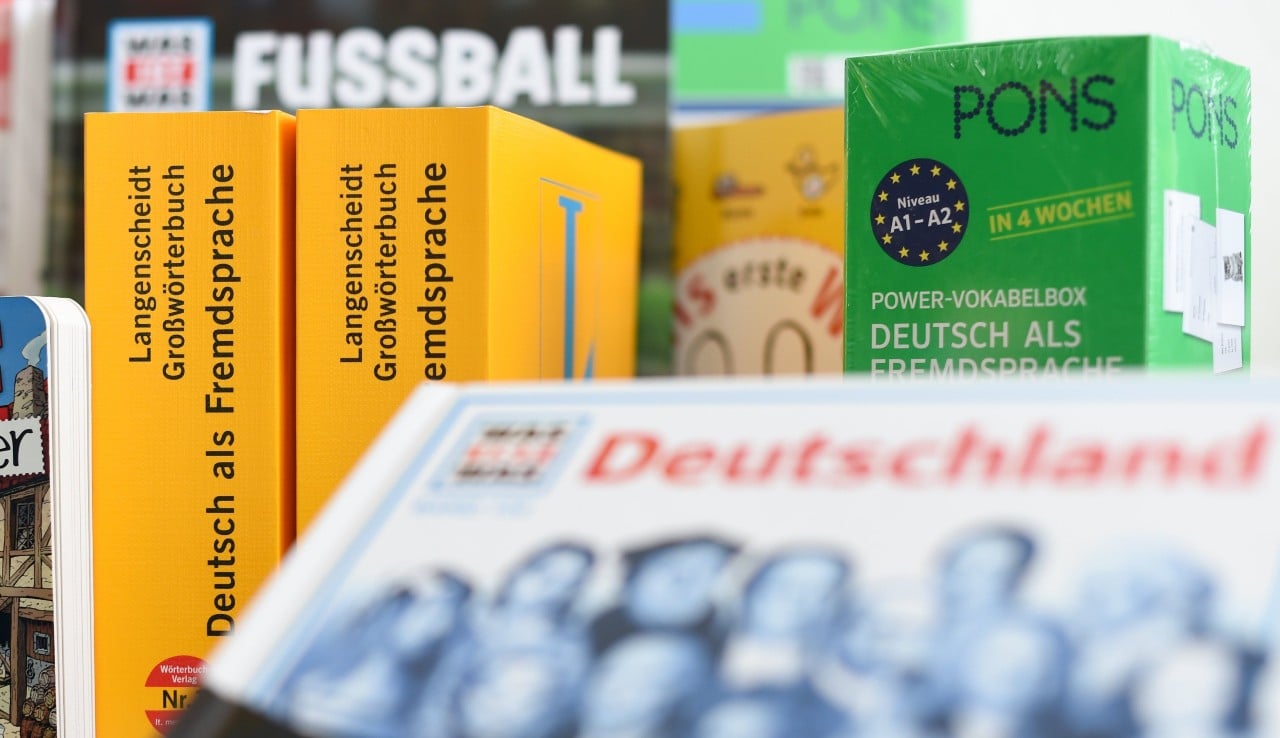
German learning resources at a language school. Photo: picture alliance/dpa | Arne Dedert
Once you’ve achieved a basic German foundation, there are plenty of free online resources, like the Easy German Youtube channel, or Tagesschau’s news “in simple language” that can help you continue learning.
You can also keep an eye on our Learning German and German word of the day news pages for articles about resources and helpful words and phrases to know.
READ ALSO: The seven stages of learning German every foreigner goes through
Many people initially aim to learn German up to B1 level, according to the Common European Framework of Reference for Languages (CEFR). Speaking at this level allows you to navigate most day to day interactions, and also happens to fulfil the basic language requirement for permanent residency or citizenship.
Reader Questions
Do you have other questions about life in Germany? Head to our Reader Questions section where we answer questions on all sorts of topics in daily German life. You can also leave your questions in the comments section below.
Disclaimer : This story is auto aggregated by a computer programme and has not been created or edited by DOWNTHENEWS. Publisher: thelocal.de



