
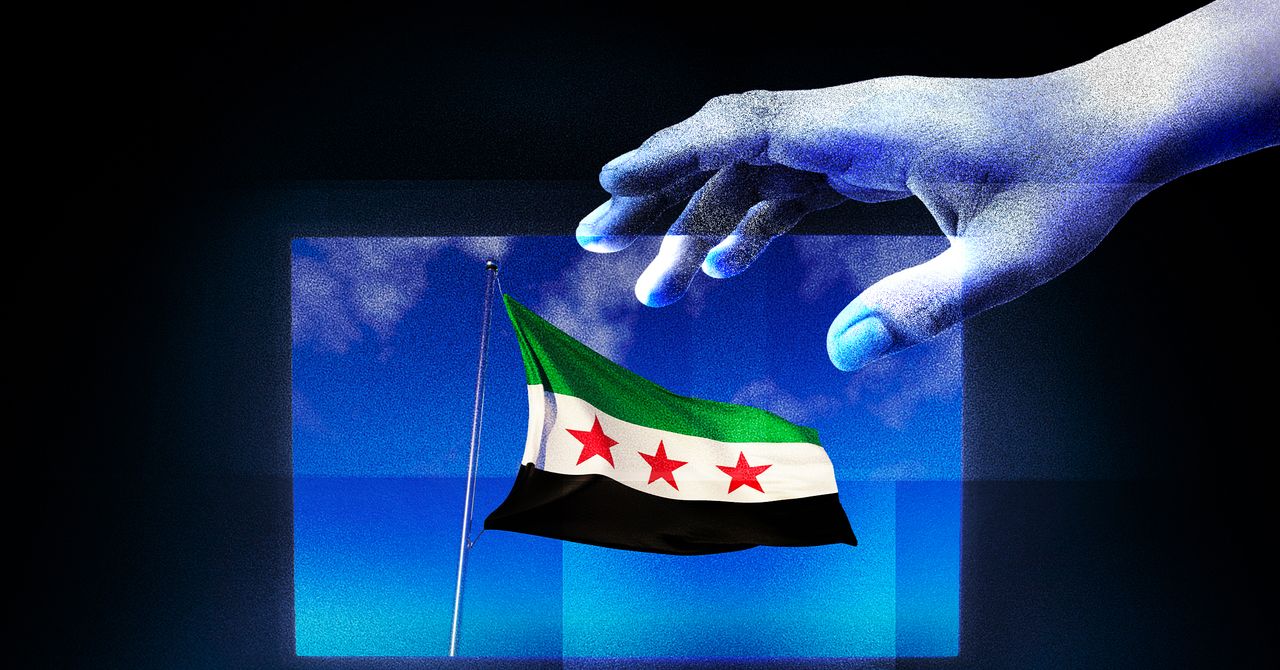
When a wave of unusual activity swept through Syrian government accounts on X in March, it first looked like pure chaos—trolling, parody names, and even explicit content. But beneath the noise lay something far more telling: a state still struggling with the most basic layer of its cybersecurity.
In early March, several official Syrian government accounts on X—including those linked to the presidency’s General Secretariat, the Central Bank, and multiple ministries—were hacked. The compromised profiles posted “Glory to Israel,” retweeted explicit material, and briefly renamed themselves after Israeli leaders.
Authorities moved to restore control within days, with the Ministry of Communications and Information Technology announcing “urgent steps” to recover the accounts and prevent further breaches. Yet what remained unsettled was the deeper question: How secure is the state’s digital front door?
In a government now dependent on commercial platforms for communication, losing a verified account doesn’t just disrupt messaging—it silences the state’s voice.
When the State Stops Speaking for Itself
At first glance, the breach appeared politically charged. Pro‑Israel messages circulating on verified government accounts during a tense regional moment fueled speculation over motive and attribution. No group claimed responsibility, and officials did not clarify whether internal systems were compromised.
To analysts, the episode pointed less to a geopolitically driven hack and more to a familiar, systemic weakness.
“We still do not know exactly what happened. Whether the accounts were directly hacked or accessed through weak or reused credentials, the conclusion is much the same: very poor digital security practices,” says Noura Aljizawi, a senior researcher at the Citizen Lab, a research organization that monitors threats to civil society in the digital age.
The ministry said it had coordinated with account administrators and X to “restore control and strengthen security,” promising new regulatory measures soon. The perpetrators have not been publicly identified.
One Weak Link, Multiple Accounts
Before the accounts were recovered, several displayed identical pro‑Israel messaging—a detail that suggested shared credentials or centralized access, according to platform monitoring data.
That assessment was echoed across the cybersecurity community.
“The fact that several official X accounts seemed to fall in quick succession suggested some form of centralized control, possibly with the same credentials used across multiple accounts,” says Muhannad Abo Hajia, cybersecurity expert at Damascus-based group Sanad. “That kind of setup is not inherently wrong, but only if proper safeguards are in place.”
Experts say this pattern is consistent with common failures: password reuse, phishing attempts, compromised recovery channels, or the absence of multifactor authentication (MFA). In practice, one careless password or a single compromised recovery email could give outsiders control of multiple institutions.
“Account takeovers of this kind are common enough globally and usually result from familiar vulnerabilities: phishing, password reuse, compromised recovery emails, weak credentials, or the absence of MFA,” says Rinad Bouhadir, a cybersecurity engineer tracking the region.
A System Built on Fragile Foundations
The breach, specialists say, reflects not a targeted cyber‑offensive but deeper structural flaws.
“The current authorities inherited a near-nonexistent cybersecurity system and have yet to treat repairing it as a real priority,” says Dlshad Othman, a Syrian cybersecurity specialist.
He believes the incident likely stemmed from either a centralized unit managing several official accounts or a shared third‑party tool used across ministries—both of which create a single point of failure.
That design makes multiple agencies vulnerable at once. In moments of heightened tension, even one falsified post from a verified government account could stoke panic, misreporting, or escalation before correction.
A verified government account can be weaponized to spread false information in real time, particularly during periods of regional escalation, when confusion carries immediate real-world risk.
The breach also highlights a broader gap in awareness. “Syrian government organizations and the general public lack awareness of basic cybersecurity fundamentals,” Abo Hajia says. “We wait to get hacked before taking precautions and understanding their importance.”
Even simple protections—two‑factor authentication among them—remain inconsistently applied, Aljizawi notes.
Image vs. Reality
In the past couple of years, Syria has been promoting an image of technological modernization—digital government platforms, talk of infrastructure reform, and the language of innovation. But analysts say those appearances often mask fragile systems and outdated practices.
“More troubling still are the attacks the public never hears about,” says Othman, suggesting that what surfaced on X may be only a fraction of a broader, ongoing vulnerability. “Syria has repeatedly been targeted by serious cyber operations, including attacks on its telecommunications infrastructure and top-level domain, by both regional and international state-backed actors.”
For Mohammad Mostafa, a digital expert at Sync, the lesson is simple: “This happened because of basic errors; it could have been the result of a targeted phishing attempt against a communications staffer, password reuse across multiple government profiles, or a compromised recovery email or phone number tied to several accounts at once. None of those scenarios requires elite capability. They require basic lapses.”
Addressing those lapses, analysts argue, requires more than emergency recovery plans. True security means treating digital protection as national infrastructure, on par with physical defense, and investing in training, standards, and institutional accountability.
Until then, Syria’s online confidence will remain what experts describe as a thin digital facade—one breach away from silence.
This story originally published on WIRED Middle East.
Disclaimer : This story is auto aggregated by a computer programme and has not been created or edited by DOWNTHENEWS. Publisher: wired.com







