
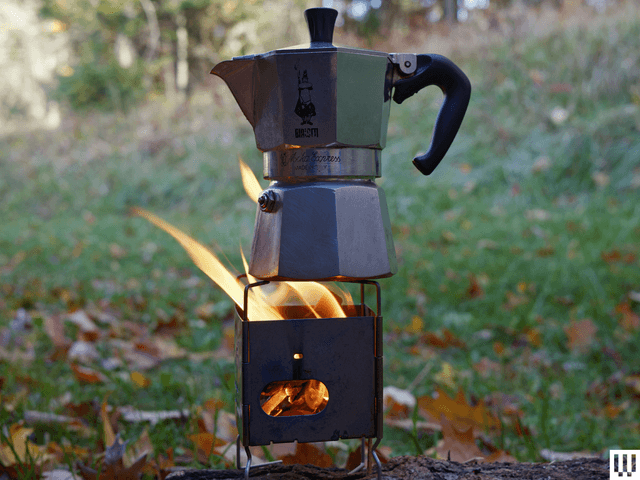
Coffee is the original office biohack and the nation’s most popular productivity tool. As we lose sleep to the changeover to daylight saving time, the caffeine-addicted WIRED Reviews team is writing about our favorite coffee brewing routines and devices that’ll keep us alert and maybe even happy in the morning. Today, operations manager Scott Gilbertson expounds on the perfect simplicity of the moka pot. In the days after, we’ll add other Java.Base stories about other WIRED writers’ favorite brewing methods.
Years of travel and a love of repair has given me a special appreciation for simple devices. A pen and paper is still the simplest way to write. A cast-iron pan is the simplest way to cook. And a moka pot is the simplest way to brew coffee.
What I love about the moka pot isn’t just the results I get from it. I do love the flavor, especially when paired with a nice dark, chocolatey, smokey roast, but the moka pot is about more than flavor. It’s also about ingenious simplicity and a design that has lasted nearly a century.
Simple Beginning
The moka pot’s exact origins depend on who you ask, but it was first manufactured and popularized by an aluminum manufacturer named Alfonso Bialetti and his son Renato, who started mass-producing them the same year. Today, Bialetti Industries still makes the Moka Express. The iconic logo image of a short, squat, heavily mustached man is indeed based on Bialetti himself.
If you want some idea of Renato Bialetti’s commitment to the device that made him famous, consider that when he died in 2022, his ashes were interred in a large moka pot. He isn’t the only one who revered the design. The moka pot is featured in museums around the world, including the Museum of Modern Art. Its iconic octagonal shape makes it one of the most recognized coffee brewers in the world.
The moka pot is a pressure-driven stovetop (or campfire top, though this requires close attention) coffee brewer that works something like a percolator. The Moka Express consist of four parts, split into two chambers. The bottom is the water reservoir which heats up on the stove. Into this, you put the brewing basket which holds your grounds. The top consists of a long tube in the center of a holding chamber. On the bottom of the top piece, there’s a metal filter ringed by a rubber (or silicone on some models) gasket. The top and bottom screw together.
As the water heats it passes upwards, through the basket of grounds, and eventually out of the tube. The extraction sits above the grounds and the metal filter keeps everything in place. It’s ingeniously simple.
Moka pots are often called stovetop espresso, but that’s a misnomer. They do build some pressure, usually about 2 to 3 bars, but nowhere near the 9+ bars that espresso machines produce. But there’s no denying that the dark, rich, almost sludgy results of a moka pot extraction are as close as you can get to espresso without an espresso machine. In my experience, moka pot extractions are often closer in flavor, if not texture and crema, to true coffeehouse espresso than most home espresso machines. I would, and do, take a moka pot over every other method of home brewing that I’ve tried.
Simple Brewing

As with anything you’ve done for years, I have my own particular way of brewing with the moka pot. The traditional way is to fill the lower chamber with room temperature water, fill the basket with grounds (coarser than espresso, finer than drip), screw the two parts together, and pop it on the stove. This makes a fine cup of coffee and is probably how most people do it.
World barista champion James Hoffman has a slightly different method where you pour boiling water (or very hot water) into the bottom chamber of the moka pot and then put it on the stove. The theory is that in the cold water method, the extended heating time means that the grounds get heated as well, which leads to a more bitter taste. No offense to Hoffman and others who swear by this method, but ultimately the water reaches the same temperature in either case, so it’s hard to imagine what the difference is there. Call me a Philistine, but I did a side-by-side blind taste test of both methods and I picked the traditional method.
I’ve been drinking exclusively moka pot coffee for well over a decade now, and my personal method is the traditional method, but I also gently tamp the grounds down (I know, the horror, not endorsed by anyone but me). I don’t espresso-style tamp them, just a light press to get a little air out of there and slow down the water moving through.
What I have found makes a far bigger difference than the initial water temperature is the amount of flame heating your moka pot. I am loath to brew a moka pot on a traditional stove, as it’s very hard to get the flame down where I like it. In fact, odd though it sounds, the best thing I have found for brewing a great moka pot is a Trangia alcohol stove with the simmer ring on. I started using this method because I wanted a silent way to make coffee at camp in the morning, but I liked the results so much I use it all the time now, even at home.


There’s one bit of silliness I’ve seen around the internet that needs to be addressed. Well, technically, that’s not true. I don’t waste my time on the internet. But my editor tells me that there is a trend of people saying you should never wash your moka pot. That’s crap. Even the manufacturer, Bialetti, says right on its website that you should wash your moka pot, otherwise the buildup of coffee oils and fine silt will burn and make your extractions bitter.
What you shouldn’t do is use soap or put it in the dishwasher. Just wash it off with water and wipe it dry with a clean cloth. Once a month or so, I pull out the rubber washer and take off the metal filter and wipe the inside of that down as well.
If you have hard water, you might see an accumulation of limescale in the water chamber. Bialetti recommends cleaning this with a mixture of baking soda, white vinegar, and lemon juice. An even better idea would be to use another water source to brew your coffee, as the minerals in hard water definitely affect the taste of the final product as well.
I like the traditional aluminum model from Bialetti, and I also like the smallest one, the 3-cup model (which makes about 3 to 4 ounces, not cups). Sometimes I worry about the aluminum leeching. I did once buy the Venus model, which is stainless steel, but I didn’t like the results nearly as much. However, if you have an induction cooktop, the Venus is compatible.
Disclaimer : This story is auto aggregated by a computer programme and has not been created or edited by DOWNTHENEWS. Publisher: wired.com



