Jonathan van Ness breaks down the Fab Five drama that’s plagued this final season, and looks at life beyond the grind of reality TV.
Can you believe? After 10 seasons, eight years and more than 80 “heroes” lives changed for the better, Queer Eye has come to an end. But the victory lap for this famously wholesome makeover show was cut short when one of the Fab Five, Karamo Brown, spectacularly pulled out of his press commitments.
In a statement given to breakfast TV presenters the morning of the group’s interviews, Brown claimed he had been “mentally and emotionally abused [on the show] for years” and advised by his therapist to not attend.
Deputy TV editor Meg Watson spoke to Queer Eye’s grooming expert Jonathan van Ness about the controversy, the end of this era and what comes next as they bring a stand-up show to Australia.
Meg Watson: Let’s talk about the difficult thing first. Karamo’s statement was very serious. Who do you feel it was directed towards? And have you spoken with him since?
Jonathan van Ness: I haven’t spoken with Karamo since. I think it’s very hard to prioritise your mental health and sit out of an interview. I applaud him for doing that. When I look back at my time on Queer Eye, I think we navigated a really complex situation. I am proud of all of us for doing what, I think, was our best.
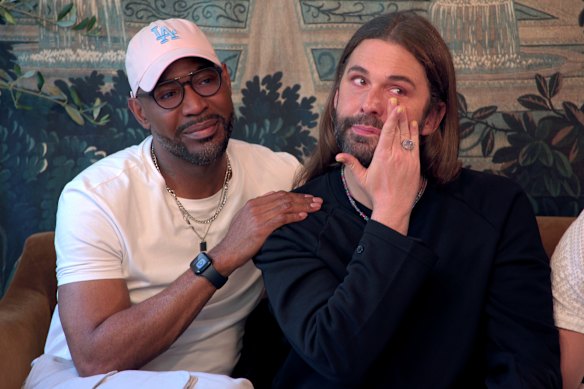
MW: Do you feel that the drama has overshadowed the end of the series? This is a show that’s been on for almost a decade, but its ending has now been so tied up in tabloid headlines. Fans are looking at who’s following whom on Instagram, what Bobby is saying and the meaning of certain Chappell Roan songs [Berk, who left the show two seasons ago, posted a smiling photo on social media shortly after Brown’s bombshell soundtracked by My Kink is Karma]. How do you feel about how fans are engaging with this moment?
JVN: It’s not how I wish things would have ended. But I also don’t want to control what people think … I’ve tried to be honest about what I can do better on and who I am as a person. I have so many exciting things in my future, I don’t want to re-litigate something that’s in my past.
What people talk to me most about with Queer Eye is that it got them through a moment in their life that was sad or dark, that it brought them some joy or connection … That’s what I hope the show’s legacy can be.
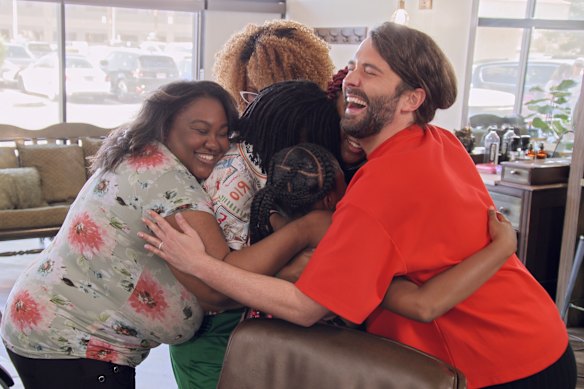
MW: It must feel strange because, in some ways, it’s a private workplace situation. Do we, as viewers, have a right to know exactly what goes on behind the scenes? But, on the other hand, this is also a show about the joy and connection of the Fab Five, where people have essentially formed parasocial relationships with you. I think a lot of viewers want to believe those friendships are exactly what we see on screen.
JVN: It’s a tricky thing because… it’s not like I’m editing that show. The five of us never said, “can you edit this to make it seem like we live together?” Or “can you edit this together to make it seem like we are just the absolute best of friends”. In reality, we met each other at casting …
As a viewer, it’s valid. If I was watching a show and then found out that two people that I thought were really close weren’t getting along, I can imagine that I would be disappointed. But also, we’re in the midst of a pretty intense rollback of women’s rights, queer people’s rights, immigrants rights, human rights – all of which Queer Eye has given me the platform to talk about – so it just feels kind of trivial to talk about what is workplace dynamics between five people who are all over the age of 35.
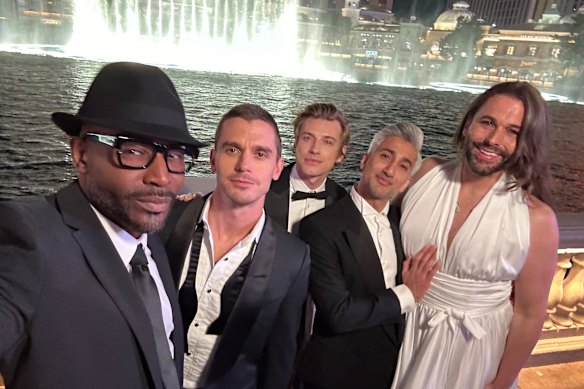
I have so much gratitude for the opportunities that we were given and what we got to do together. It doesn’t mean that I’m ecstatic about how the show ended, but I’m grateful for everything that it taught me.
MW: The show was such a cultural phenomenon. Those first couple of seasons especially were really emblematic of the political moment. After Trump’s win in 2016, there was this push for people to understand each other better, to bridge the gap in the political divide. How do you feel about that mission now? It feels like we’re in a very different political climate today.
JVN: I think understanding and compassion are always going to be central to any society … It’s not just that people are politically polarised on opposite ends of the spectrum, it’s also that we have a lot of people who don’t know their power, or they don’t think their vote matters, or they’re just completely overwhelmed by politics generally.
I think [as a culture] we tend to push “all or nothing” thinking – whether it’s diet culture or politics or Queer Eye. Like, yes, don’t hold space with someone who is horrifically opposed to your human rights. But we also have to be a little bit more patient so we can get people to understand their power. I just want to make the [political] conversation a little bit more welcoming.
MW: Your podcast Getting Curious felt very fresh in that way, a way of integrating heavy political ideas and making them accessible and fun. And now you do that with your stand-up comedy too. What should audiences expect from your upcoming show?
JVN: I’m definitely taking on politics. I don’t know if everyone in Australia knows, but I was used in this Trump campaign ad that [was everywhere]. I was so sad to see my face on it, and it was a political influence that I didn’t know I had: to incentivise people to vote for Trump because I looked that good in a dress.
I discuss that fallout, as well as the fallout from the 2024 election. But really in Hot and Healed, I’m talking so much about my healing journey, the messiness of what the healing journey is, and how I’ve personally healed from the gender binary, from ageism, from the patriarchy, and I’m also taking on racism in a way that I haven’t gotten to talk about yet. We’re talking to the white people, honey!
It’s definitely my most controversial show. It’s my most political show – and I think my most unapologetic show. This is my fourth stand-up hour that I’ve toured around the world and I feel like, “okay, I’m ready to have these conversations”.
MW: What kind audiences do you find come to the shows?
JVN: We have a lot of women, a lot of allies. There is a cohort of straight men who I have always been convinced are getting dragged there against their will by their partner, thinking that it’s a live makeover show. And then we have a large cohort of queer fans as well.
MW: I saw a comment you made about the end of Queer Eye saying this was the last season “in this form, at least”. What does that mean?
JVN: I’ve been saying for years that it would be cool if they did a Voice-style approach where you could have some of the original Fab Five, you could have some of the Brazilian Fab Five, you could mix and match so it could be more diverse, intergenerational and sustainable. It would mean people wouldn’t have to be in a different city every year, in the same trailer as five people for the next decade…
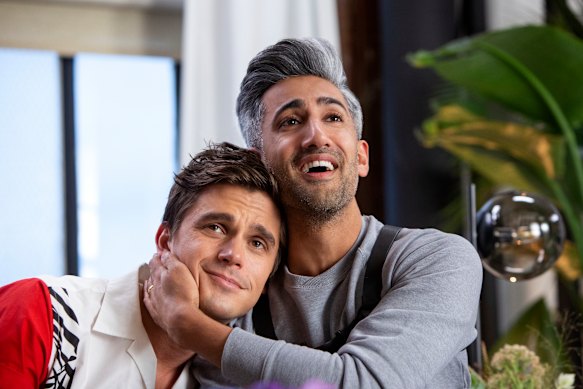
If I did have any regret over Queer Eye, it’s that. I knew pretty early that it wasn’t sustainable. I’ve heard huge figures of what Netflix invested in the marketing of Queer Eye when it first came out, and [it’s difficult] when a corporation’s investing in you like that. I was in recovery, trying not to relapse and keep my head on straight … The amount of pressure that we were all under – and becoming the world’s best friend overnight – wasn’t sustainable. Living in a different city every month wasn’t sustainable.
The five of us were made into these unhuman characters of ourselves, like we were superheroes or something.Jonathan van Ness
I tried to tour my comedy as well in seasons three and four, and I think that was the basis for what was in Rolling Stone, and what some of my negativity was. [A 2024 story cited multiple unnamed sources from Queer Eye claiming van Ness was emotionally “abusive” on set and had “rage issues” which allegedly contributed to a rift within the cast. Van Ness chose not to comment at the time.]
I was so uncomfortable with the stardom, so uncomfortable with the attention. There was also a horrific personal situation that I was dealing with that no one knows about … And, to deal with the stress, I booked myself solid with work. Every weekend I went and did a show, and that meant that on Fridays, on a reveal day, I would be really stressed out. I’d be really overwhelmed.
After those seasons, [production] were like, “queen, you’re not your best self on Fridays”. I’m paraphrasing here. And they said, “moving forward, you can’t be touring while doing Queer Eye”.
Once that decision got made, I was happy as a clam. But if someone had that experience [with me] in 2018 or 2019, then that was the experience they had. I would have loved to personally repair that with people. But sometimes people would rather like go talk to a journalist and say that you’re a horrific monster instead.
MW: Are you speaking about the unnamed production sources cited in Rolling Stone, or castmates?
All of it. There’s so much that goes on behind the scenes. But you’re still a person. Whether you’re a brand, or whether you’re on a really successful show, you’re still just like a person who’s doing their best.
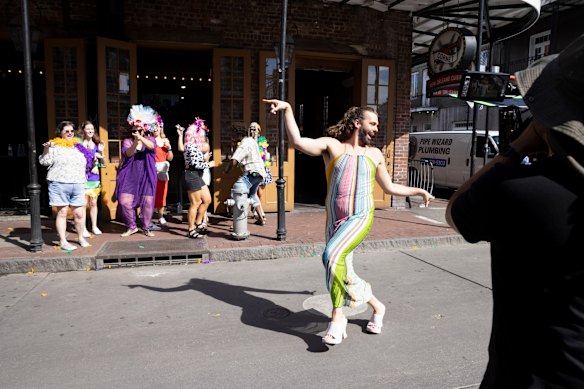
MW: Do you feel like you were in a better place in the later seasons?
JVN: Yes … I really improved. I got a corporate coach. I really got it together and learned to deal with the pressure better, and had been dealing with it better for a long time.
But I do hope someday, though, the show can come back with a more sustainable model. I think the five of us were made into these unhuman characters of ourselves, like we were superheroes or something. That edit’s impossible to live up to.
This conversation has been edited for length and clarity.
Jonathan van Ness is bringing their show, Hot & Healed, to Sydney’s Opera House on February 26 and Melbourne’s Hamer Hall on March 1.
Find out the next TV, streaming series and movies to add to your must-sees. Get The Watchlist delivered every Thursday.
Disclaimer : This story is auto aggregated by a computer programme and has not been created or edited by DOWNTHENEWS. Publisher: www.smh.com.au