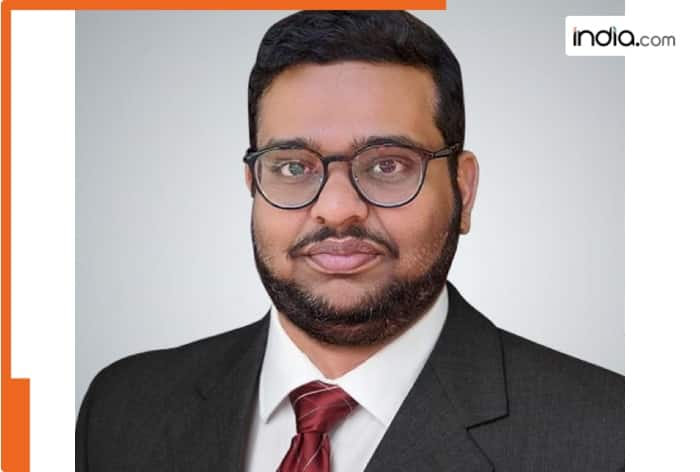
Venkata Devarakonda bridges engineering and commerce, leveraging patented electrical innovations and value engineering to deliver sustainable, cost-effective, and certified HVAC solutions.

Published: February 9, 2026 12:52 PM IST
The process of achieving sustainable infrastructure is frequently described in the context of policy and desire but its actual implementation is to be made in the fastidious design of primary systems. This is more the case than in the area of heating, ventilation, air conditioning and water heating, where optimistic performance goals are faced with the reality of the thermodynamic laws, regulatory baroques, and what mass production requires as reality. Advancement on this is not invention, but a stern ordeal of assimilation. It requires an expert who could move between the abstract computational simulation with such software as ANSYS and MATLAB and the actual realities of agency certification by such standards as ASME, UL and Department of Energy. This is a position that combines an unusual technical thoroughness with a sharp sense of commercial and regulatory acuity in a level of expertise that is uncommon and invaluable.
The career of Venkata Rama Gautham Devarakonda that gives an interesting case study of such a rigorous type of engineering leadership. A systems-thinking mindset has characterized his career, starting with the technical backyard work and leading up to a high level of leadership in value engineering and product development. He is a specialist in finding out and deconstructing the systemic bottlenecks that impede the universal use of the state-of-the-art thermal technologies especially with global markets decisively shifting into electrification. This is not gradual adjusting but root cause problem fixing, success here is evaluated by the technical beauty of a solution, whether it can be manufactured or not and its readiness to comply.
One of them is his contribution in the invention of a patented system of electric load balancing in the three phase commercial water heaters. Such innovation overcomes a very important triad of issues: grid stability, electrical safety, and unit efficiency, which become more significant with the rise of electrical building systems and loads. Having solved this puzzle of integration, the invention creates a more dependable and safer route towards the electrification of thermal loads, one of the pillars of the current decarbonization efforts. This input is enhanced by his academic effort such as the peer-reviewed publications on finite element analysis of the pressure vessel and efficiency of combustion that spread rigorous approaches to develop the overall technical knowledge base of the field.
The effectiveness of this strategy is measured in objective, business results. Devarakonda, having initiated efforts with proven success in a new role as Appointed Value Engineering Supervisor at Rheem Manufacturing, was appointed to that position in November 2017. This has been so under his leadership whereby specific design changes have paid off with the reliability of the products recorded to have gone up ten percent and the warranty claims have gone down by fifteen percent. The metrics, based on customer relation management and warranty tracking systems, are directly converted to product longevity and cost saving in a considerable amount. In addition, the annual savings of more than two million dollars have been achieved through his management of strategic cost-optimization programs. The attainment of these is not done alone but through a conscious effort of cross-functional cooperation- coordinating the work with the R&D, manufacturing and quality assurance division to bring engineering accuracy to the needs of the business.

The higher importance of such a set of skills particularly stretches to the very basics of a contemporary, competitive industrial ecosystem. At the time when technological leadership is linked to the capability of quickly turning research into trusted, certified and scalable products, specialists whose mastery is both integrated and combined play a crucial role. They are the necessary bridge that makes the innovative ideas grow strong commercial products. This would enhance the high-tech manufacturing, also help with the stability and effectiveness of energy networks in the process of change, and finally make the overall cost of ownership of the critical infrastructure lower. The example of Devarakonda career, patented invention, peer-reviewed scholarship, and measurably commercial leadership, is illustrative of the level of professionalism needed to maneuver through this complicated environment and transform sustainable ambition into working reality.
Also Read:
Topics
Disclaimer : This story is auto aggregated by a computer programme and has not been created or edited by DOWNTHENEWS. Publisher: india.com