When NASA’s new moon rocket lifts off as soon as April 1, its immense core stage will mix 537,000 gallons of liquid hydrogen with 196,000 gallons of liquid oxygen and ignite the propellant in four, eight-foot-wide engines, producing some 1.7 million pounds of thrust. Shortly after these main engines fire, two solid rocket boosters, one on each side, will light their gunpowder-like propellant to add 3.3 million pounds of thrust each.
This immense force will lift the 322-foot-tall rocket, named the Space Launch System (SLS), on the first leg of Artemis II, a more than 600,000-mile journey to the moon and back.
“It’s like a whole building lifting up into the air,” says Nathalie Quintero, SLS core stage operations lead at Boeing, which built the central part of the rocket. “Just the sizing of it is huge.”
The SLS rocket for Artemis II, a 10-day lunar flyby mission, recently rolled out of the Vehicle Assembly Building (VAB) and was positioned on the launch pad at NASA’s Kennedy Space Center. NASA initially rolled the rocket to the pad in January, but the agency had to bring it back to the VAB to address an issue loading helium onto the upper stage. The mission’s next window to launch is between April 1 and April 6.
Artemis II comes more than three years after Artemis I, the first and only uncrewed test flight of SLS and the Orion spacecraft. That first flight carried two mannequins named Helga and Zohar to measure radiation doses, but this second flight will carry flesh-and-blood astronauts, the first people to make the journey to the moon since Apollo 17 in December 1972.
The four-person crew includes commander Reid Wiseman, a Navy pilot who has lived aboard the International Space Station and taken two spacewalks; pilot Victor Glover, also a naval aviator who has lived and worked on the ISS; mission specialist Christina Koch, a field scientist and space instrument engineer who holds the women’s record for longest single spaceflight at 328 days; and mission specialist Jeremy Hansen, a Royal Canadian Air Force pilot who will serve as the first Canadian to ever venture to the moon.
These four will join 24 others as the only people in history to fly all the way to the moon, an average distance of about 240,000 miles. When Artemis II launches, the moon will be near its farthest point, closer to 250,000 miles away. And because the Artemis II astronauts will fly at a higher altitude above the lunar surface than the Apollo astronauts did, they will travel farther from Earth than anyone has before.
“We will very likely, depending on the launch period that we launch in, see things that no human has ever seen,” Wiseman said during a press conference leading up to launch.
NASA plans to follow Artemis II with Artemis III in mid-2027. That mission will test a lunar lander from SpaceX, Blue Origin, or both in low-Earth orbit, practicing rendezvous and docking maneuvers. Artemis IV, which NASA hopes to launch in 2028, would then land astronauts on the lunar surface. The long-term goal of the Artemis program is to continue with a series of missions to establish a crewed lunar station in preparation for missions to Mars and beyond.
Before NASA can facilitate a grand interplanetary expansion, it needs to do something that hasn’t been done in more than 53 years: successfully fly astronauts to the moon and back. The journey is unique in its extreme distance, a quarter million miles from Earth. The farthest crewed spaceflight that was not to the moon was Polaris Dawn, a private flight on a SpaceX Dragon that carried current NASA administrator Jared Isaacson and three other people 875 miles from Earth. The ISS orbits at about 250 miles.
“Deep space travel is inherently risky,” says Paul Anderson, the deputy program manager for the Orion spacecraft at Lockheed Martin. “[In] low-Earth orbit, you’re a couple hours away from getting home. From the moon, you’re four days from getting home at best.”
The lunar trip will start with the explosive launch of the SLS rocket, which will become the most powerful vehicle that people have ever flown on and only the second rocket to send people to the moon.
“As the rocket is going up, it’s going through a trajectory and makes the adjustments based on what the receiving inputs are in flight,” Boeing’s Quintero says. “All that has to come together in harmony, kind of like an orchestra.”
About two minutes after launch, the solid rocket boosters that provide most of the liftoff thrust will be ejected. Some six minutes later, the main engines will cut off, and the core stage will separate and fall away. In the first two hours of flight, the upper stage of SLS will conduct two burns to raise the spacecraft’s orbit, and then it will also separate.
Two days later, the European Service Module attached to Orion will make the critical engine burn known as translunar injection (TLI). This boost will send the spacecraft on its way to sling around the moon and return to Earth with only minor trajectory corrections the rest of the mission.
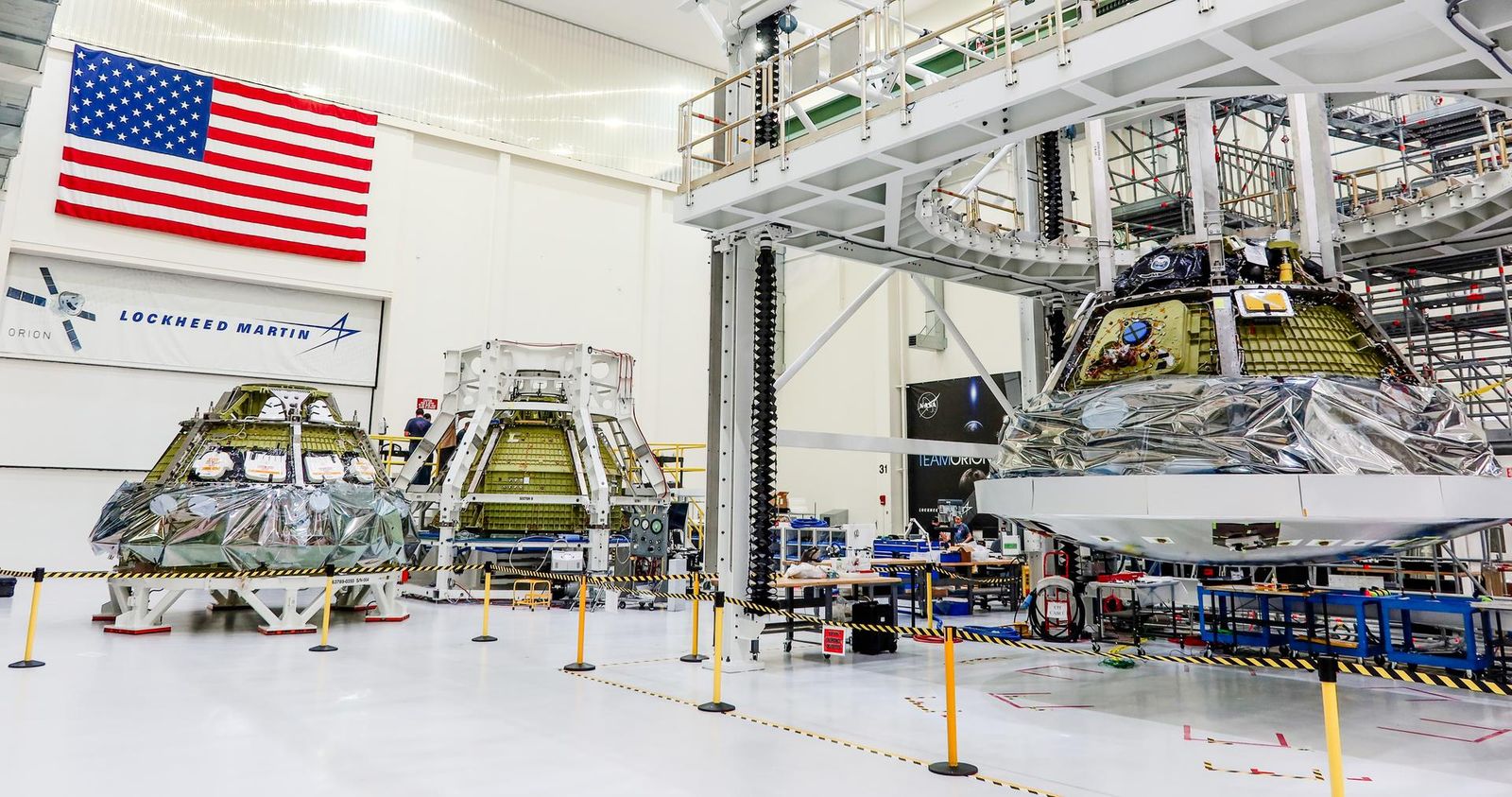
Although the Orion capsule outwardly resembles the Command Module of the Apollo program, the technological guts of the space capsule have come a long way. Modern life support systems, GPS navigation, solar power and sophisticated computers are just some of the tools that didn’t exist during Apollo.
“We did an entire mission with Artemis I that was uncrewed,” Anderson says. “Launched, orbited, did a burn, went around the moon, came back, entry, descent and landing—all autonomous.”
Astronauts will still play a key role piloting the spacecraft, particularly during operations like docking with another ship, which will be necessary for a lunar landing. After separating from the upper stage of the SLS rocket in space, the Artemis II crew will take the controls of their spacecraft to practice these docking maneuvers with the spent part of the rocket before heading off for the moon.
Five days into the mission, the Artemis II crew will be treated to a sight only two dozen people have seen before: the far side of the moon.
Because the moon’s orbit keeps one side facing Earth at all times, the only way to see the far side is to fly over there and take a look. While the Artemis II astronauts pass behind the moon, they will experience a communications blackout with Earth for between 30 and 50 minutes.
Unlike the Apollo missions, which were flown while the landing sites on the near side were in the daylight, Artemis II will likely see a significant portion of the far side illuminated by the sun. And because Artemis II will fly about 4,600 miles above the lunar surface, much higher than Apollo, the astronauts aboard will see significantly more of the lunar landscape.
“There’s major, major chunks of the far side that have never been seen, including a couple really compelling and interesting lunar features,” says Kelsey Young, a lunar geologist at NASA who works with the astronauts.
Unlike the near side of the moon, which is characterized by large basaltic planes called maria that formed when magma welled up in impact craters, the far side is mostly an ancient crust of feldspar-rich rock called anorthosite. This crust is pocked by some of the oldest and largest impact craters in the solar system, undisturbed for billions of years.
“Apollo taught us that human observation of color, albedo and how illumination affects the surface can actually tease out scientific detail that orbiters cannot,” Young says. “The camera is taking the picture you tell it to take, whereas the human eye is seeing the material as is.”
Two features the science team is particularly interested in are the Orientale basin and the South-Pole Aitken basin. Orientale is a series of debris rings spanning hundreds of miles that formed during impacts some 3.8 billion years ago, at the end of a period called the Late Heavy Bombardment. The South-Pole Aitken basin is the largest impact crater on the moon and possibly the oldest in the entire solar system.
“The moon is like a witness plate for everything that’s actually happened to Earth but has since been erased by our weathering processes, and our tectonic processes, and our other geologic processes,” Artemis II astronaut Christina Koch said during a press conference. “We can actually learn more about solar system formation, more about how planets form, maybe around other stars, more about the likelihood of life out there, starting with studying the moon.”
Ten days into the mission, with the moon left behind, the crew will prepare for the final major event of the flight: entry, descent and landing. The Orion spacecraft will hit Earth’s atmosphere at nearly 25,000 miles per hour and experience temperatures of about 3,000 degrees Fahrenheit.
During Artemis I, there was an issue with Orion’s heat shield during reentry when larger chunks of charred material broke off than expected. An investigation determined the cause was a buildup of gasses inside the outer ablative material of the heat shield. To avoid this on Artemis II, the spacecraft will take a steeper angle on reentry, which should prevent the accumulation of such gasses.
The friction of Earth’s atmosphere and then a series of parachutes deployed at 25,000 and 9,500 feet will slow Orion down for splashdown in the Pacific Ocean off the coast of San Diego. Once the crew is recovered, the teams working on Artemis II will finally be able to breathe a sigh of relief.
NASA will then be able to turn to future missions to land on the moon, though “there are some major hurdles ahead that have to be addressed,” says Daniel Dumbacher, an aerospace professor at Purdue University and former NASA engineer on the space shuttle main engines.
In addition to completing a lunar lander equipped with all the necessary flight components and life support systems, the current plan for a mission to the moon’s surface involves refueling the lander in Earth orbit before sending it on to the moon, something that has never been done.
“You have a whole new generation that has not gone to the moon before,” Dumbacher says. “So even though it’s been done, and that helps to know that you can do it, you still have a team and an industry that has to prove to itself that it can do it.”
Many steps remain, and Artemis II represents the next major leap. With the rocket on the pad and the crew ready to fly, humanity may finally launch again on voyages to other planetary bodies.
“I hope we’re forgotten,” commander Wiseman says. “If we are forgotten, then Artemis has been successful. We have humans on Mars. We have humans out on the moons of Saturn. We are expanding into the solar system.”
Disclaimer : This story is auto aggregated by a computer programme and has not been created or edited by DOWNTHENEWS. Publisher: wired.com