A first home buyer in Melbourne can buy an entry-level unit at a lower price than five years ago, but the weak prospects for price growth could make it difficult to upsize to a house in the future.
In 2020, the entry price for a unit in Melbourne was $452,000 compared to today’s $441,250, according to Domain’s latest First Home Buyer Report, released on Thursday. That is a decline of 2.4 per cent.
This means it would take a couple in the 25-34 age bracket just under 3½ years to save a 20 per cent deposit.
The modelling assumes the partners were each earning $62,808 post-tax. Domain derived the entry-level unit price by disregarding the top three-quarters of sales in Greater Melbourne in the three months to December, then selecting the top sale from the remaining 25 per cent.
The median unit price in Melbourne is $601,184.
Domain chief of research and economics Dr Nicola Powell said there was a glut of units due to factors including Melbourne’s strict lockdowns during the pandemic, when many people left the state, a large pre-COVID apartment construction pipeline in inner Melbourne, and tax changes affecting investors.
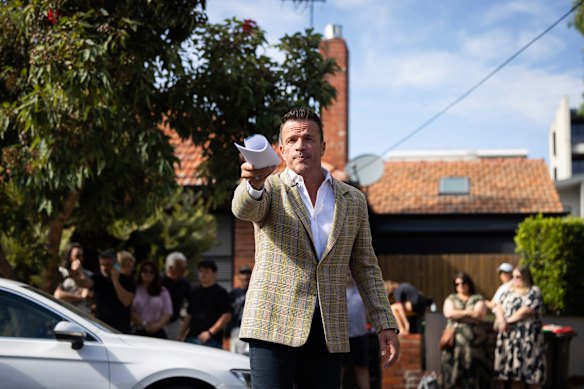
Entry-level prices for Melbourne units are some of the most affordable in the country. Credit: Paul Jeffers
“This … has meant that the market in Victoria overall has been much more muted,” Powell said.
“When you’ve got slower rates of price growth and muted dynamics of the housing market, it is a much better outlook for first home buyers … and one of the reasons Victoria has led the way in terms of first home buyer participation.”
KPMG’s director of planning and infrastructure economics, Terry Rawnsley, said that on a per capita basis, “Melbourne has done really well, especially against Sydney, Brisbane and Perth”.
“It’s reflecting more supply that Melbourne has had coming to market in four to five years … as well as the mix of housing we’ve got, such as … studio or one-bedroom [apartments], as well as some of the 1970s stock scattered around the city.”
But he warned that buying an entry-price unit five to 10 years ago was a good way for people to get onto the property ladder by building equity before upgrading to a house, it was now not as straightforward.
“What we’ve seen over the last five or 10 years was house prices growing faster than unit prices, so now if you’re in a unit for a while, the house is getting further and further away from you,” Rawnsley said.
Quantify Strategic Insights head of data Angie Zigomanis agreed, and said a one- or two-bedroom apartment was a good deal for a first home buyer if they were planning to spend their life there.
“If they’re not going to spend their whole life there, it makes it harder to upgrade – they won’t necessarily get capital growth,” he said. “But the flipside of that is they could be living in a rental, and depends on where they invested their money, and whether they can get positive investment returns elsewhere.”
Greater imposts on investors in Melbourne, who tend to purchase smaller, entry-level apartments, has also meant less investor activity and more leftover stock, Zigomanis said.
For a house, the entry price in Melbourne was $720,000, a 20 per cent increase over the past five years. The median house price for Melbourne was $1,111,084.
A first home buyer couple would need to save for more than five years to reach a 20 per cent deposit, and their mortgage repayments would be 41.4 per cent – above the mortgage stress threshold of 30 per cent.
“When you compare it to other capital cities, you’ve got a city where wage growth has been able to outpace what we’ve seen in terms of entry-level price growth,” Powell said.
“We’ve seen over a five-year period wages across Melbourne increase by 22.2 per cent, whereas we’ve seen entry unit prices drop 2.4 per cent, and we’ve seen entry house prices increase by 20 per cent.”
Zigomanis said Melbourne’s more affordable land market, along with the fact Victoria had built more detached dwellings than other capitals, added to the more affordable price point.
But he warned this could affect the feasibility of new dwellings.
“In some respects you need capital growth in established markets to make new dwellings more attractive to become feasible,” Zigomanis said.
Rawnsley said that the relatively affordable entry-level houses in Melbourne applied only to “greenfield sites in the north-west, south-east” parts of Melbourne.
“[An entry price of] $720,000 won’t get you very far in an established suburb in Melbourne, that’s for sure,” he said. “But I also want to make the point that … if people are looking at median house prices and going, ‘Oh my god, it’s a million bucks, I’ll never make it’, whereas … these entry-level prices maybe give people a little more hope.”
Most Viewed in Property
Disclaimer : This story is auto aggregated by a computer programme and has not been created or edited by DOWNTHENEWS. Publisher: www.smh.com.au