
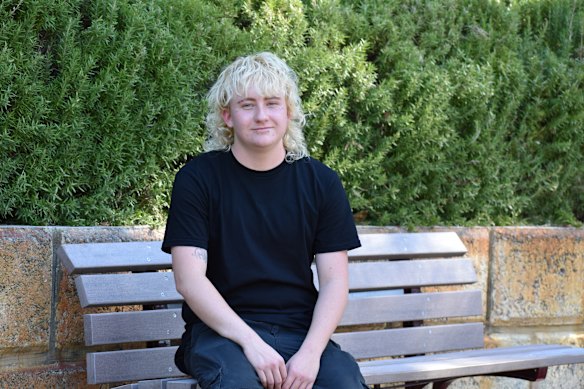
For Kyro McDonald, transitioning felt like a waiting game.
Now a year into his hormone therapy journey, the 19-year-old still wishes he could have accessed the life-changing medical treatments sooner.
McDonald described his journey to coming out to his family as a trans man at 16 as both confusing and “very scary”.
“Puberty is when I started to figure stuff out. I’d always been a very, very girly girl. I’ve always liked makeup, all that stuff. It was just more my body image when I started going through puberty [when things started to feel off]. It was such an odd feeling,” he said.
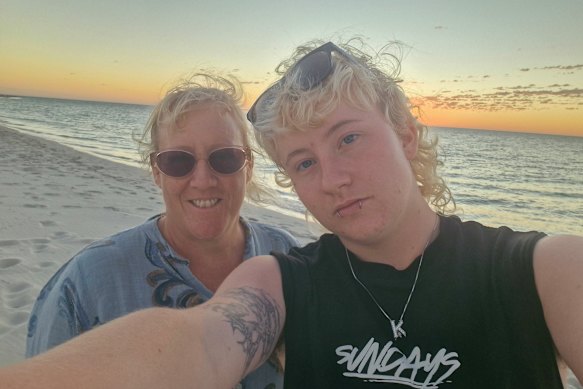
“It already is [weird] going through puberty in general – but when you’re looking at men, and you’re looking at women, and you’re like, ‘Wait a second, I want to be doing what they’re doing’, that you realise you shouldn’t be feeling like that.”
McDonald, who appears alongside his mother Sandi in an upcoming episode of Insight about trans medicine, said he couldn’t imagine his life as a woman.
“It was more like dread of the idea of going through a female puberty and how I was going to develop more. I remember hearing about it, and periods, and childbirth and all that stuff, and it just was such a disconnect in my brain,” he said.
“It was so foreign and weird. But then the idea of being a man felt more comfortable. It felt safe to me. It felt calmer, and it just felt right compared to being a woman.
“But my problem was, again, I was very feminine. I still liked girly stuff. I still liked makeup. And it was not until I’d watched more queer media where I saw more gay flamboyant men when I realised, ‘Wait, that’s an option? I can be that?’”
Despite cutting his hair, binding his chest and dressing more masculine, without parental consent McDonald was unable to begin his transitioning journey before he was 18.
In WA, people younger than 18 have access to puberty blockers and hormone treatments – as long as both parents give consent.
“I felt like I could talk to my mum about it, but then I couldn’t because she was still very dismissive of it at that point and I just could not talk to my dad about it,” he said.
McDonald said his mum was “in denial” about his desire to transition and believes she thought it was a phase he was going through.
“Even at that point, when I was 15 it was still like, ‘You’re just a bit confused’ because my friends were queer. So [she thought I was] just copying them and it was just a funsy little thing we all get together and do,” he said,
“But it’s like, no, we don’t want to get hate crimes, it’s not like a fun cute thing where we go outside and get yelled at.”
While McDonald wishes his parents had supported his desire to begin hormone therapy at 16, he understands their hesitation.
“I 100 per cent get it. Because at the end of the day, it’s a big thing. Almost all the changes with testosterone are irreversible. Like, your voice isn’t going to un-drop,” he said.
“I also understand the fact that it’s scary, you’re losing your daughter, and if it was a mistake, then she’s going to have all these issues when she’s older – like I get that.
“But my mental health was so bad because I’m trapped, not being able to do anything about anything … and I felt like once I was on hormones, [things would be better].”
A few months after his 18th birthday, McDonald had his first appointment to go on hormones and, by February 2025, had his first shot.
“I was so giddy,” he said.
But appointments aren’t easy to come by.
McDonald plans to undergo top surgery and said he has had to wait a year just to have his first initial assessment appointment which is pencilled in for November.
“You shouldn’t have to wait a year for a surgery when you’re already feeling like shit for years and years and years,” he said.
The numbers behind transgender healthcare in WA
Perth Children’s Hospital’s Gender Diversity Service is the point of call for transgender youth in WA.
The GDS, operated by the Child and Adolescent Health Service, offers outpatient services for children and adolescents up to 18 years old with persistent gender dysphoria, the psychological distress caused by a mismatch between a person’s sex assigned at birth and their gender identity.
The service – which can be accessed through referral by a general practitioner, paediatrician or other health professional – treats patients in two stages: puberty suppression treatment and hormone treatment.
As of March 2026, there are 215 children as young as 11 receiving care as part of the program.
This number has declined from 2020, when there were 392 young people accessing gender diversity services at PCH.
“The GDS has a multidisciplinary team model including clinical psychology, child and adolescent psychiatry, endocrinology, gynaecology, nursing and speech pathology professionals,” a spokesperson for the Child and Adolescent Health Service said.
“All young people who wish to access gender-affirming medical care, undergo a comprehensive mental health assessment and multidisciplinary team assessment. The care pathway is comprehensive and requires written informed consent from the young person and both parents or legal guardians.
“Treatment options are explored with the family at the end of the assessment phase and are dependent on the young person’s physical development, gender experience, wishes, and existing supports.”
The spokesperson wouldn’t provide updated information on current wait times for appointments, but in 2020 there was a three-month wait for an initial assessment, and a 4½-year wait for a comprehensive mental health assessment with a clinical psychologist.
According to answers provided in state parliament in November 2025, in 2025–26, the Mental Health Commission allocated $2,514,890 to the Child and Adolescent Health Service for the Gender Diversity Service.
Laws to access services as a youth differs between states, with the Northern Territory and Queensland initiating blanket bans across the public health system on puberty blockers and hormone treatments for people under the age of 18.
A professor’s point of view
Paula Gerber, a Monash University professor of law and author of Sex, Gender & Identity: Trans Rights in Australia, doesn’t agree that parents should have the final say on trans youth access to health care.
“I have some concerns because not all parents are going to be understanding and supportive of their children,” she said.
“So it all depends on the age of the child and their maturity and their ability to understand all the implications of embarking on a certain course of medical treatment.
“But it’s probably best left to the young person and their health carers, rather than having parents being able to veto it because they don’t understand or approve of changing your gender.”
She added that government-enforced blanket bans on treatments could come with dire consequences.
“We’ve seen a significant spike in suicide by trans and gender-diverse youth. If we’re talking about what’s in the best interest of children, then this sort of blanket ban saying, ‘Well just wait until you’re 18’, some children are just not going to be able to survive going through puberty in the wrong gender,” she said.
Soon, for the first time, the Australian Bureau of Statistics will include transgender people aged 16 and up in the census.
“The ABS has compiled some questions that are asking people about sexual orientation and gender identity and this is really important because people throw around a lot of numbers and percentages about how many people are gay or trans, but we really don’t know,” Gerber said.
“So, it’s important if we’re making policy, that it’s based on evidence, and the best evidence is the census.”
A parent’s journey
Sandi McDonald said she loves her child regardless of him coming out as transgender.
“We have gotten closer, if anything. Kyro and I discuss everything openly and I hope this will always be the case,” she said.
But she says the loss of the daughter she had would always be difficult to come to terms with, and that her decision to hold off on allowing Kyro to take hormones was made to ensure that he “wasn’t going through a phase due to situations around him at the time”.
Despite this decision, she firmly believes blanket bans on puberty blockers and hormone treatments are wrong.
“I strongly disagree with what [Northern Territory and Queensland governments] have done, no one should take away basic human rights,” she said.
“If the child and parents have been counselled and gone through all the right steps, they should be given the right to utilise the blockers if it fits their circumstance. It would certainly save a person going through surgery later on.
“There are so many varying circumstances in play within each family unit.”
McDonald said she struggled to know how or whether to discuss her son’s transition with others – especially within her family unit – but knows her love for him will never change.
“I love Kyro for who he is and am so proud of the person he has become. He is a much happier, outgoing, quirky person overall and loved immensely by us,” she said.
SBS Insight episode Trans Medicine airs Tuesday, March 24 at 8.30pm on SBS, or stream on SBS On Demand.
Disclaimer : This story is auto aggregated by a computer programme and has not been created or edited by DOWNTHENEWS. Publisher: www.smh.com.au







