The political fight in the US over the future of prediction markets like Polymarket and Kalshi has escalated into a full-blown war, and battle lines aren’t being neatly drawn along party lines. Instead, conservative Mormons have aligned themselves with Las Vegas bigwigs and MAGA royalty is siding with liberal Democrat lobbyists. One side argues that the platforms are breaking the law by operating as shadow casinos. The other insists they are just giving people access to legitimate financial markets already subject to adequate government oversight. Neither camp is backing down.
Right now, prediction powerhouse Kalshi operates in all 50 states. Its primary rival, Polymarket, was banned from the US in 2022 for operating as an unregistered derivatives market, but it returned in a limited capacity last year. These companies offer “event contracts” to customers, allowing them to trade shares tied to the outcomes of almost anything, from who will win this year’s Oscar for Best Actor to what the price of Bitcoin will be at the end of the day. The most popular category by far is sports. Kalshi reported a daily record of over $800 million in trades on Super Bowl Sunday related to the game alone, and over $1.3 billion traded on contracts related to the event altogether.
Once a niche financial experiment, prediction markets have rapidly become entrenched in mainstream culture, a transformation that has brought vast sums of money into play. The industry’s leading players are already billion-dollar companies in their own rights. Each day, casual speculators and die-hard sharps log on to predict where the world will go next, choosing between a dizzying array of opportunities to win and lose.
Advocates argue that these platforms democratize access to commodities trading and are useful tools for forecasting the future. And at the end of the day, they say, adults should be able to do what they want with their money. The fundamental difference between a prediction market and a casino is that “on Kalshi, there is no house, users trade against each other. Users benefit from this: they get fair pricing, the ability to cash out at any time for fair market value, and winners are never banned or limited,” says Kalshi spokesperson Jack Such.
But critics say that prediction markets, at least in their current form, are exploitative. “This is illegal gambling,” says former New Jersey attorney general Matt Platkin, who recently launched a boutique law firm focused on consumer protection cases. The industry is “unregulated, untaxed, unsupervised,” he adds.
Prediction markets are currently overseen at the federal level by the Commodity Futures Trading Commission (CFTC), the agency in charge of financial instruments known as derivatives. It has been grappling with the industry since the late 1980s, when the University of Iowa launched the Iowa Electronic Market, an academic project allowing participants to buy contracts based on the election results and public market outcomes.
Attorneys general and gambling regulators in many states say sports contracts on prediction markets should follow state gambling laws. One reason for the pushback is that prediction markets represent a compelling alternative to the regulated gambling industries in places like Nevada, which represent a significant part of the local economy. “The states have such a vested interest,” says Alex Grishman, head of the digital assets practice at the law firm Haynes Boone. “They want to have as much of the tax revenue as they can.”
Kalshi alone is facing 19 separate lawsuits across the country, and it narrowly evaded a recent temporary shutdown in Massachusetts. Federal lawmakers have also started weighing in; earlier this month, 23 Democratic Senators voiced support for efforts to push prediction markets to abide by state gambling laws. Platkin believes the wave of challenges is nowhere near over: “We’re just at the beginning of those types of lawsuits.”
Over the past few days, the CFTC has forcefully asserted that it has sole control over the industry. The agency filed an amicus brief in support of the cryptocurrency exchange Crypto.com in its ongoing legal dispute with Nevada state regulators, who have accused the company of running an unlicensed sports betting operation. (Crypto.com has offered its own sports prediction contracts.) In an unusual video posted to social media the same day, CFTC chairman Michael Selig vowed to fight against what he called an “onslaught” of lawsuits. “To those who seek to challenge our authority in this space, let me be clear—we will see you in court,” Selig said in the video.
Selig is a Trump Administration appointee, and there is ample evidence to suggest that President Trump and his inner circle want to ensure prediction markets are treated with a light touch, not the least being that he and his family plan to soon launch their own called Truth Predict. The president’s son Donald Trump Jr. is an adviser to both Kalshi and Polymarket, and his firm 1789 Capital is an investor in the latter. The Trump Media and Technology Group also has a strategic partnership with Crypto.com.
But support for Selig’s approach isn’t confined to Trumpworld. “We have the CFTC for a reason. We have very clear federal legislation going back to the 1930s that gives it exclusive jurisdiction in this area,” says former Democratic Congressman Sean Patrick Maloney, who now leads the Coalition for Prediction Markets, a new industry lobbying group. Kalshi also recently hired longtime Democratic strategist and former Biden Administration official John Bivona as its head of government relations.
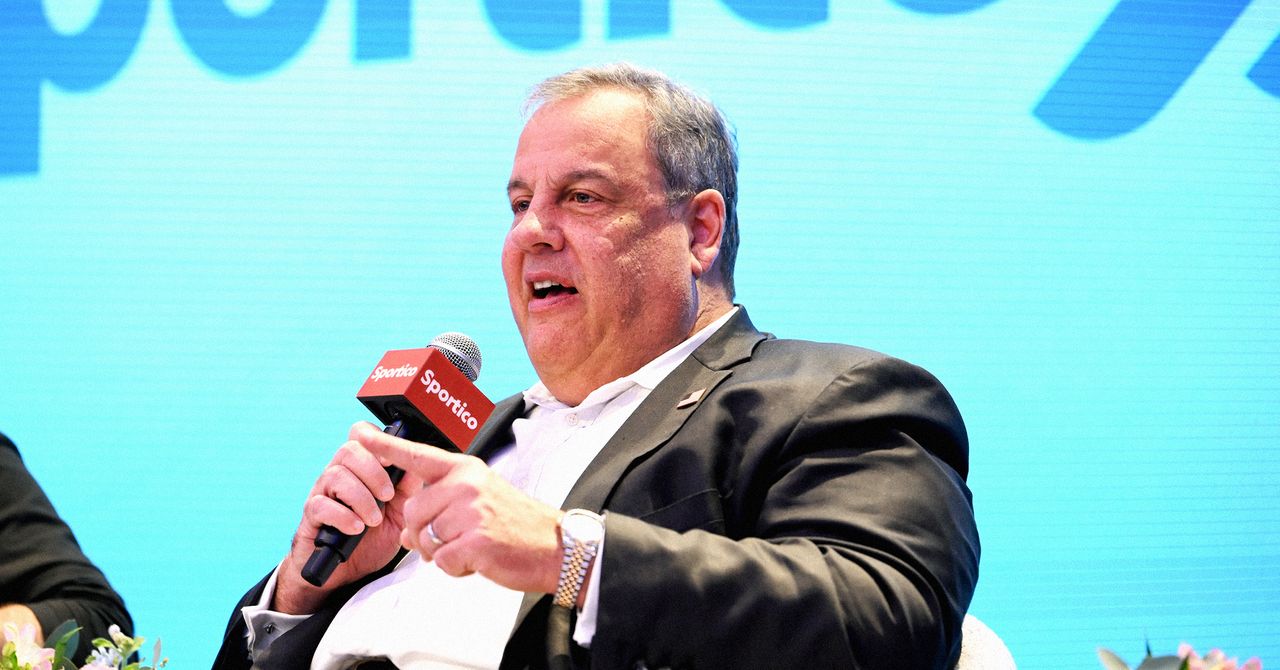
Meanwhile, opposition to prediction markets is growing among conservatives. Some Republican critics of the industry have ties to the legalized gambling movement, like former New Jersey governor Chris Christie, who currently advises the American Gaming Association. But others don’t. Utah Governor Spencer Cox, a Republican from a state that bans sports betting altogether, released a statement on X promising to “beat” the CFTC in court after Selig made his comments. Earlier this week, Senate Agriculture Chair John Boozman, the Arkansas Republican whose committee oversees the CFTC, likened prediction markets to the “Wild West,” and said he plans to speak to Selig about the issue.
As the regulatory fight unfolds, prediction markets continue expanding their offerings. Both Polymarket and Kalshi have announced a slew of new corporate partnerships designed to cement their role within mainstream finance and media ecosystems. Just this week, Polymarket announced a deal to integrate its data on Substack, and the nonpartisan Federal Reserve released a positive report on Kalshi’s efficacy as a forecasting tool. Between the two companies, they’ve struck data-sharing deals with CNN, CBS, CNBC, and Dow Jones. Quantitative trading firms are diving in too, with Jump Trading taking stakes in both Polymarket and Kalshi.
The battle over regulating prediction markets in some ways mirrors the ongoing conflict over the rise of legal hemp-derived THC products. Cannabis is still federally illegal, yet a growing patchwork of states, including Illinois, New York, and California, collect hundreds of millions of dollars each year from regulated sales. Alongside the official markets for traditional cannabis, a parallel industry offering molecularly-identical compounds derived from hemp plants has sprung up by taking advantage of a legal loophole.
Both critics and enthusiasts alike have noted that the psychotropic effects from “regular” cannabis and hemp-derived products can be indistinguishable, just as the thrill of winning money on the Super Bowl hits the same whether it came from a sportsbook wager or a prediction market. But each class of products is regulated entirely differently, in a way that can feel capricious. And, just like the war over prediction markets, the fight over THC isn’t a right-versus-left affair. In Illinois, for example, Democratic Governor J.B Pritzker has called for tighter regulation—but Democratic Chicago mayor Brandon Johnson just vetoed an effort to rein in the hemp industry.
One final similarity: Both fights aren’t going to be resolved quickly. Americans have spent close to a decade already debating what to do about intoxicating hemp products, and yet that industry’s future remains murkier than ever. The Prediction Market Wars are similarly unlikely to be settled any time soon. Observers don’t expect the current crop of court cases to create sweeping change—a win in Nevada, for instance, won’t necessarily impact the outcomes of a case in Massachusetts, and any single ruling will likely be appealed. “This fight will, unfortunately, have to get deliberated and litigated in higher courts,” says Alex Grishman.
Disclaimer : This story is auto aggregated by a computer programme and has not been created or edited by DOWNTHENEWS. Publisher: wired.com