
There’s a reason we’re called WIRED. If there’s one thing most of today’s gadgets have in common, it’s that they typically need to be plugged in from time to time. But all those cables, cords, and wires can be tough to manage. They don’t have to end up in a tangled nest under your desk; you can bring order to the cable chaos.
As a gadget reviewer, I have more cords than most people, which is why I also have a regimented cable management strategy to keep everything orderly. Here are my tips and product recommendations for hiding those cords and power strips, and keeping your desktop tidy.
Planning and Prep
Start by surveying the scene, unplugging and untangling everything, and removing anything that doesn’t need to be there. You might be surprised to find a stray USB-B or Micro-USB you haven’t used in years in the mix. Before you get started on cable management, take a slightly damp microfiber cloth and wipe down all the surfaces and cables. Now, you can start planning routes and figuring out which cables it would make sense to bundle together.
Ideally, cables will be the exact required length, so if you have spares or you don’t mind snagging some new cables, it’s worth switching and getting as close as possible to exact lengths to reduce the excess cable you have to hide. If you have a standing desk, remember to take into account the cable length required for a standing position (trust me, dear reader, it’s no fun when you hit stand on the desk and it pulls your PC tower into the air by a DisplayPort cable that is now forever stuck in that port).
Cable Management
Tidying your tech often comes back to cable management, but there are several ways to keep those cords neatly out of sight. Many desks have channels, grommets, and power strip trays built-in, so have a quick look to make sure you’re using what’s available. Some monitor arms also have built-in cable management. You also likely have a bunch of cable ties in your junk drawer or toolbox, so gather them together.

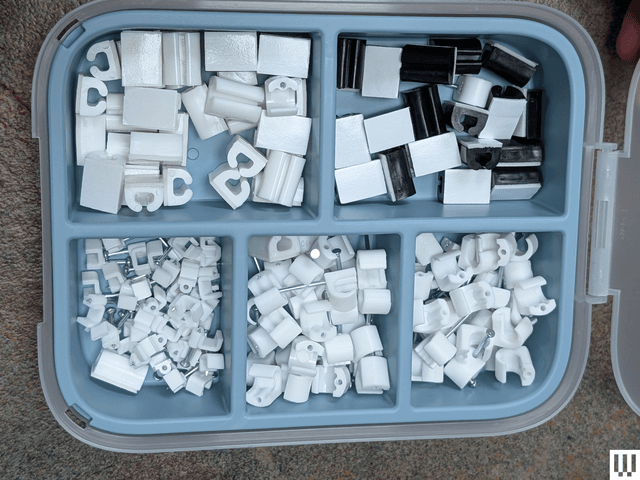
This cheap kit from Ikea is pretty good for covering a range of cable scenarios. There are three sizes of cable clips with nails and adhesive-backed clips in black and white.
These Velcro-style cable ties are my favorite because they can accommodate all sizes of cables or thick bundles of multiple cables (you can even combine two for extra fat bundles), and they are very easy to adjust or reuse.


This is the way to go if you have a bundle of cables that are all traveling the same route. The mesh is easy to open if you ever need to switch a cable, you can cut them to length, and they look very neat.


These lengths of plastic raceway come in different sizes with various shapes, including bends, so you can cobble together a cable run. There’s enough room for a few cables inside, they are easy to open, and you can even paint them to help them blend into your wall.
Hiding Power Strips
You have a few choices to hide those ugly power strips. Many power strips have holes in the back so you can mount them on screw heads or hooks. You just need a good out-of-sight spot behind your desk.


An under-desk tray is often the best option, especially if you have a standing desk. This clamping tray from Ikea fits most desks, but you should also check if your desk manufacturer offers something specifically designed for your desk.


I like these unobtrusive boxes with easy-to-remove bamboo lids and openings in the sides to run cables in and out. They work great if you’re happy to have your power strips sit on the floor.
One last thing that can save you some hassle later is to label the plugs, so you don’t need a trial-and-error approach to unplug your monitor. Use a label maker if you have one, buy a sheet of labels, or just use white tape with a Sharpie.
Clearing Your Desktop
I find it easier to work when my desk is relatively free of clutter. I’m a big fan of clamping things to my desk to preserve space, but you will likely want some stuff to hand.


If you have an iPhone with MagSafe or a Qi2 phone, this handy wireless charger keeps it neatly out of the way. It has a suction pad to stick firmly to your desktop with cable management on the back and a couple of adhesive-backed cable clips.

Maybe you need to charge a whole bunch of devices. I’ve been using this Anker charger, which gives me two USB-A ports and four USB-C ports. Pair it with some super short cables or a retracting cable, and you can reduce cable clutter. Alternatively, place it under your desk in a box or tray and run cables to the holders below.

These simple adhesive-backed plastic clips come in rows with two to four cable slots that are perfect for keeping the ends of cords accessible. You can stick them to the side of your desk to keep cables to hand but out of view. There are many alternative styles that do the same job. I quite like the fabric-finished magnetic Smartish Cable Wrangler ($30).
Disclaimer : This story is auto aggregated by a computer programme and has not been created or edited by DOWNTHENEWS. Publisher: wired.com



