These are the stories of the 15 people killed at Bondi Beach, in the words of those who knew them best and loved them most.
The singer who couldn’t resist a microphone. The mother with Bond girl good looks. The father who woke at dawn to ride alongside his paperboy son. A lolly man, an ideas man, a Holocaust survivor, and a big sister who daydreamed of capybaras.
These are the 15 innocent people killed by two gunmen in a terror attack at Bondi Beach that terrible day, December 14, 2025. Their deaths are known to the world, but their lives are worth remembering.
Their loved ones are the custodians of their memories. Here we have compiled interviews, testimonials, eulogies, family photos, and tenderly crafted words that these memory-keepers were willing to share.
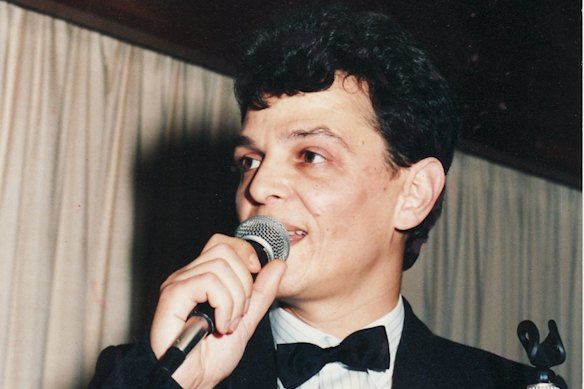
Boris Tetleroyd
Anyone who met Boris Tetleroyd heard him sing. With a tremendous voice and skilled at playing the guitar and piano, he captivated friends, family, and colleagues with renditions of The Beatles and Russian songs from his youth.
“He was just fearless. He didn’t have any kind of stigma, any kind of inhibition. He would just go up and perform,” son Ya’akov remembers.
Niece Jenny Roytur said whenever the family went out and there was a band playing, Boris would find a way to get involved.
“If there was a microphone available … he would grab it,” she said.
Music was how he met his wife, Svetlana. He regularly played at the restaurant where she worked in their home town, now Tashkent, Uzbekistan.
They had three sons – Ya’akov, Roman and Michael – before fleeing the crumbling Soviet Union in 1989, travelling through Italy before landing in Australia and settling in Sydney’s eastern suburbs.
Boris worked as a draftsman for Transport for NSW for 30 years. He had planned to retire by the end of the year.
He loved living on the coast and would walk from Bronte to Maroubra regularly. Surviving colon cancer in the early 2000s “ignited” Boris’ wellness journey, and he began attending yoga retreats and discovered meditation.
He was also detail-oriented, which he attributed to his time in the USSR military. He would tell stories of navigating the Black Sea, peeling thousands of potatoes, and mentoring his shipmates through rough waters.
“His time in the army really served him well throughout his life. He was a very disciplined man,” Ya’akov says.
He was diligent. Boris archived more than 100 years of family history, and stored records and photos to bring out at family gatherings. He loved adding to the cache, snapping photos at family events.
Faith was a big part of his life. His sons were circumcised in secret under Soviet rule, and Boris underwent the procedure aged 60 in Australia.
“He was a very holy man, and he had a lot of wisdom … people just went to him with questions, and he would listen. He was one of the best listeners I know,” Ya’akov says.
“My father died celebrating his Judaism. He came there to celebrate light and happiness. And so my father died the way he lived, with light and happiness.”
Rabbi Eli Schlanger
Two hours before he was killed, Rabbi Eli Schlanger was leaning over the gate in front of his sister’s pool, confiding in his brother-in-law, Rabbi Mendel Kastel.
While the kids swam and nagged for jam doughnuts, Eli was wrestling with his future: The 41-year-old was reckoning with letting go of control of an event he had nurtured for almost two decades, Chanukah by the Sea.
“He was very involved. But this was the first year where he wasn’t running around schlepping chairs and dragging stuff an hour before,” says his sister, Tzippy Kastel.
Instead, Eli was by the pool in the Kastel home near Bondi, as he was most Sundays, with one of his five children hanging off him, playing pranks and imitating family members.
The Kastels remember their last moments with Eli because they were recorded: the final sun-drenched glimpses from four decades spent together, captured forever by the home security cameras necessary for a Jewish family to live safely in Bondi.
“He had a lot of chutzpah. He was cheeky. He had no filter,” Kastel says. “He lived on Bondi Beach, for God’s sake, he was running around there with a beard, dressed in black and white, and everyone else is wearing whatever, he didn’t care, he would rock it with confidence.”
Eli, the little boy with a lisp, became a peacemaker within his family and a counsellor to hardened criminals in the prison system. He was “like a cushion”, Kastel says.
When Eli was still in primary school, the family of 11 moved from London to New York. After studying in France, he joined his family in Sydney, where he not only ran the festival at which he was killed, but also helped build the Chabad centre where his funeral was held.
“He was obsessed with that building. He chose the Jerusalem stone, the materials, and the fabric,” she says. “Everything was personal to him.”
He was a devout religious scholar of the Torah and a Zionist. He hosted barbecues for Israeli soldiers near the border with Gaza and toured controversial Israeli settlements in the West Bank, as the conflict in the Middle East reverberated around the world.
When Anthony Albanese recognised Palestine as a state last year, he wrote to the prime minister urging him to “rescind this act of betrayal”.
“He just absolutely loves Israel,” Kastel says. “When you go there, your soul’s on fire. He had that passion for that reason.”
Two months on from his death, there is still passion in the family, but there is also grief. It’s in security footage at the Kastel home, the family photos, the last $5 note from a Hanukkah raffle that he let Kastel’s son keep. It’s in the streets of Bondi and in the synagogue.
Every time family members go to the kosher shop or Jewish school, they are confronted by others who have lost someone who was once an indispensable part of their lives.
“We’re just feeling a gaping hole,” Kastel says.
Rabbi Yaakov Levitan
Eli Schlanger was an ideas man; Rabbi Yaakov Levitan got them done.
Their wives were close, very close. They had been best friends since high school. Eli and Yaakov would form their own formidable partnership, becoming the driving force behind not only the Chabad of Bondi but also the Chanukah by the Sea festival, where they were both gunned down.
“How do we make any sense of it?” says his brother-in-law, Rabbi Mordechai Guth.
“What was he doing at the moment his soul left his body? He was involved in an event designed to strengthen, inspire, and bring people together.
“Specifically, he was a man with a hot dog stand. Not because he made hot dogs, but because somebody had to man the hot dog stand. And to be involved with something so pure and so special, at the moment that, as providence would have it, turned out to be his last moments, that actually gives a little bit of comfort.”
Guth says Yaakov was a person who brought out others’ potential, and made it real in the name of “making the world more luminous in the spirit of Hanukkah”.
His role in the community spanned everything from running the synagogue and organising trips to Israel, to checking torah scrolls and making funeral arrangements.
When a dozen of their own were massacred on Bondi Beach, Yaakov would have been the person the community turned to for the painful logistics. Instead, the 39-year-old father of four was being buried himself.
“If you go to the Chabad at Bondi today, six weeks after the event, there are certain things that nobody really knows how they work because he was the one who would maintain them,” Guth says.
Yaakov’s small acts of kindness, known as a mitzvah in the Jewish tradition, extended beyond the Chabad. They ranged from helping neighbours rewire their internet cables buried underground to establishing tapNgive, a company that provided tap-and-pay donation kiosks for fundraising.
“The greatest reward for him was that something got done, not that he received recognition,” friend Avremi Joseph told the Chabad. “He was the spine of all Jewish organisations in Sydney.”
Marika Pogany
Roman Benuska speaks tenderly of his mother’s divine red fingernails.
“She was always beautifully manicured from the day I can remember,” he says.
Benuska holds up his phone displaying his favourite photograph of his mother, taken decades earlier. His friends were on the money when they described her as a Bond girl. Marika is breathtakingly beautiful as she leans against a brick wall in bright sunlight. Her blonde hair was perfectly coiffed, with half-moon curls over her ears and leopard print trimming around the collar and button-down front of her white outfit.
“I just can’t believe that’s my mum,” he says proudly.
The feeling was mutual. Her son was the greatest achievement of her life.
“I’d say the most common memory I’ve got in my mum is a protector, defender, whenever you fall, whenever you’re hungry, whenever you want a toy,” Benuska says. “She was there at the drop of a hat. That would be my mum.”
Known lovingly as “Omi”, the mother and grandmother came to Australia from Czechoslovakia in 1968 with her son and her own protector, her older brother, Ivan.
Marika became a citizen four years later and embraced her “Aussie” life with pride.
“She always worried about others, especially as she was getting older, more so than herself,” Benuska said in a video played at the Light Will Win commemoration held at Sydney Opera House in January.
Talk to anyone who worked with her in the kitchen or tuckshop, Benuska says. They’d tell you that she was very bossy.
“She used to get the mums, sort of boss them around.”
She loved working with Meals on Wheels and Sydney COA, a volunteer service for Jewish seniors.
“Twice a week, she was off driving around … making meals for those who needed them,” Benuska told mourners at Marika’s funeral at the St Joseph’s College Chapel in Hunters Hill.
“She was welcoming. She would take you in and have a chat. That person you know is always there. Now I look back, that is the part you miss.”
Friend Susie Berger described Marika, 82, as happy to help anybody without being asked.
“I spoke to her on the Saturday before that terrible Sunday,” Berger recalled. “It makes my sorrow so much more bearable to know I told her 24 hours before her death that I loved her.”
Describe a social butterfly, and like the kaleidoscopic patterns of a butterfly’s wings, the refracted hues of Marika’s identity (Australian, Hungarian, Slovenian, Jewish, Catholic, non-religious) drew all manner of people to her.
“It didn’t matter who you were. She would welcome you into her circle,” Berger says.
“She would never just have coffee with one or two friends. You would arrive and find that she would have invited 10 or 15 more.
“Now we have to find a new boss.”
Reuven Morrison
To his three grandchildren, his name was “Zaida”. To them, he was everything.
When they won awards at school, he was the first person they would call. He let his twin granddaughters wrap him in bandages when playing doctor. They told their mother they liked to go shopping with him, “because Zaida had no budget”.
“He would move heaven and Earth to get them what they wanted,” daughter Sheina Gutnick says. “But at the same [time] … he gave them so much of their heritage and their identity.”
Reuven Morrison, born in 1963 in the former Soviet Union, knew the cost of that identity. At school, he was singled out by classmates as a “dirty Jew”. Teachers stamped his school reports with marks branding him Jewish. His family shared an apartment overlooking the schoolyard and, when Reuven’s mother saw him in a scuffle with other children, she came down and beat them with a rolling pin.
Seeking safety, Reuven emigrated with his parents to Australia. He was 14. On a visit to Bondi Beach, he met another young Jewish refugee from the Soviet Union. Her name was Leah. They were wearing the same Levi’s jeans. The teenage Reuven playfully suggested that, one day, “that ass is gonna be mine”. They were married two years later.
With Leah by his side, Reuven built an empire from the ground up. He started as a 14-year-old locksmith’s apprentice, then sold cigarettes at Kings Cross. He ran a potato processing plant in Queensland, an apple orchard, a printing and fax business, and then a petrol station. Slowly, he built a sprawling development empire across Sydney.
Reuven and Leah were blessed with one daughter, Sheina, “born after many years of praying and waiting”, friend Chanie Hebel says. Sheina was the centre of his universe, and “Papa Morrison” to her friends. The family moved to Melbourne in 2006, but Reuven commuted to Sydney for work and stayed close to the city’s Russian Jewish community. He was part of a group of philanthropists who built and donated the $30 million Chabad synagogue in Bondi, which opened in 2024. “His other baby,” Sheina calls it.
Sheina grew up, got married, and moved into the house across the street. When the twins were born, Reuven gave the couple a walkie-talkie to call them during the night.
“I have this image of him and Mum on the couch at like 2am, each with a baby in their hand, giving them a bottle,” Sheina says.
Reuven’s upbringing under Soviet rule gave him a relentless work ethic and moral compass. The 62-year-old worked between Sydney and Melbourne. Sometimes, he was gone for weeks at a time. His grandchildren reminded him it was worth it.
“Having the kids walk in the door after school and jump into his arms just meant the world to him,” Sheina says. “They meant the whole world. They were [his] continuation. They were the light.”
Adam Smyth
The two oldest children of 50-year-old Adam Smith, Harry and Matilda, shared these words about their Dad.
“We are not able to speak at this time because of grief, but we would like to share these words in writing. They can be printed exactly as written:
“Adam was a devoted father. He was proud of us, his children – Harry (27), Matilda (21), Angus (17) and Olivia – and of who we were becoming. He showed up – coaching junior sport, helping at schools, at clubs, at charities – not because he wanted praise, but because he believed that being part of a community meant carrying some of the weight.
“Dad was hardworking. One of our earliest memories of this was when Harry got his first job at 11 years old, delivering newspapers. It meant 5am starts, riding a heavy bike loaded with newspapers – more than a young kid could easily handle. Dad woke him up every morning and rode alongside him the whole way. He didn’t just tell him he could do hard things – he showed him.
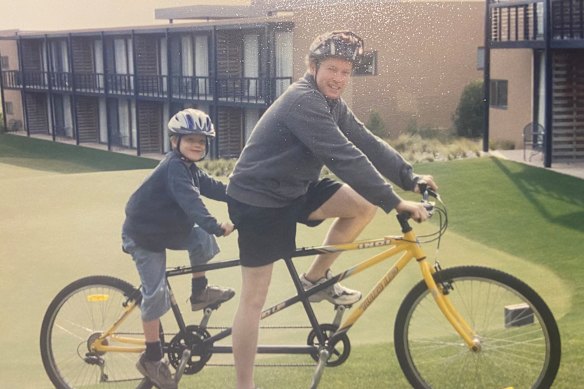
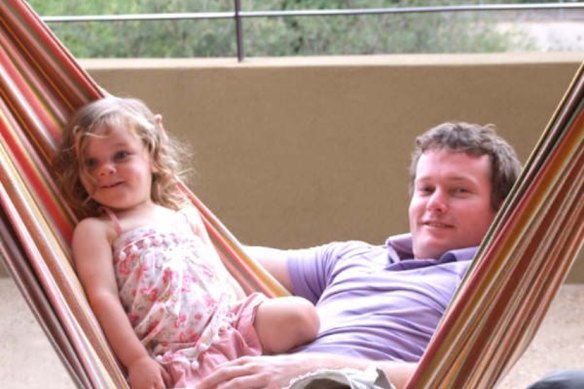
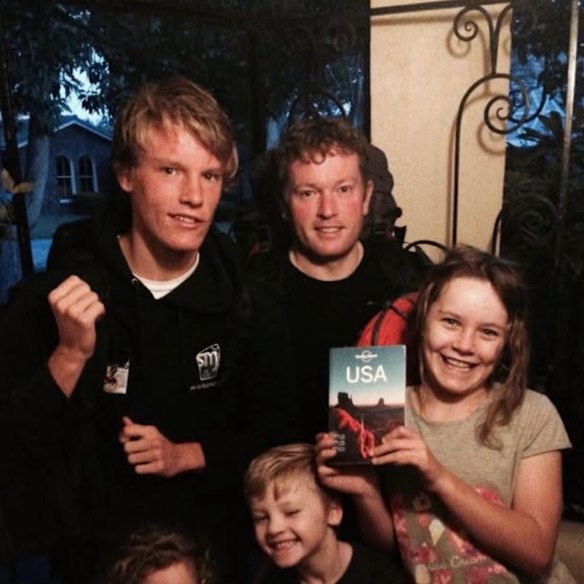
“Dad valued effort, movement, and showing up – especially in sport. He ran multiple marathons, Oxfam Trail 100km events, triathlons, played junior soccer for Avalon, senior soccer at college, and later for Old Melburnians in Melbourne. He loved his teams – Liverpool and the Sydney Swans – and followed them with loyalty. But more than any of that, there was nothing better for him than watching us play our sports. On sidelines, in cold mornings and hot afternoons, he was there either as coach, team manager or cheerleader.
“In Dad’s passing, we hope that his life was not lived in vain – that from this horror we take away a true desire to be more compassionate, more aware of our community, and more willing to stand with one another. Not only the grieving, but all Australians.
“We hope we become more grateful for the freedoms we have, and more respectful toward those of every faith, colour, and creed. For our generation – and for the children who come after us – we must build this culture.
“If this is read in 10 years, we want people to know this: Adam’s life mattered. It should be remembered for what he gave, not how he died.
“Adam believed in helping. He believed in showing up. He believed in community.
“His life will not have been lived in vain if we choose to become more compassionate, more aware, and more respectful of each other – not just in grief, but always.”
Tibor Weitzen
Tibor Weitzen was fond of saying, “Life is too short, eat ice-cream”. And so he did. Every evening, wife Eva Weitzen says.
She has plenty of ice-cream in the home she shared with her devoted husband of 56 years.
Eva never doubted his love for her: “For him, I was something very special”.
Tibor, 78, was born in 1947 in the Soviet Union and migrated to Israel, then to Australia in the late 1980s.
He was the proud father of two, with 11 grandchildren and great-grandchildren.
“He was [an] absolutely crazy grandfather,” Eva says of his doting ways.
“Family was everything to him,” daughter Hanna Abesidon said in the commemoration video. “He was a selfless person. Everybody [else] came first.”
For 18 years, Tibor ran a weekly club called Friends of Refugees of Eastern Europe (FREE), which brought elderly Russian-speaking members of the Jewish community together to foster a sense of belonging.
In 2015, he was honoured with an award for his commitment and volunteering at a Chabad Bondi Gala dinner.
Grandson-in-law Mendy Amzalak says Tibor brought joy to everyone he met, especially the children at the Bondi Shul.
“In every Shul, there’s someone called the ‘lolly man’ whose job is to keep the kids quiet by giving them lollies so as not to disrupt the sermons,” Amzalak says. “In the Bondi Shul, that was Tibor.”
Tibor would be remembered for the light he brought to others.
“My wife’s pregnant and to think my second child won’t meet their grandfather is heartbreaking,” Amzalak says.
“He was a very warm person,” Abesidon says. “Don’t judge anybody. Give everybody the benefit of the doubt. He didn’t want anybody to be harmed; he didn’t want anybody to suffer. And I think these days, with what we’re going through. I think he would say: stop it.”
Matilda Bee Britvan
When Michael and Valentyna Britvan named their firstborn Matilda, they chose a middle name that captured her spirit: Bee. She was as bright and busy as her namesake, bringing sweetness and joy wherever she went.
Her first toy was a bumblebee, and for special events, she could often be found in her favourite yellow dress with zebra patterns.
The 10-year-old had wavy brown hair, her face framed by a fringe, and bright blue eyes. She wore a gold necklace bearing her name and loved the colour purple.
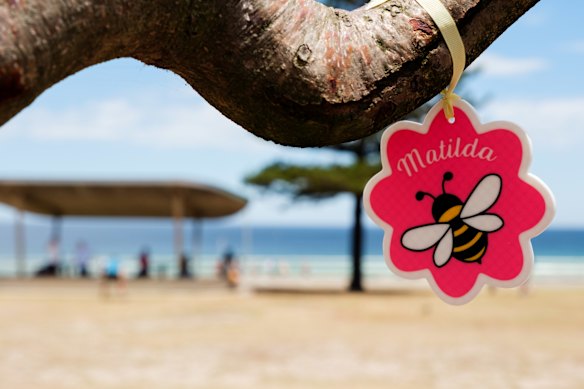
Her parents, who moved separately from Ukraine to Australia before settling in Sydney’s east, remembered her at an emotional memorial at the Sydney Opera House. “[The sisters] love to sing, they love to dance,” Michael said. “She was very, very peaceful and kind.”
Matilda was a devoted older sister. Her sibling shared memories of the pair racing scooters and playing games in the park. That adventurous streak defined Matilda; she was an active child who spent her time rollerblading, practising acrobatics, and training in judo. She loved to travel.
Matilda had started a diary “talking about ‘my crush’ and pages about capybaras”, Michael says. “It was all happy stuff.”
At La Perouse Public School, Matilda was so beloved by her classmates that they gave her an Indigenous nickname: “wuri wuri”, meaning the little ray of sunshine. Her favourite subject was maths.
It was a sentiment echoed by Valentyna, who remembered her daughter as the light of their lives.
“Her smile was bringing the light. She lights up everyone who walks past and she was bringing the light in this world. No one seen her with no smile on her face.”
Alex Kleytman
Alex Kleytman gave his family a new life when he uprooted them and left his home of 54 years in the former Soviet Union.
“It was a gift to our family,” daughter Sabina says. “My dad fell in love with Australia. You couldn’t say anything bad about it.”
Alex, 87, survived the Holocaust and a Siberian work camp during World War II. In the former USSR, the family were deemed refuseniks – the word for the Russian Jews who were prevented from migrating to Israel and spied on.
Larisa, Alex’s wife, was forced out of a teaching job. “She was no longer ideologically approved,” Sabina says.
Just as the family thought life was improving after the collapse of the USSR, a death threat prompted them to leave Lviv.
“Dad applied to migrate to Australia the next week. He was so proud to be able to bring us here,” Sabina recalls.
His family – his wife, two children and 11 grandchildren – want Alex to be remembered as more than the oldest person to die. He died a hero, trying to save Larisa, his wife of 57 years.
Alex was an engineer known for ingenious solutions, a daredevil, a near-daily swimmer, a champion table tennis player, a ballroom dancer, a teller of bad dad jokes and an author. He loved to travel, and the family’s favourite place was Katoomba in the Blue Mountains. After he was killed, Sabina and Larisa returned there for three days.
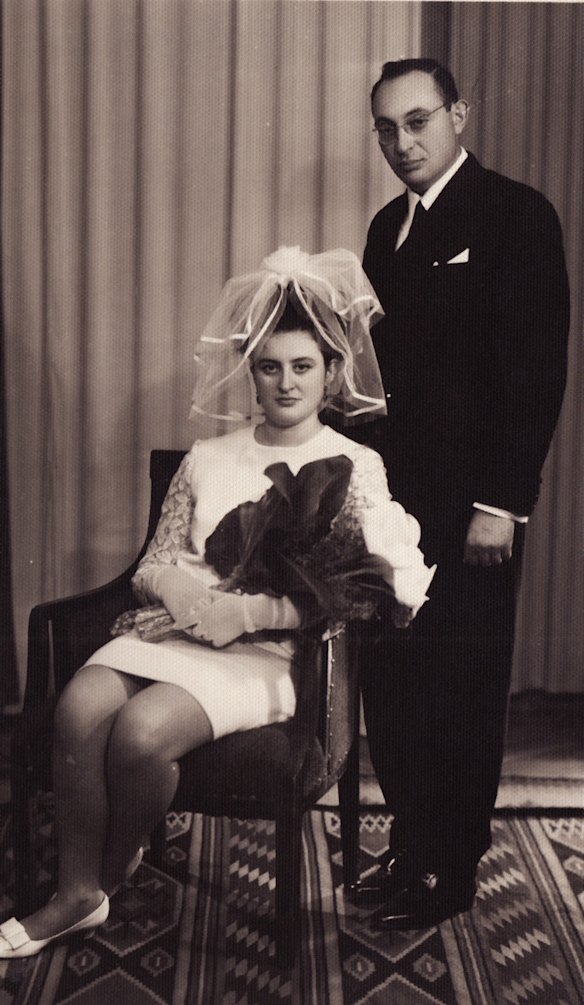
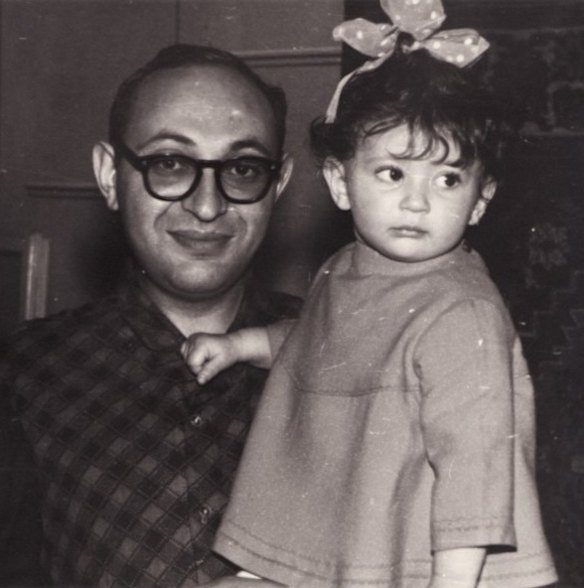
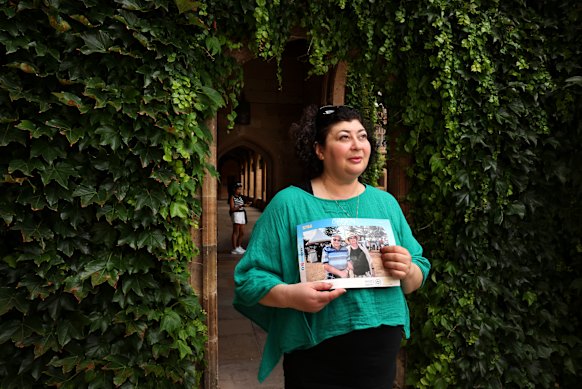
As a small child, Sabina remembers asking her father the questions she is asking herself now: “Why am I here? What does life mean?”
Her father would answer seriously. Nearly 50 years later, she doesn’t remember his answers.
Later, she asked: “Dad, are we Jewish?”
This answer she remembers. “He told me to be proud of being a Jew. It has stuck with me for the rest of my life. Being Jewish at the Hanukkah family event was what killed him.”
Life in Australia brought peace and joy. In the past decade, Alex researched and wrote two books, interviewing survivors of the Holocaust and others on the impact of antisemitism. He wanted to record it and prevent it.
When antisemitism increased in Australia, Alex was distressed.
“It was like he was travelling back in time,” Sabina says. “We came here to be safe. And my mum saw my dad bleed to death at Bondi Beach.”
Tania Tretiak
Tania and Pavel Tretiak moved to Bondi Beach the day they migrated from Tashkent, Uzbekistan, with their two children, Dennis and Julia, in 1992. The couple bought a home in Randwick six years later, but returned most weeks to stroll by the sea.
“They loved Bondi Beach. Isn’t it [ironic], my mum started her life here in Bondi, and her life ended at Bondi Beach,” Dennis Tretiak says of his mother’s death.
Tania, 68, was born in Chechnya, Russia, and moved to Tashkent as a child. She trained as a nurse and met her husband of nearly 50 years, Pavel, a tram driver, on her way to work. They were in their mid-30s when the family moved to Sydney.
“They were very brave to leave everything – their friends, everything they built,” Dennis says.
“It’s a big change, they had to start from scratch – new jobs, new friends, new culture. But they did very well here. They never regretted one day that they had left. They knew what they were going for. They wanted to build a better life, and they knew it would be a better future for us.”
Dennis says his parents were devoted to each other. The couple was together at the fateful Hanukkah event with their granddaughter, Amelia, 4.
“She really loved my dad. They were always together. I don’t remember one day when they were apart. My sister says they were joined by the hip. She adored him.”
Pavel, 70, sustained head injuries and remains in hospital. “She would not be able to live through what he’s going through now, she wouldn’t be able to take it,” Dennis says.
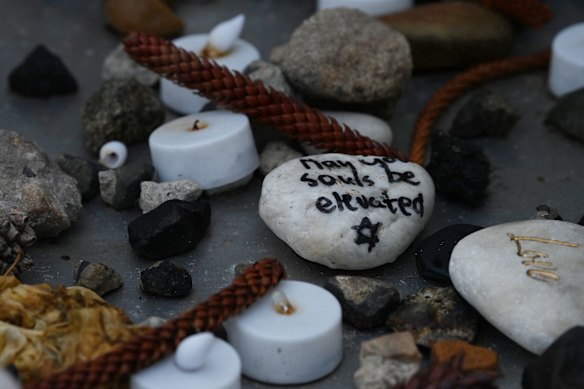
Pavel was Jewish; Tania was not. But she embraced Jewish traditions and celebrations. The couple had enjoyed taking their grandchildren to the Chanukah by the Sea event each year.
“It wasn’t the religion so much, it was more about family and the community. It was all the people they knew who came here at the same time in the ’90s. Mum really enjoyed it all.”
Dennis said his mother had filmed a video, which they found on her phone, of her granddaughter getting her face painted during the festivities that afternoon.
“Mum asked if it was a princess, and Amelia said: ‘Baba … this is a unicorn’. She was so serious about it,” he smiles at his young niece’s comment to her grandmother.
“It must have been just a few minutes before the shooting started.”
Tania and Pavel worked full-time providing community transport for people who were elderly or had a disability. Dennis says his mother loved entertaining and “cooking up a storm”, particularly traditional Uzbek cuisine such as plov (pilaf). She adored Dennis and his wife Tammy’s children, Gabriel, 16, and Liana, 9, and Julia’s daughter Amelia.
Tammy says her mother-in-law was always busy and loved going to events. The couple travelled to Korea last year and went on cruises; they often visited Tashkent. “They were very active and healthy people. They were travelling a lot and enjoying life, and their grandkids.”
Edith Brutman
Edith Brutman was a principled, gracious, caring and passionate woman devoted to her family, community and tackling discrimination, say those who knew and loved her.
Her family was adamant their “beloved Edith” should be remembered as “a woman of integrity who chose humanity, every day”.
“She met prejudice with principle, and division with service,” they said in a statement.
“Our family mourns her deeply, but we ask that her life, not the senseless violence that took it, be what endures. We hope her memory calls us as a nation back to decency, courage, and peace.”
Edith was a member of the NSW branch of B’nai B’rith, an international Jewish organisation that aims to combat antisemitism and discrimination, and provides humanitarian aid.
She was “a gracious woman and a devoted member” of the NSW chapter, the group said after the shooting. B’nai B’rith International said in a tribute:
“Edith was a cherished leader in the community and a devoted member of B’nai B’rith NSW, where she led the organisation’s anti-prejudice and anti-discrimination committee – work that now carries an even more painful and profound significance.”
Ernie Friedlander, the president of the organisation’s Alfred Dreyfus Unit, worked closely with Edith and described her as a “good, caring human being”.
“She was a very clever lady, and she was very, very passionate about dealing with prejudice and discrimination. She was always there, and she had very strong opinions.”
Rabbi Yehoram Ulman knew Edith for nearly two decades. It was “truly difficult for me to imagine she isn’t here”, he said at her funeral at All Souls Chapel at Rookwood Cemetery on December 19.
“Edith wasn’t just a part of our lives, she was a very, very vocal part of our lives. But her love, her loyalty, her devotion, was really unique in every way.
“Edith was a person who did everything in a very full way. She wanted to be charitable in every way.”
Dan Elkayam
French national Dan Elkayam, 27, played his beloved football in much the same way he approached his life off the field: with lightning speed, an insatiable sense of adventure, and a ready smile.
His partner, Krystal Troyano, whom Dan met at a Sydney hostel soon after arriving in Australia in 2022, said his outlook made her feel the pair’s time together would never run out.
“You made me think we were infinite. Death? Not a word for us. We only knew how it [was] to be alive, and very, very fully alive,” Troyano said at his funeral at Ashdod Cemetery in Israel on December 25.
“With you, [no] day was like the other. I dare to say that we were immortals, and that we are forever … Even living so much, your bucket list only grew and grew and grew.
“You were thirsty for living, and you were running for life like you were hungry for it. You lived intensely, but in fast and slow motion at the same time. I love you so much. More than I can say. Thank you for the adventure. Now, go live your next one.”
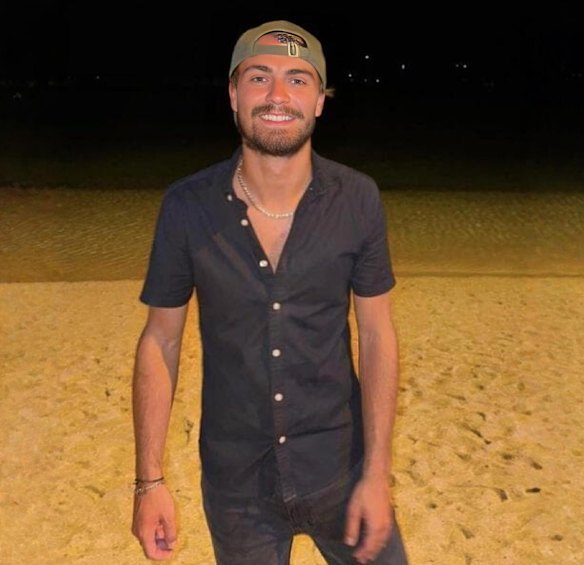
Dan was an IT engineer at NBC Universal, a travel enthusiast, and a passionate footballer who played for Rockdale Ilinden FC’s Premier League side. His family said he had played at the 2022 Maccabiah Games and for various teams in France and Australia, including Waverley. He was in the process of signing with Dolls Point before he died.
He was born and raised in Le Bourget in Paris, where his parents, brothers, nieces and nephews still reside. In a statement after his death, his family said Dan “loved life – fully and intensely”.
“He travelled the world and was known for his gentle, kind, fun and loving nature, making friends wherever he went. Alongside football, he had a deep connection with nature. He was a certified scuba diver and an explorer at heart, always eager to discover new places, cultures and experiences.
“Dan brought light wherever he went and inspired countless people through the way he lived. His smile could light up any room. He was pure joy – a beautiful and humble soul.
“To say that Dan will be missed is not enough. He was a person who truly wanted to do good in the world, to share his love of life and his sense of adventure with everyone around him.”
His close friend, Jesse Singer, recalled how Dan spent his final hours doing what he loved: playing football in the sun by Bondi Beach with his friends, and celebrating his Jewish faith. “People meeting [Dan] for the first time would say he’s shy but happy, always smiling,” Jesse says.
“When all this happened, my wife and I spoke, and we just said we have to live life to the fullest. That’s what we have to do because that’s what Dan did.”
Boris and Sofia Gurman
The public knows Boris, 69, and Sofia, 61, as two of the bravest heroes at Bondi Beach, having confronted one of the attackers, only to be killed for their courage.
To Alex Gurman, they are the parents he would choose a million times over.
“Every good characteristic that I embody now I owe entirely to them,” he says.
“I would choose the same upbringing, the same parents, the same value set. Nothing would change because, candidly, I think I’d hit the jackpot.”
Boris was roughly his son’s age when he fled Ukraine with Sofia and Alex.
“They kind of took the ultimate risk moving to a foreign country, no money, no language, with a child and no idea how they were going to make it work, but their values and principles guaranteed success,” he says in his parents’ commemoration video.
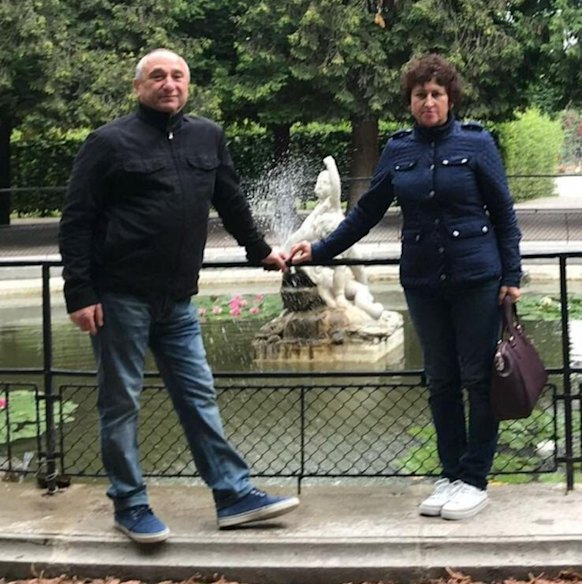
“Their view of what having a fulfilling life would look like is to just have a positive impact on those around you.”
Family was the core of everything they did. They had planned to celebrate Sofia’s birthday the day after the terror attack. The couple would have celebrated their 35th wedding anniversary in January.
Alex describes his mother as the “go-to person” who always seemed to have the most sensible answer to a problem, even if it took you weeks or months to realise she had been right all along.
“From a young age, Sofia was always the one a little further ahead,” Alex shared in a statement read at his parents’ funeral by Rabbi Yehoram Ulman at the Chevra Kadisha in Woollahra. “The first up the tree, the one you trusted with responsibility, the one others instinctively followed. That instinct followed her through life.”
Sofia would cook recipes from myriad cuisines, from Africa to Asia, but every year, her family looked forward to savouring her traditional Soviet wafer cake.
Boris, a retired mechanic, was a calming presence within the family. He was “very organised, tremendously handy” and loved his garden of lemons, chillies and a banana tree.
“In his younger years, he was something of a troublemaker,” Alex’s statement says. “But over time, that energy matured into a deep sense of responsibility and care for the world around him.
“He loved a chat, and it didn’t matter how well he knew you or [how] fluent the shared language was, Boris always found a way to connect. His English was sometimes broken, but his meaning never was.”
Alex says that even in their final moments, the couple showed the depth of who they were.
Peter Meagher
It is hard to find someone who doesn’t wish they had known “Marzo” once they hear about him.
A former police officer and Randwick Rugby coach, Peter Meagher was fulfilling his dream working as a photographer at Bondi on December 14.
His death was violent and horrific, yet Peter was “none of those things”, says his widow, Virginia Wynne-Markham. “He was an honourable man, thoughtful, generous with his time and energy, and he was a considered human being. That is how he should be remembered. He was compassionate, day in and day out.”
In 34 years with the NSW Police, Peter rose to become a much-decorated detective sergeant, yet he never drew his gun. He would have preferred to police without one. “He didn’t like it,” Virginia says.
The last image she has of Peter is a screengrab of a video of the terror attack showing her late husband – wearing his hat backwards – trying to save someone.
“Peter was right there. I found a video that shows Peter face down, trying to help someone, pretty much in full view of those bins and that bridge. In the next photo, he is on his haunches, moving a fellow into a recovery position.
“There’s red on the white shirt that Peter has his hand on.
“In the next shot, Peter is down.
“And in the video, I can see his leg move. Then he is still.”
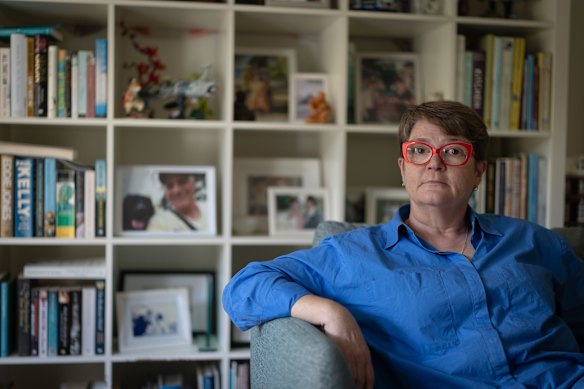
A woman called her on Christmas Day to say she had seen Peter being shot. That made her stay down and protect her four-year-old daughter. “I believe your husband saved my life,” she said.
Virginia says, “With his last breath, he was being selfless. He was an unassuming sort of chap, but he was a good egg.”
To encourage players at Randwick Rugby to aim high, Peter stuck photos of those who had worn the club’s myrtle green and later played for the Wallabies to the lockers.
“On Monday, Tuesday, [and] Thursday nights, he’d go to rugby training,” Virginia says. “He’d be there before anybody else to help set up the cones and make sure everything was where it should be. The water bottles were filled. He’d been doing it for so long that it was kind of effortless for him.”
Had Peter survived, he would have turned 62 on January 18. On that day, Virginia fell apart and sobbed. Her body broke from sadness.
Together since 2009, it was the first significant relationship for both. They met on the matchmaking site eHarmony in 2009, and after months of emails and talking, their first date was the Waratahs v the Hurricanes on May 14, 2010, Virginia says, recalling the exact date.
“We were going to be on the life journey together as companions, as best friends, as lovers of the same things.”
Their chocolate Labrador, Vada, brought him joy every day. And when Virginia walks Vada, the loss of Peter hits her, and she has a good cry. “Other times, I think I should have told him more that I loved him, hugged him more. So I hug her instead.”
With Wolter Peeters and Taylor Dent
Disclaimer : This story is auto aggregated by a computer programme and has not been created or edited by DOWNTHENEWS. Publisher: www.smh.com.au