Accepted norms in Sydney’s underworld are crumbling and the vicious killing of Chris Baghsarian is just one example of the shift.
There has never been honour among thieves. But once, there was a code even the most ruthless of criminals lived by. For the most part, family was left alone; women and children were considered off limits, and violence was largely contained to the world of those inflicting it.
In the underworld, the unspoken rules of engagement were strictly enforced and rarely broken. The line was clear, and for those who overstepped it, retribution was swift and fierce, but even that was within the boundaries of what those on the wrong side of the law considered among themselves befitting of a transgression.
Now though, the rules have changed. Criminals are younger, more brazen, increasingly inexperienced, and armed with a disregard for life and law that astounds even the most seasoned of detectives. This week, the already hazy line between innocent bystanders and the criminal world was further blurred by the alleged kidnapping and murder of elderly widower Chris Baghsarian, killed in a case of mistaken identity that has raised questions about how far criminals are willing to go, and who, if anyone, is safe.

The shift in the criminal landscape has been unfolding over several years, some of it on show in the tragic kidnapping gone wrong of Baghsarian. Where once business was handled in-house, it is now contracted out to guns for hire; acts of retaliation in the past commissioned by local heavies are now ordered by criminals hidden behind encrypted devices and living abroad, far beyond the reach of Australian authorities; and children not yet old enough to drive are hired to do the dirty work of the city’s underbelly.
Organised crime syndicates are exploiting teenagers and their desire to gain status and to fit in, criminologist and former NSW Police detective Vince Hurley says. “They have no identity in society, and they don’t belong to a particular group, and they have a need that the organised crime syndicates meet. That need is a feeling of ego or importance,” he says.
Police now face an increasing challenge to combat indiscriminate violence that has spilled into suburban homes amid perpetual gangland conflicts.

A broken code
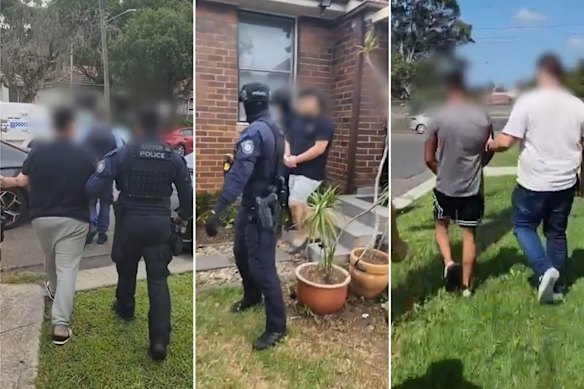
One night last April, 45-year-old Thi Kim Tran answered a knock at the door of her Bankstown home. It was late, and her husband was away, but she answered anyway. As the door opened, three masked men, armed with a gun and a baseball bat, rushed into the home and grabbed Tran. The 45-year-old was stripped naked in front of two boys – including an eight-year-old who was hit over the head with a baseball bat – before being bundled into an SUV. Police found her body in the burnt-out car in a nearby suburb the same night. The men have been charged, but they cannot be named for legal reasons.
Detectives allege Tran, an innocent woman, had been targeted by contracted killers after her husband had been accused of stealing millions of dollars worth of methamphetamine from the international drug syndicate he was working for. The ruthlessness of Tran’s alleged killers shocked experienced police officers and members of Sydney’s criminal underworld, and it flew in the face of a long-held code of conduct.

“It’s extremely rare and, certainly, this organised crime group have … upset a few people out there in the criminal milieu because this is not the norm,” Detective Superintendent Joe Doueihi, commander of NSW Police’s homicide squad, said last year.
“Family, females, children are normally not involved in this type of revenge attack.” Doueihi, a detective for more than 30 years, said the targeting of innocent people in such a way was not just rare, but unprecedented. “These organised crime groups are breaking their own code of conduct by targeting innocent women and children,” he said.
Targeting Tran sent a message about how far the underworld was willing to go, says Hurley, a detective for more than 20 years.
Late one night five weeks later, John Versace, a 23-year-old plumber still living with his parents and working in his father’s business, parked his car outside his family’s Condell Park home. As he got out, a masked and hooded man dressed in all black ran towards him, gun drawn. Before Versace could finish pleading for his life, he was shot at least four times.
Versace, according to police, had only a traffic offence to his name, and no involvement in organised crime. He was nothing but an innocent person killed in a case of mistaken identity, his death an alleged contract killing botched by inexperienced hitmen who got the wrong man. Across the board, detectives are dealing with contract criminals who are sloppier, less skilled and less intelligent than those who came before them, making them increasingly unpredictable.
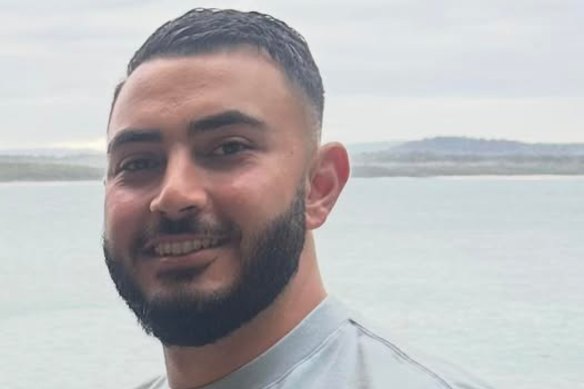
“There’s nothing to suggest that Mr Versace was anything but a hard-working young man who was living at home with his family and trying to set himself up for the rest of his life,” Detective Superintendent Jason Box said after police charged two men with Versace’s murder in November.
Such was the pressure on police that a week later, after underworld figure Dawood Zakaria was killed in a shooting targeting his criminal associate, police launched Taskforce Falcon, a concerted effort to stem violence flowing from a conflict within the Alameddine crime family. Many of the key suspects were arrested over several months, and the feud simmered down before the 150-strong taskforce was wound up at the end of last year. Setting up short-term special taskforces is an “effective way to dismantle whatever the problem is at that time”, Hurley says, but it is a Band-Aid on a bullet wound solution to the changes afoot in the underworld.
This year, a new conflict between the Alameddine family and an emerging rival – the self-proclaimed “Coconut Cartel” – has again thrust innocent bystanders into the firing line. On February 17, former NRL player Matt Utai was ambushed outside his western suburbs home in an attack detectives say was motivated by his son Iziah’s involvement in the Coconut Cartel. Utai, 44, has no criminal links and police say he was another innocent person in the wrong place at the wrong time.
‘Playing catch-up’
Since Tran’s killing last April, many of the alleged offenders charged over the dozens of gangland shootings, firebombings and other targeted attacks have been children. Five teenagers, including a 15-year-old boy, were charged over the shooting of Matt Utai and other targeted attacks on homes linked to his son. More than a dozen shots were fired at a St Clair home while a woman, who was uninjured, was inside. Hours later, Iziah Utai’s home was set alight. Video of both incidents was filmed and shared with SCN Worldstar, an independent media channel that has become a platform for offenders to boast about their crimes. One of the teens, a 16-year-old boy, allegedly helped hide the pistol used to shoot Utai after the attack. The 15-year-old, police allege, drove Utai’s alleged shooter from the attack in a getaway car.

All five of the teens were allegedly part of a “criminal for hire group” contracted to target the Utai family. “They think they’re going to get a reputation of being associated with a crime family or an organised crime syndicate, and then they can use that leverage themselves to maybe even subcontract that out again,” Hurley says.
Beyond the challenge of increasingly younger criminal networks, authorities are being tested by the ability of puppet masters abroad to pull the strings far from the bloodshed. Targeting them has become the No.1 priority for local and federal police. “It’s quite disgusting that criminals who are overseas are now recruiting young people into Australia and essentially consigning them to a particular lifestyle, while they remain offshore,” Detective Acting Superintendent Brad Abdy said after Matt Utai’s alleged shooters were arrested.
The “old boundaries” that once existed between rival criminal groups have blurred too, as competitors increasingly pool resources to import large shipments of illicit drugs into Australia, feeding the country’s famously insatiable appetite for cocaine and other substances. Rather than being far removed from organised crime, the casual consumers of illicit drugs are a crucial link in the chain that drives demand and fuels the supply chain at the heart of organised crime-related violence.
“Police are working around the clock, and they do have a proven record of locking up those responsible,” NSW Police Minister Yasmin Catley told ABC Radio’s Sydney Mornings on Wednesday. “Police will not stop. They are absolutely determined to rid our streets of these organised crime gangs acting out violence on our streets and those bad actors that come along with it.”
But taking into account all the factors behind the latest evolution in organised crime, Hurley sees a near-impossible task for his former colleagues. “It’s so multidimensional that they can’t police it,” he says. As they try to hold the line between chaos and calm, he says, police will continue to adapt to changing crime types. But with resources stretched beyond their limits and crooks often one step ahead, the task is more challenging by the day. “I don’t think they will ever be able to address it,” Hurley says. “They’ll always be playing catch-up to try and work out how to go about it.”
Start the day with a summary of the day’s most important and interesting stories, analysis and insights. Sign up for our Morning Edition newsletter.
Disclaimer : This story is auto aggregated by a computer programme and has not been created or edited by DOWNTHENEWS. Publisher: www.smh.com.au