
From a Michelin-star meal in a quiet street to a storied steamship with an Aussie link, Bristol is full of secrets. Here are nine surprising highlights.
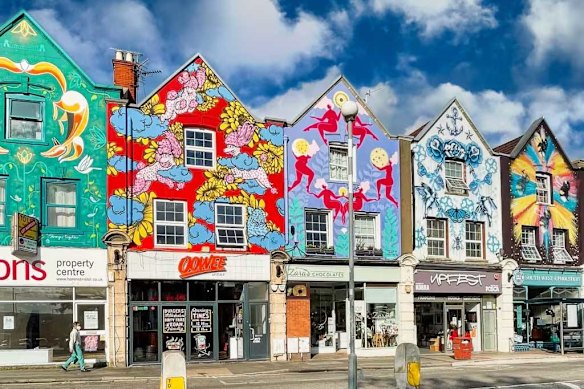
1. The street art tour
When arguably the most famous street artist in the world comes from your home town, there’s no avoiding the medium. Banksy is of course front and centre of the city’s graffiti legacy, but while the enigmatic painter’s work is rarely seen in his home town any more, some of his oldest and most iconic works are still dotted around its walls. Where the Wall walking tours visit many of these while still making sure to point out the great work by other, less famous artists. The tours take in some of Bristol’s best street art, and include insights from Bristolians who have been part of the scene since its ’90s heyday. See wherethewall.com/tours
2. The best restaurant
Sign up for the Traveller Deals newsletter
Get exclusive travel deals delivered straight to your inbox. Sign up now.
Fine dining in Bristol has proved a fickle business over the years, and the fabled Michelin Guide has given and removed stars like clouds in a night sky. While other restaurants have seen their fortunes wax and wane in the hands of Michelin judges, Bulrush has remained a constant. Using foraged or organic ingredients has helped this petit restaurant on Cotham Road hold onto its cherished star since 2019. From the outside, the place looks unassuming, and while the atmosphere inside is relaxed, the standard of the cuisine is consistently brilliant. Using so many wild ingredients, of course, means the menu is highly seasonal. See bulrushrestaurant.co.uk
3. The lights in the dark
February technically isn’t the darkest month in the UK, but as the glow of Christmas fades, it can certainly feel like the bleakest. It’s a perfect time, then, for the Bristol Light Festival, a multi-site, multisensory experience that illuminates the city centre in the depths of British winter. This free event runs between 5pm and 10pm every day for the first 10 days of February and, depending on how vengeful the weather is, can take a couple of hours to explore. Artworks and installations change every year, so check listings for an idea of what to expect. See bristollightfestival.org
4. The toppled slave trader
Bristol found itself the centre of wide media attention in 2020 when protesters removed a statue of the slave trader Edward Colston. The Englishman may have been dead for 299 years, but at a time of social reckoning, his image was deemed no longer tolerable, so was promptly torn down and dumped into Bristol Harbour. Things might have finally ended for old Colston then, but in a bizarre bit of search and rescue, the statue was dragged from the water. Though certainly not resurrected, it is now viewable – prone and in its damaged state – in the M Shed museum. See bristolmuseums.org.uk
5. The concert venue
To give you an idea of how complicated Bristol’s history is with the slave trade, its most historic, and for some most beloved, performance venue was formerly named after Edward Colston. As Colston Hall, it hosted everyone from The Beatles to Jimi Hendrix to Queen. Now rebranded as the Bristol Beacon, it remains one of the best – and certainly most historic – places to see a live performance in the city. Whether it’s rock, stand-up comedy or an orchestral show, check the listings to see what’s on during your visit. See bristolbeacon.org
6. The suspension bridge
One of Britain’s finest Victorian landmarks remains as practical as it is aesthetically pleasing. The Clifton Suspension Bridge is a listed structure and one of the most cherished engineering accomplishments in England. Hanging more than100 metres above the Avon Gorge, it was originally designed by the legendary Isambard Kingdom Brunel and was completed in 1864. While simply a commuter route for thousands of Bristolians, it is endlessly photogenic and is such a beloved symbol of the city that it has its own visitor centre. See cliftonbridge.org.uk
7. The hot-air balloons
There has been a hot-air balloon festival in Bristol since the 1970s. Every August, the sky over the city is filled with hundreds of intrepid pilots taking part in the Bristol International Balloon Fiesta, and crowds of up to 100,000 gather on those summer nights to see the spectacle. One of the most popular spots to watch the event is the Clifton Suspension Bridge (above), but as the event runs over four days, there’s no need to fret too much if you miss out initially. The fiesta is unticketed, but if you like what you see, several local companies can take you up, up and away. See bristolballoonfiesta.co.uk
8. The hotel
Located just east of Castle Park, the Leonardo Hotel Bristol City was built in 2021 in a red-brick style so as not to stand out from the surrounding historic neighbourhood. Offering remarkable value for money considering its location, its 197 rooms and gym are unlikely to get much use considering how close it is to the city’s major attractions. West from the hotel are several of the city’s best pubs, including the Cornubia, the Left Handed Giant brewery and the ever-popular Apple, one of Bristol’s most popular cider bars. See leonardo-hotels.com
9. The retired warship
To get an idea of Brunel’s polymath mind, having admired his bridge, you can get on his ship. The permanently moored SS Great Britain was in service in the mid-1800s, during which it was the largest passenger ship in the world.
The first iron steamer to cross the Atlantic, she then spent almost three decades bringing emigrants to Australia (primarily Melbourne) from Britain. Among her famous passengers was Anthony Trollope, who used the long voyage to write Lady Anna. Today the ship is one of Bristol’s most popular visitor attractions, a museum to herself. See ssgreatbritain.org
The writer travelled as a guest of Visit West. See visitwest.co.uk
 Jamie Lafferty is a writer and photographer based in Glasgow, Scotland. He has been to over 100 countries and all seven continents at least four times. He absolutely will steal your hotel’s shampoo when you aren’t looking.
Traveller Guides
From our partners
Disclaimer : This story is auto aggregated by a computer programme and has not been created or edited by DOWNTHENEWS. Publisher: www.smh.com.au