
After Israel and the US launched joint attacks on Iran on Saturday, Tehran responded with missile attacks across the Gulf, targeting US military bases in those countries. Within hours, the UAE Ministry of Defense confirmed that its air defense systems had successfully intercepted several incoming ballistic missiles.
According to the ministry, the missiles were destroyed before impact. However, debris from one interception fell in Abu Dhabi, killing one civilian. Abu Dhabi sits near several strategic military installations, including Al Dhafra Air Base, which hosts Emirati and US forces.
For many residents, the event unfolded as a series of distant flashes and muffled explosions in the sky. Behind those brief moments, however, is a complex network of radars, interceptors and command systems designed to detect, track and destroy ballistic missiles traveling at hypersonic speeds.
Understanding what happened in those seconds means understanding how the UAE’s layered missile defense network works.
The System Designed to Stop Ballistic Missiles
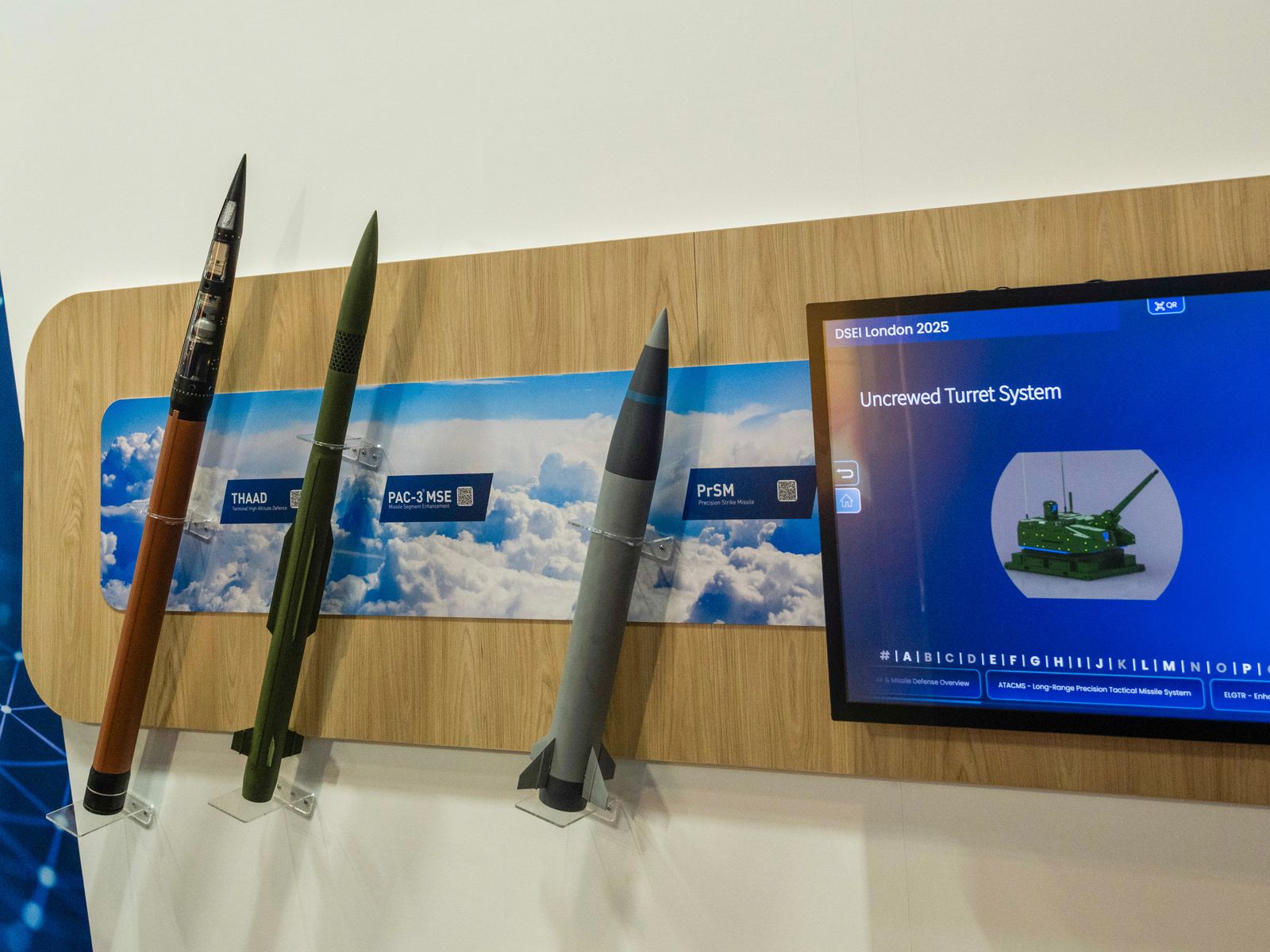
The UAE’s missile shield includes multiple layers of defense, such as the high-altitude Terminal High Altitude Area Defense (THAAD) and the lower-altitude MIM-104 Patriot.
Developed by Lockheed Martin, THAAD is designed to intercept ballistic missiles during the final phase of their flight, when they descend towards their target.
Unlike traditional air defense missiles that explode near a threat, THAAD interceptors destroy incoming missiles through direct kinetic impact, basically colliding with them at extremely high speeds in what is known as “hit-to-kill” interception.
The UAE became the first country outside the US to deploy THAAD in January 2022, having received the system in 2015 as part of a multibillion-dollar defense agreement.
A Layered Defense Network
THAAD is only one component of the UAE’s broader air- and missile-defense architecture. The country also operates the MIM-104 Patriot system, which is designed to intercept aircraft and ballistic missiles at lower altitudes.
Together, these systems form what defense planners describe as a layered missile-defense architecture, giving operators more than one opportunity to intercept an incoming threat before it reaches the ground.
In a typical interception sequence, several steps happen within seconds:
- Detection: Early-warning sensors and radar systems detect a missile launch and begin tracking its speed and projected flight path.
- Tracking and command: That data is relayed to command-and-control networks, which analyze whether the missile threatens populated areas or critical infrastructure and determine where an interception should occur.
- Interception: High-altitude interceptors such as THAAD attempt to destroy the missile in the upper atmosphere. If necessary, lower-altitude systems like Patriot provide another interception opportunity.
Missile defense begins with sensors that can detect a launch within seconds. One of the key radars used with THAAD is the AN/TPY-2, a high-frequency X-band radar designed to track small, fast-moving objects at long distances.

The radar can detect and track ballistic missiles hundreds of kilometers away, following objects traveling at hypersonic speeds and transmitting that data to command centers in real time.
Once a missile launch is detected, defense systems calculate its trajectory and determine where the missile will be at a given moment in flight. Interceptors are then launched to meet it at that exact point in space.
Why Intercepting Ballistic Missiles Is So Hard
Ballistic missiles travel extremely fast. Some reach speeds of more than 20,000 kilometres per hour, fast enough to cross the entire UAE in just a few minutes. Because of those speeds, defense systems often have only minutes to detect, track. and intercept a missile before it descends toward its target.
To respond within that narrow window, missile defense systems rely on multiple technologies working together: early-warning sensors to detect launches, radar networks to track the threat, and interceptor missiles designed to destroy it mid-flight.
The expansion of missile defense systems across the Gulf has been driven largely by the rapid development of ballistic missile arsenals in the region. Iran is widely considered to possess one of the largest ballistic missile inventories in the Middle East.
As a result, Gulf countries have spent more than a decade investing in radar systems, interceptors, and command networks designed to protect critical infrastructure, major cities, and military facilities. The UAE hosts several major military installations, including Al Dhafra Air Base, which houses both Emirati and US forces.
Even when a missile is successfully destroyed, the danger does not disappear entirely.
Intercepted missiles can break apart at high altitude, sending fragments falling back toward the ground. In some cases, debris can still cause damage if it lands in populated areas. Saturday’s incident illustrates that risk: Although incoming missiles were intercepted before impact, falling debris from one interception killed a civilian in Abu Dhabi.
This story originally appeared on WIRED Middle East.
Disclaimer : This story is auto aggregated by a computer programme and has not been created or edited by DOWNTHENEWS. Publisher: wired.com



