
Nomi Kaltmann
On the first night of Passover, Jewish children open the Seder – the meal held by families on the first and second nights of Passover where we retell the story of the Exodus from Egypt – with the Ma Nishtana: why is this night different from all other nights?
They spend weeks practising these ancient Hebrew verses and they ask the familiar questions: why do we dip our vegetables twice? Why do we lean like kings when we drink our wine? Why do we eat matzah instead of bread? And why do we eat maror, bitter herbs, instead of other vegetables?
I used to love reciting the Ma Nishtana as a child. Even now, in the weeks leading up to Passover, I find myself humming it as my children practise morning and night before their teachers test them. But this year, the question lands differently.
Why is this night different? This year, many Jewish families in Australia will sit down at their Seder tables with an empty chair. Passover is usually one of the happiest festivals on the Jewish calendar, celebrating the freedom of the Jewish people from Egypt, from slavery to nationhood.
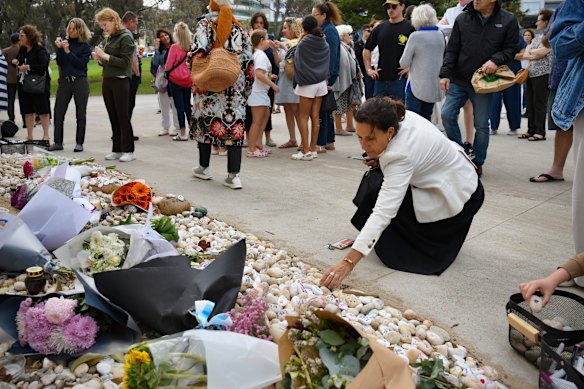
Families spend weeks planning the food, inviting guests and organising where the Seders will take place. Some host at home, others travel somewhere special, and the evening stretches late into the night. Yet, since the Bondi Hannukah attack in December, every Jewish festival has had grief mixed in with joy.
At Purim, the first festival after Hannukah, many people dressed as bees to honour Matilda Bee, the 10-year-old girl who was tragically killed. Now Passover arrives, and the losses are felt again.
The Seder is usually led by the head of the family, but this year, the widows and orphaned children of Rabbi Eli Schlanger and Rabbi Yaakov Levitan will sit at the table without their husbands and fathers.
For other families, whose loved ones were killed at Bondi, there will be a sadness of those who are missing. The rituals of Passover and celebrating freedom will be the same, but the absences will be impossible to ignore.
In a way, this grief echoes the Passover story. The Seder is built around symbols of hardship alongside symbols of freedom. We eat the bitter herbs as well as the festive meal. Joy and sorrow are never fully separated.
The Haggadah – the book that retells the story of the Exodus from Egypt – acknowledges this tension directly. It reminds us that in every generation there are those who rise up to destroy the Jewish people, and yet somehow, we endure.
At Passover this year, which starts this Wednesday evening and runs until the Thursday of the following week, many Jews in Australia will still feel shaken. The sense of safety we once assumed in this country has been fractured. But Passover is not only about remembering our people’s suffering, it is also about insisting on continuity.
And so, children will still stand up at tables across the country and ask the ancient questions, Ma Nishtana, why is this night different from all other nights? This year, the answer is painfully clear, because some of us will be asking it with people we love missing from the table.
Nomi Kaltmann is an Orthodox rabbi.
From our partners
Disclaimer : This story is auto aggregated by a computer programme and has not been created or edited by DOWNTHENEWS. Publisher: www.smh.com.au




