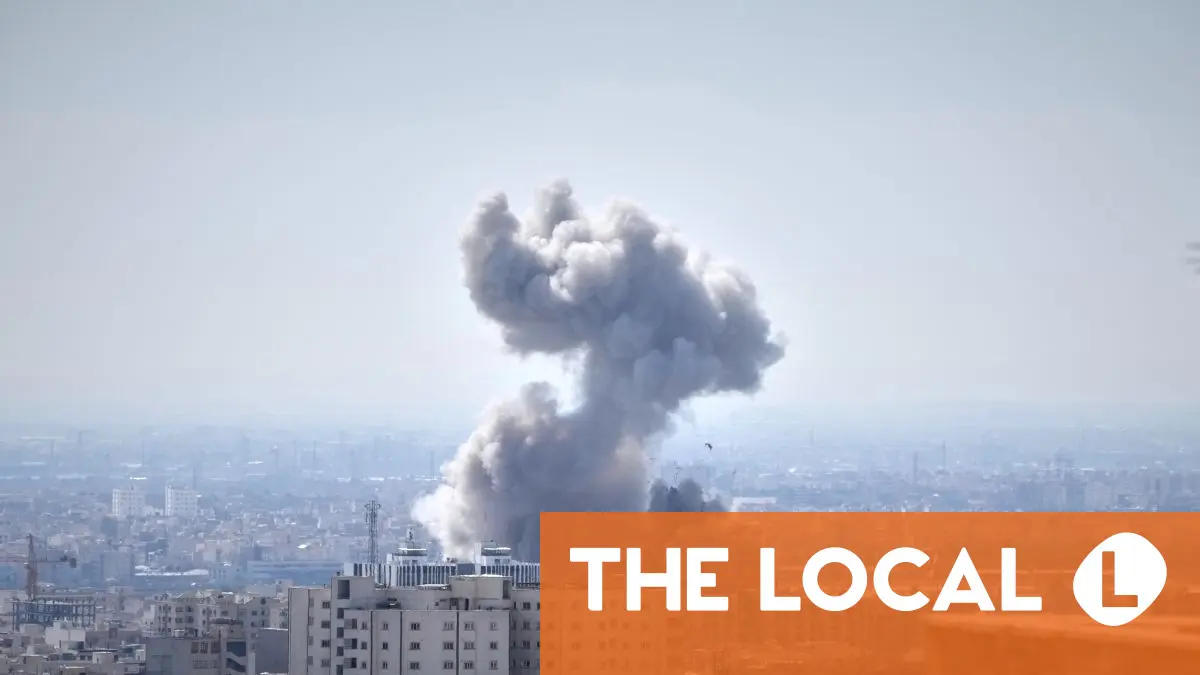
Around 30,000 travellers from German tour operators are affected by the escalation in the Gulf region. German and EU citizens are advised to stay put and listen to local authorities as state evacuations are so far not possible.
Thousands of travellers from around the world are stuck in the Middle East in what has become a war zone. Planes and cruise ships cannot take off and the sound of rocket alarms are common.
“We all have to be prepared for this conflict to last longer. It is not foreseeable that we can expect an end to the fighting in the next few days,” said Germany’s Foreign Minister Johann Wadephul on Sunday evening on a televised ARD program.
Israel and the US had begun air and missile attacks against targets in Iran on Saturday morning, in which religious leader and head of state Ayatollah Ali Khamenei was also killed.
Strikes on civilians have also been reported, including one on a girls’ elementary school which had killed more than 100 children.
Tehran responded with attacks on Israel as well as targets in the Gulf region, where there are US military bases.
German, French and UK leaders have so far condemned Iran’s retaliatory attacks.
According to US President Donald Trump, the war with Iran could last another four weeks.
Travellers affected
As a result, air traffic at Dubai airports, for example, was suspended until further notice.
Temporary accommodation, meals and refreshments were provided. In addition, the United Arab Emirates wants to cover “all accommodation and food costs for affected and stranded passengers”, the authority announced.
For the time being, however, a lot of uncertainty remains. A traveller from Hamburg, who was stranded in Dubai on her return from Malaysia with the airline Emirates, reported on Sunday that she saw columns of smoke over the city from her hotel. Several people had told her that there had been debris at the airport.
The German Travel Association (DRV) advises, “Tour operator guests should follow the instructions of the local authorities and stay in their booked hotel as a matter of urgency and not go to the airport or neighbouring countries on their own.”
According to the DRV, around 30,000 travelers from German tour operators are currently affected by the situation.
The Foreign Office said on Sunday that a low five-digit number of affected Germans in the Gulf region – more than 10,000 people – has so far registered in the crisis preparedness list. These consist of both holidaymakers and Germans living abroad.
No evacuation possible
Foreign Minister Wadephul said a military evacuation of Germans in the area is not possible as airspaces around the region are closed.
Instead, the federal government is relying on information services and consular support. “All embassies, all foreign missions are open,” he told the ARD programme Caren Miosga.
A spokeswoman for the Federal Foreign Office added: “Travellers in the region are called upon to examine commercial exit options and to obtain information directly from tour operators or airlines.”
In addition, German nationals in the region are instructed to register on the “Elefand” crisis preparedness list, which will allow an embassy to contact them in an emergency and offer support if necessary.
It is estimated that there are a few thousand people with EU citizenship in Iran, according to a senior EU official in Brussels. However, many of them also have Iranian citizenship and do not necessarily want to leave the country, she added. She did not give exact information on the number of people who want to be evacuated.
Significantly more EU citizens are stuck in countries around Iran because of cancelled flights.
Disclaimer : This story is auto aggregated by a computer programme and has not been created or edited by DOWNTHENEWS. Publisher: thelocal.de