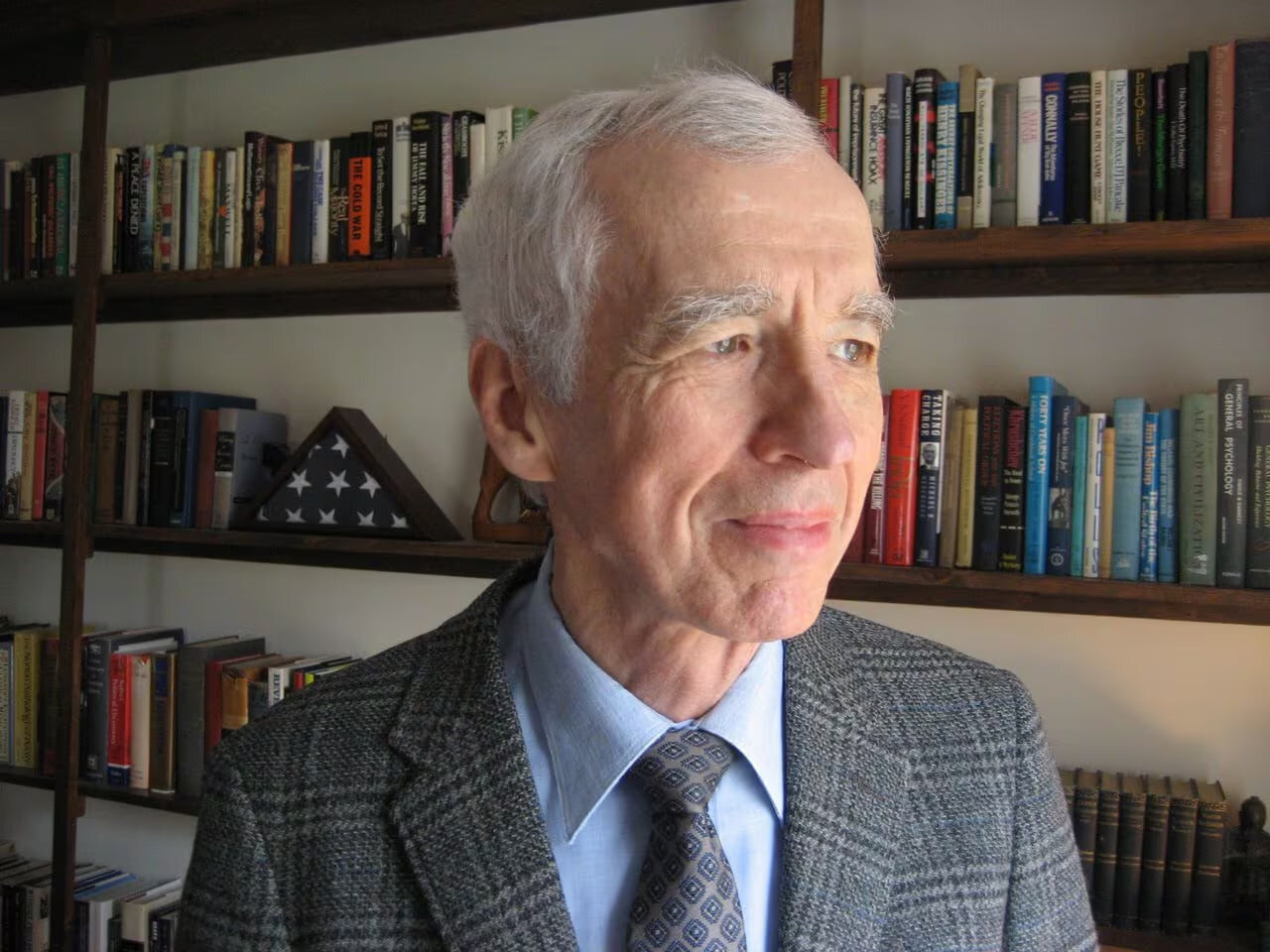
TEHRAN – Paul Pillar, a former CIA officer and now a senior fellow at Georgetown University’s Center for Security Studies, tells the Tehran Times that the Pentagon’s attacks on Venezuelan boats in the Caribbean, carried out under the claim that they are trafficking drugs to the United States, reflect President Donald Trump’s return to the “gunboat diplomacy” of the 1920s and 1930s, when U.S. military forces intervened in several Latin American countries.
Questions are mounting over the legality of a wave of U.S. strikes on alleged “drug boats” in the Caribbean Sea, which have killed more than 80 people since September.
UN experts have warned that the “systemic” nature of the strikes “raise serious concerns about the commission of potential international crimes,” the BBC reported on December 5.
It has become evident that the Trump administration supports compliant leaders in South America.
The United States seems determined to push President Maduro out of Venezuela. According to reports, just recently U.S. Secretary of State Marco Rubio has floated the idea of granting Maduro safe passage to Qatar.
Releasing its new national security strategy on December 5, 2025, the Trump administration said, “American foreign policy elites convinced themselves that permanent American domination of the entire world was in the best interests of our country.”
In an analysis, Foreign Policy magazine said Trump’s refocusing of U.S. influence on its immediate vicinity has been foreshadowed for months, including earlier this week when the administration published a “Trump corollary” to the 1823 Monroe Doctrine stating that “the American people—not foreign nations nor globalist institutions—will always control their own destiny in our hemisphere.”
The following is the text of the interview with Paul Pillar:
So far, the U.S. has gone to the extreme by targeting Venezuelan boats in the Caribbean and telling Maduro to leave the country. Do these behaviors and statements show that Trump wants to revive the Monroe Doctrine in South America?
The Monroe Doctrine–which was always mainly about opposing interventions in the Western hemisphere by powers that are outside the region–has been a part of U.S. foreign policy, at least tacitly, for two centuries. What Trump is doing is a reversion to the “gunboat diplomacy” of the 1920s and 1930s that saw U.S. military interventions in several countries in the region–an approach that came to be widely discredited.
What sense do these ultimatums to Venezuela send to the world?
They convey the sense that the United States under Trump is an imperialist power.
In general, don’t you see these behaviors as reckless and dangerous?
Trump favors authoritarian regimes that display his variety of right-wing false populism.
Of course there is recklessness involved. The principal dangers include the risk of a larger war between the U.S. and Venezuela. There are also ill effects in the United States domestically, in that much of what is being done in the attacks on the small boats reflects a further breakdown of the rule of law under Trump.
Statements by American officials openly indicate that the Pentagon’s attack on Venezuela is imminent under the allegation that Maduro’s government is an accomplice in the drugs trafficked into the United States. Isn’t the Trump administration pushing the fragile world order toward more anarchism, especially as Maduro’s involvement in drug trafficking has not been proven?
Any broader anarchistic effects will depend on the extent to which the Trump administration uses even more military force against Venezuela–especially in any direct attack on that country–than it has already. The issue regarding drugs is not so much whether Maduro is innocent of any involvement in the drug trade–he is not–but rather that blowing up small boats in the Caribbean is hardly the most effective way to curb that trade, and specifically any part of the trade that harms the U.S. There also is inconsistency in the Trump administration’s policies about drugs, as highlighted by Trump’s pardon of a former president of Honduras who had been convicted in a U.S. court of trafficking large amounts of cocaine into the United States.
Some argue that Trump’s political, economic and military pressure on Venezuela is intended to gain control over Venezuela’s oil riches given the U.S. president’s great love for oil and his disdain of renewable energy. What is your opinion?
Trump’s pressure on Venezuela is more a matter of exerting power for the sake of exerting power.
Oil is less of a consideration in this matter than it would have been before fracking technology increased oil production within the United States. Probably for Trump, his pressure on Venezuela is more a matter of exerting power for the sake of exerting power.
Is Trump sending a message to leftist governments in the American continent by sending the world’s largest aircraft carrier, the USS Gerald. R. Ford in the waters off Venezuela?
Such shows of military capability have long been used to send messages to adversaries. The specific message is that the targeted country might be subject to a military attack. In the current case, probably the regime in Cuba is as much a part of the intended audience as the Maduro regime in Venezuela, which is an ally of Cuba.
If, as Trump and some Republicans claim, that the U.S. wants to bring democracy to Venezuela, there are despotic rulers in the world that Trump has friendly ties with. If this claim is true, how can these controversies be reconciled?
Of course they cannot be reconciled, although this problem has been around a lot longer than Trump. It characterized many relationships the United States had during the Cold War, when the overriding concern was whether a regime took the side of the United States or the USSR. The twist under Trump is that he shows favoritism especially toward authoritarian regimes that display his variety of right-wing false populism.
Disclaimer : This story is auto aggregated by a computer programme and has not been created or edited by DOWNTHENEWS. Publisher: tehrantimes.com