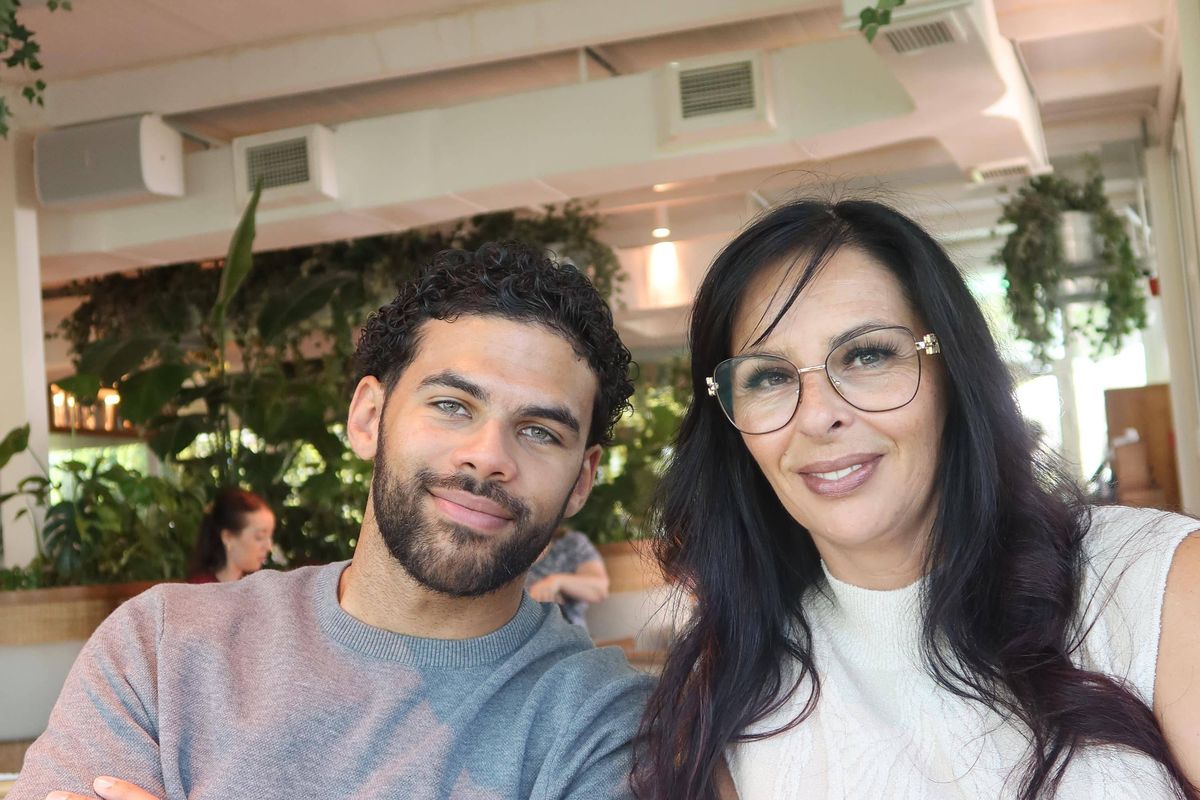
The former contestant’s mum and grandmother are also affected
A former Love Island star has broken his silence about a health ‘scandal’ that has affected him and members of his family. Maxwell Samuda is the first man to reveal how a cancer-linked pregnancy medication taken by his grandmother decades ago has affected his wellbeing.
Maxwell suffers from multiple reproductive health complications, which he attributes to exposure to diethylstilbestrol, widely known as DES. His mother, Natalie Samuda, 50, and grandmother, Maureen Day, 78, similarly believe their medical conditions, encompassing breast cancer and autoimmune disorders, stem from the medication.
The 26-year-old, who featured in the ninth series of the ITV programme, branded the circumstances a “scandal” and threw his support behind demands for a comprehensive public inquiry. DES is a man-made version of the female hormone oestrogen administered to women between the 1940s and 1970s to prevent pregnancy loss, reduce breast milk production and alleviate menopausal symptoms.
The campaign organisation DES Justice UK (DJUK) estimates approximately 300,000 women received it, resulting in fertility problems, reproductive abnormalities and heightened cancer risk. The medication was connected to a form of cervical and vaginal cancer – clear cell adenocarcinoma – in 1971, leading US authorities to recommend against prescribing it to expectant mothers. Despite this, it remained in use across Europe until the late 70s.
DES is additionally associated with other malignancies, including breast, pancreatic and cervical cancers. Mrs Day, a resident of Herne Bay in Kent, believes she was given DES in 1972 and 1973.
She already had one daughter – Ms Samuda’s elder sister – and took the drug during her second pregnancy to prevent miscarriage. After her son was born prematurely and sadly passed away, she took the drug again to halt breast milk production.
Mrs Day received a breast cancer diagnosis four years ago. Ms Samuda underwent a procedure to remove pre-cancerous cells from her cervix at 25, had her fallopian tubes removed due to fluid accumulation, and underwent a full hysterectomy last year.
She also battles multiple autoimmune conditions. Meanwhile, Samuda needed surgery as an infant for undescended testes, a condition where one or both testicles fail to descend into the scrotum before birth.
Five years ago, he discovered a benign lump on his scrotum and medics informed him that he has varicocele, enlarged veins in his scrotum. A semen analysis also revealed a low sperm count.
Samuda, who is employed in finance and currently resides in Dubai with his mother, shared with the Press Association: “I do a lot to keep myself in shape, to keep myself fit and healthy. I don’t drink, I don’t smoke.
“Having a family is something that I’m really keen on doing one day, if I get the opportunity.”
The revelation that you might potentially face issues with that – something I’ve always taken for granted – suddenly made me realise, ‘oh, I’m not actually guaranteed that’… it’s definitely an unsettling feeling. And it can be very frustrating to know that it’s off the back of something that happened 50-odd years ago that I had no control over.”
The family now stands firmly behind DJUK’s demand for a public inquiry and compensation scheme for DES victims. Ms Samuda, who previously worked as a midwife, noted her elder sister had escaped any health complications.
She continued: “Coming from a healthcare background myself, it needs a full inquiry to understand how, what, why and when, to ensure that this can’t happen again. So many people’s lives have been affected.
“I’ve literally had, with all the autoimmune issues, eight to nine years of really feeling unwell almost on a daily basis. And constant treatments, medications, appointments, surgeries; it’s had a really big impact on my day-to-day life.”
Samuda explained he felt compelled to speak publicly about the matter because there was “no shame or nothing to hide” regarding his health. “When it comes to men, sometimes it can be a habit of just keeping issues to yourself and overlooking certain things,” he said.
“The main thing that I would want men to take away from this situation is when there is something that you spot, get it looked at straight away. There’s no reason to hide or to not feel comfortable about what it is that you’re experiencing, especially when it can come to things like our reproductive system.
“It can be quite a touchy subject for men. But I think when it comes to something like this, where it is such a big scandal, where so many people have been affected, I think people do need to come together to really vocalise how it has impacted them.”
Mrs Day said: “We always wondered why my eldest daughter never had any health problems, but Natalie did. I didn’t realise that it had that impact until I saw coverage of DES on the news.
“For it to have affected Natalie and Maxwell is extremely upsetting. We also don’t know if it will impact Maxwell’s children if he is able to have them in the future.
“I wish I had never taken it and the fact that so many women were allowed to is disgusting. I want justice for all of us and compensation for everybody affected.”
DJUK, which now has more than 500 members, met with UK Health Secretary Wes Streeting last month, advocating for a public inquiry into what they term a “silent scandal”. They are also campaigning for an NHS screening programme to identify those potentially at risk due to DES exposure.
Clare Fletcher, a partner at Broudie Jackson Canter, the firm representing DJUK, said: “The story of Maureen, Natalie and Maxwell is a tragic but all too familiar one which shows that this isn’t a historic injustice, but one that is affecting lives today. So many families have had their lives blighted and devastated because they trusted doctors and the government.”
While compensation schemes for DES victims exist in the US and Netherlands, there is currently no such provision in the UK.
A spokesperson for the Department of Health and Social Care said: “For too long, GPs and other health professionals have been unaware of the impacts of DES and support that should be offered to those exposed, despite so many women continuing to endure its devastating impacts a generation on. This government has gripped this issue by alerting cancer alliances to ensure NHS clinicians are aware of the impacts of DES and NHS screening guidance.”
The representative added that Health Minister Dr Zubir Ahmed had a meeting with DES campaigners last month “to discuss what more we can do to support women exposed, including the need for further clinical guidance and boosting research into the long-term, generational harms of the drug”.
Disclaimer : This story is auto aggregated by a computer programme and has not been created or edited by DOWNTHENEWS. Publisher: mirror.co.uk