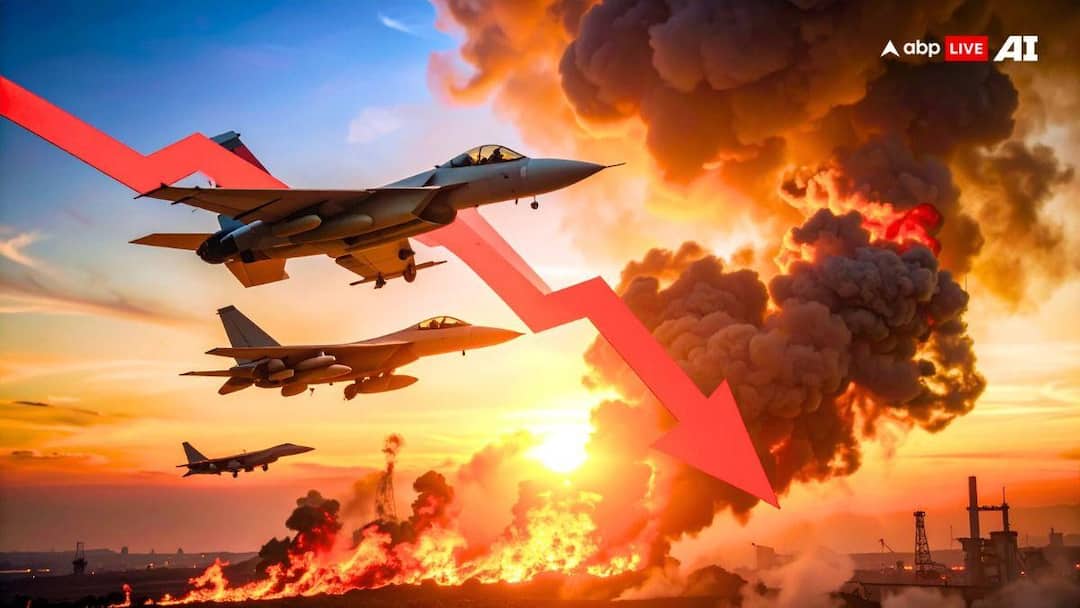
Indian equity markets started Wednesday morning on a negative note, as sentiment among investors remained bleak, with benchmark indices sliding sharply in the pre-open session. Geopolitical tensions in West Asia continue to rattle global markets and keep investors on edge.
The BSE Sensex opened the session a little under 78,700, crashing close to 1,600 points and the NSE Nifty50 started the day around 24,400, tanking more than 450 points, as of 9:15 AM.
On the 30-share Sensex, Infosys, HCL Tech, TCS, BEL, and Tech M emerged among the only gainers this morning. Meanwhile, the laggards included L&T, Tata Steel, IndiGo, Adani Ports, and UltraTech Cement.
In the broader markets, the Nifty Microcap250 led a sea of red and nosedived 2.19 per cent. Sectorally, the Auto index bled 2.74 per cent, while the IT index remained the only exception in green and inched up 0.66 per cent.
The cautious mood comes after domestic markets remained closed on Tuesday on account of the Holi festival, leaving investors to react to global developments and heightened geopolitical risks at the start of Wednesday’s session.
At around 9:06 AM in the pre-open session, the Sensex was at 78,393.66, down 1,845.19 points or 2.30 per cent. The Nifty50 stood at 24,333.30, lower by 532.40 points or 2.14 per cent, indicating a likely gap-down opening when trading begins.
Asian Markets Slide Amid Energy Shock Fears
Asian markets also witnessed heavy selling on Wednesday as investors reduced exposure to crowded trades in gold and technology stocks amid fears that a wider Middle East war could trigger an energy shock.
Shares in Seoul plunged around 4 per cent, taking the two-day losses in the Korean market to more than 11 per cent, as foreign investors and short-term traders exited positions following the recent rally in chipmakers driven by artificial intelligence demand.
Japan’s Nikkei 225 declined about 2.5 per cent, extending losses for a third straight session, reported Reuters. Both Japan and South Korea are among the world’s largest energy importers, making them particularly sensitive to rising oil prices.
According to market strategists, the widening conflict is forcing investors to reassess global inflation risks.
“It does look like conflict is going to go a little bit longer than what people thought initially. And there’s been escalation, because the war is now broadening out to include allies of the US,” said Damien Boey, portfolio strategist at Wilson Asset Management in Sydney.
“Oil infrastructure seems to be under attack … so people are having to think about what is the duration of all of that,” he added.
Global Markets Turn Volatile
The geopolitical escalation has triggered volatility across global assets. Gold fell around 4.5 per cent overnight as traders unwound profitable positions to cover losses elsewhere. The Australian dollar also slipped 0.8 per cent during the volatile trading week.
Early Asian trade showed some stabilisation attempts, with gold steadying near $5,128 an ounce, while US and European index futures tried to recover modestly.
On Wall Street, major indices trimmed deeper losses but still ended lower. The S&P 500 closed down 0.8 per cent amid fears that prolonged high oil prices could keep inflation elevated and delay potential interest rate cuts.
“The biggest issue that investors are trying to weigh gets back to the intertwining of inflation and interest rates,” said Chuck Carlson, CEO at Horizon Investment Services in Hammond, Indiana.
“Are energy prices going to remain elevated for a longer period of time than people thought yesterday, and then does that pass through?”
Monday’s Sharp Fall Sets Negative Tone
In the last trading session on Monday, Indian benchmark indices ended lower after witnessing sharp volatility through the day. Rising crude oil prices and escalating tensions in the Middle East weighed heavily on investor sentiment.
The Sensex had dropped 1,048.34 points, or 1.29 per cent, to settle at 80,238.85. The Nifty also ended in the red, declining 312.95 points, or 1.24 per cent, to close at 24,865.70. Earlier in the day, it had fallen 575.15 points, or 2.28 per cent, to an intra-day low of 24,603.50.
Analysts believe markets could remain volatile in the near term as investors monitor geopolitical developments, crude oil prices and global risk sentiment.
A sustained rise in oil prices remains a key risk for India given its implications for inflation, fiscal balances and corporate margins, particularly for energy-intensive sectors.
Disclaimer : This story is auto aggregated by a computer programme and has not been created or edited by DOWNTHENEWS. Publisher: abplive.com