
A bipartisan privacy coalition in the United States Congress introduced legislation on Thursday that would impose a strict warrant requirement on the FBI’s backdoor searches of Americans’ communications, aligning federal law with a 2025 federal court ruling that found the warrantless practice unconstitutional.
The bill, the Government Surveillance Reform Act of 2026, repeals controversial expansions of the government’s warrantless wiretapping authority while overhauling key aspects of federal surveillance law—setting up a showdown with the US intelligence community and its congressional allies weeks before a sweeping global spy program sunsets on April 20.
Senators Ron Wyden and Mike Lee are leading the legislative push alongside Representatives Warren Davidson and Zoe Lofgren. The measure carries endorsements from civil liberties organizations across the political spectrum.
The legislation arrives in a surveillance landscape fundamentally altered since 2024, when Congress last renewed the wiretap program, authorized under Section 702 of the Foreign Intelligence Surveillance Act (FISA).
The bill’s sponsors framed the Government Surveillance Reform Act as a necessary corrective to a surveillance state that has been supercharged by modern technology and bureaucratic mission creep. Wyden noted that the explosion of commercially available data and rapid advances in AI have “far outpaced the laws protecting Americans’ privacy.”
Davidson echoed that sentiment, arguing that Section 702 has been stretched “far beyond its original purpose” to enable unconstitutional domestic searches.
Section 702 permits the federal government to collect the communications of foreigners located outside the US without a warrant. In practice, the program sweeps up vast quantities of communications belonging to American citizens, permanent residents, and others on US soil.
The FBI routinely scours this intercepted data to read the private messages of Americans without a warrant, a practice privacy advocates call a “backdoor search.”
In a floor speech earlier this week, Wyden warned that Congress is debating reauthorization without a complete picture of the government’s activities. “There’s another example of secret law related to Section 702, one that directly affects the privacy rights of Americans,” he said, noting that successive administrations have refused to declassify the matter. “When it is eventually declassified, the American people will be stunned that it took so long and that Congress has been debating this authority with insufficient information.”
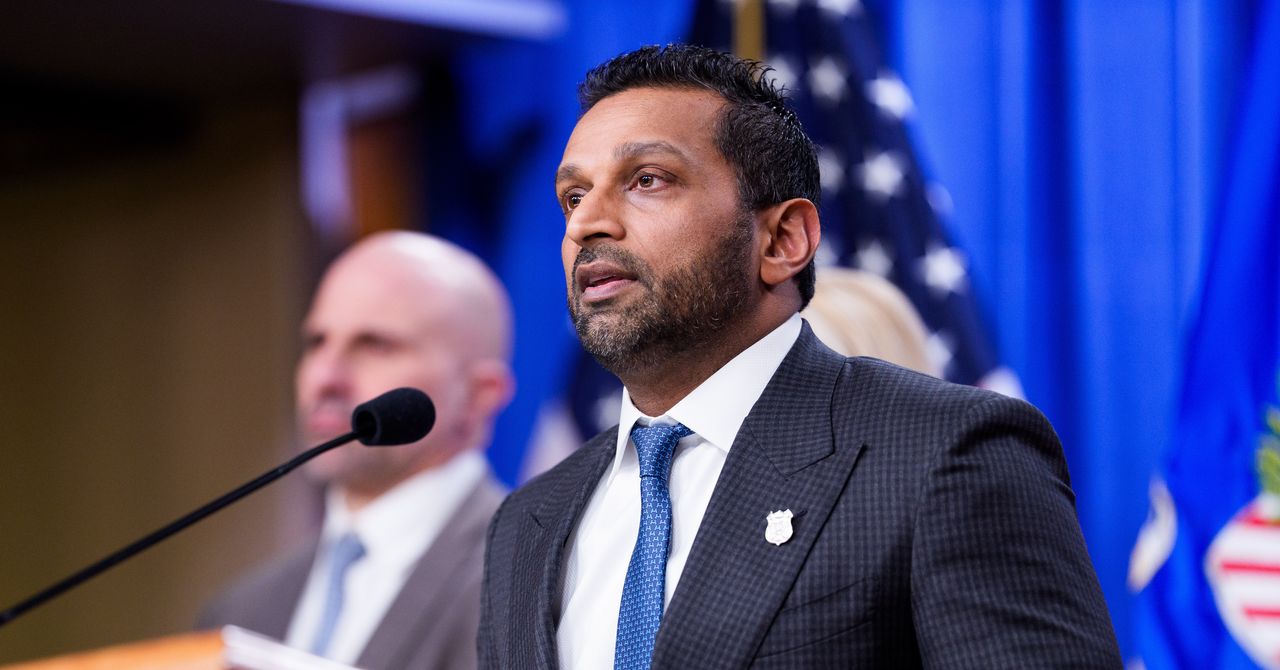
The internal oversight mechanisms meant to check the government’s sweeping powers have been systematically dismantled over the past year. FBI director Kash Patel, who previously criticized the warrantless searches, flipped on the issue after taking office. He now defends the program as a “critical tool.”
In May 2025, Patel shuttered the FBI’s Office of Internal Auditing, the compliance unit that drove a reduction in improper searches of Americans’ data from over 119,000 in 2022 to just 5,518 in 2024. The FBI heavily touted that improved compliance rate two years ago as a primary argument for why a warrant requirement wasn’t needed.
Director of National Intelligence Tulsi Gabbard has overseen a similar hollowing out of independent watchdogs, including the mass firing of inspectors general and the incapacitation of the Privacy and Civil Liberties Oversight Board. Gabbard also faces a whistleblower complaint alleging she shared National Security Agency intercepts with the White House for political purposes.
The FBI and Office of the Director of National Intelligence did not immediately respond to a request for comment.
| Got a Tip? |
|---|
| Are you a current or former government employee who wants to talk US government surveillance? We’d like to hear from you. Using a nonwork phone or computer, contact the reporter securely on Signal at dell.3030. |
This erasure of internal guardrails coincides with a broader deployment of law enforcement tools against domestic targets. Following a 2024 directive from former FBI deputy director Paul Abbate urging agents to actively run queries on Americans to justify the program’s existence, as first reported by WIRED, the current administration has raided the homes of journalists and issued a presidential memorandum redirecting counterterrorism resources toward domestic political groups.
The worst-case scenarios reformers warned of during the spy program’s last reauthorization are no longer theoretical.
The Trump administration is demanding a “clean” extension of the 702 program with zero reforms, a position backed by congressional allies like Senator Tom Cotton and driven internally by White House adviser Stephen Miller.
The Government Surveillance Reform Act represents the most comprehensive overhaul of federal surveillance laws in nearly half a century. While reauthorizing the Section 702 program for four more years, it also attaches strict constitutional safeguards to intelligence collection.
The bill closes the backdoor search loophole, requiring the FBI to obtain a warrant before reading the private communications of Americans swept up in foreign wiretaps. Those restrictions still include narrow exceptions for emergency situations.
The bill also strictly prohibits a practice known as “reverse targeting,” whereby the government surveils foreigners overseas as a pretext to spy on Americans.
The legislation further dismantles the most controversial powers granted to the government in 2024: It repeals the expanded definition of an “electronic communications service provider,” a sweeping provision that privacy advocates warned would force millions of everyday Americans and private businesses to secretly spy on the government’s behalf.
“It is imperative that Congress enact real reforms to protect our civil liberties, including warrant requirements and statutory penalties for privacy violations, in exchange for reauthorizing Section 702,” says Senator Lee.
The reforms also aim to address how federal agencies exploit parallel authorities and commercial markets, banning the federal government from bypassing Fourth Amendment warrant requirements through data brokers who traffick in Americans’ personal information.
By stripping a similar data broker ban from a 2024 defense bill, congressional leadership preserved a massive loophole that federal law enforcement has aggressively exploited. “By not banning the purchasing of data, they left a giant loophole in our country’s privacy laws,” says a senior Republican aide, who requested anonymity to speak freely.
Reformers are bolstered by a landmark January 2025 ruling in United States v. Hasbajrami, in which a federal judge ruled that warrantless backdoor searches of the 702 database violate the Fourth Amendment. The decision dismantled the government’s argument that the FBI can freely scour intercepted messages simply because the data was initially gathered for foreign intelligence, giving the bill’s warrant requirement a clear constitutional backing that was absent during the 2024 fight.
Since then, immigration and border agencies have poured tens of millions of dollars into commercial surveillance. Recent deals include a $22.8 million contract for Thomson Reuters’ CLEAR database, expanded agreements with data broker LexisNexis, and the purchase of real-time cellphone location tracking through brokers like Pen-Link. In February 2026, the Border Patrol also secured access to Clearview AI’s facial recognition database of more than 60 billion scraped public images.
The Government Surveillance Reform Act also seeks to halt the warrantless collection of business records under a statutory authority that expired over five years ago, and explicitly prohibits backdoor searches and reverse targeting in intelligence operations conducted entirely outside of FISA.
Finally, it aims to update privacy protections to cover more modern technologies—mandating, for example, that federal law enforcement obtain warrants before surveilling Americans’ location information, web browsing data, search queries, and data generated by the onboard computers and telematics now commonly installed in all vehicles.
A senior Democratic aide, granted anonymity to discuss legislative strategy, tells WIRED that some Democrats who previously voted to authorize these spying powers appear ready to pivot toward reform, driven by intense political pressure over Immigration and Customs Enforcement’s expanded use of commercial data under the Trump administration.
Conversely, some Republican lawmakers who championed privacy measures two years ago are now facing pressure to abandon those reforms and align with the White House. GOP sources say privacy-minded Republicans willing to face the heat are unlikely to bring up ICE’s tactics, but will focus their arguments instead on the fact that US citizens are being surveilled just as often as people outside the country.
The staffers pointed to the political cognitive dissonance that the wiretap program generates within both parties: “Lindsey Graham is fighting his ass off to sue the government because he’s mad he was surveilled. And he still supports the authorization of these programs. I mean, that’s crazy,” the Republican said. “And there’s going to be a lot of Democrats that support the reauthorization of FISA at the same time they’re saying Trump is a horrible guy … and yet they’re going to vote to reauthorize the surveillance of Americans.”
Graham’s office did not immediately respond to a request for comment.
The staffers highlighted a longstanding frustration for lawmakers on their side of the debate: The executive branch consistently prioritizes its own power over civil liberties, regardless of who sits in the Oval Office.
“It is imperative that Congress enact real reforms to protect our civil liberties, including warrant requirements and statutory penalties for privacy violations, in exchange for reauthorizing Section 702,” says Lee.
Representative Lofgren adds that without meaningful safeguards, the government’s unchecked access to personal data directly threatens American democracy. “Congress should not reauthorize broad domestic surveillance authorities without putting meaningful safeguards in place,” she says.
Section 702 sunsets on April 20. The two-year extension passed in 2024—the shortest in the program’s history—was specifically designed by lawmakers to force exactly this reckoning.
Reformers are betting that a recent federal court ruling, a record of gutted oversight mechanisms, and bipartisan alarm over the current administration’s domestic surveillance posture will provide them with more leverage than they had two years ago. However, the intelligence community and its allies are leveraging the ongoing conflict with Iran to argue that wartime necessities preclude any limits on the government’s spying powers, a potent argument in a Senate that requires 60 votes to pass legislation.
Ultimately, the vote will test whether the coalition backing a warrant requirement can overcome those national security appeals, now that the internal guardrails previously used to justify the government’s expansive surveillance powers have been effectively dismantled.
Disclaimer : This story is auto aggregated by a computer programme and has not been created or edited by DOWNTHENEWS. Publisher: wired.com



