
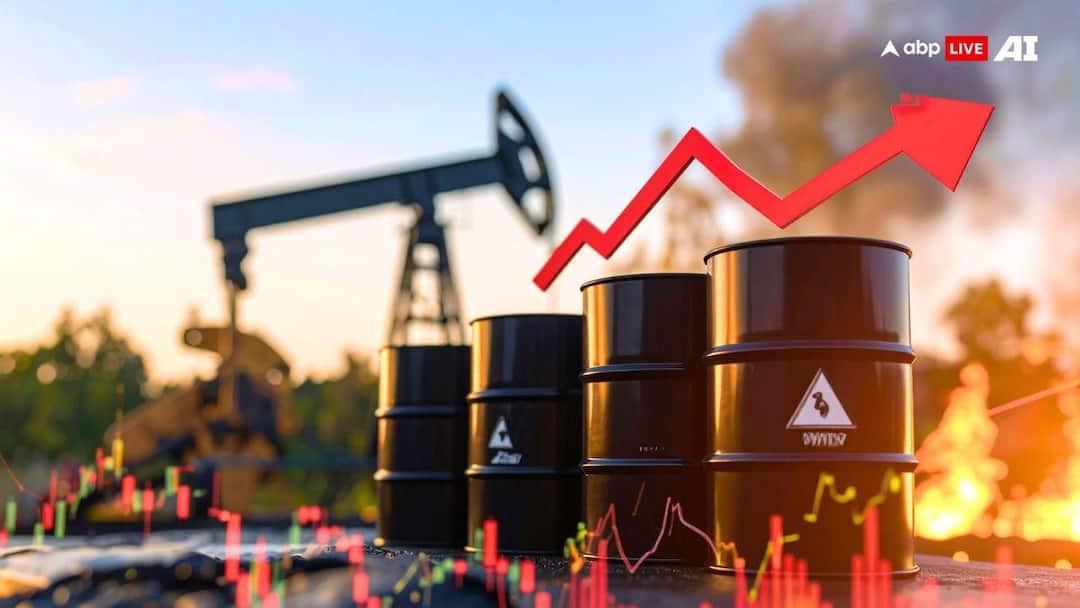
Senior executives from major American oil companies have cautioned the Trump administration that the ongoing conflict involving Iran could lead to prolonged instability in global energy markets, according to a report by The Wall Street Journal.
The warning comes as crude oil prices have surged past the $100-per-barrel mark and tensions continue to disrupt shipping routes in West Asia, a region responsible for a significant share of the world’s oil supply.
Industry leaders from companies including ExxonMobil and Chevron conveyed their concerns during meetings with US Energy Secretary Chris Wright and Interior Secretary Doug Burgum, the report stated. The executives reportedly said the current energy shock triggered by the conflict could intensify in the weeks ahead if the war continues to disrupt shipping and oil production in the Gulf region, reported Moneycontrol.
Rising Concerns Over Global Oil Supply
Energy markets have been on edge since the escalation of hostilities in West Asia began disrupting maritime traffic through the Strait of Hormuz, one of the most strategically important oil transit routes in the world.
The narrow waterway connects the Persian Gulf to global shipping lanes and handles roughly one-fifth of the world’s oil exports. Any disruption in this corridor tends to trigger immediate reactions in energy markets, as traders and governments worry about supply shortages.
According to the report, oil executives warned US officials that continued attacks near the strait could deepen volatility in crude markets and prolong the energy shock that has already pushed prices above $100 per barrel.
Higher oil prices have historically carried broad economic consequences, raising transportation costs, fuelling inflation and increasing pressure on energy-importing economies.
Strait Of Hormuz Remains A Strategic Flashpoint
The Strait of Hormuz has become a focal point of the conflict, as attacks on shipping vessels and regional infrastructure have slowed maritime traffic through the passage.
Given its narrow width and the heavy concentration of oil tankers that pass through it each day, even limited disruptions can significantly affect global supply chains.
President Trump has urged other countries to help secure the route by deploying naval vessels to escort commercial ships. According to The WSJ, the United States is exploring the formation of an international coalition that could patrol the strait and ensure safe passage for tankers.
Trump suggested that countries including China, France, Japan, South Korea and the United Kingdom could participate in such an effort, although details of the potential coalition have not yet been confirmed.
Officials are reportedly discussing whether escort operations should begin immediately or only after missile strikes in the region begin to subside.
Diplomatic Prospects Remain Uncertain
While the Trump administration has signalled openness to negotiations to end the conflict, Iranian officials have indicated little willingness to enter talks at this stage.
Iranian Foreign Minister Abbas Araghchi said Tehran had not requested negotiations or a ceasefire, responding to comments made by Trump during a weekend television interview in which he said he was willing to strike a deal if better terms could be reached.
“We don’t see any reason why we should talk with Americans, because we were talking with them when they decided to attack us,” Araghchi said in an interview aired on CBS.
He added that Iran would continue defending itself until the United States acknowledges what Tehran describes as an “illegal war”.
At present, it remains unclear whether any diplomatic channels between the two countries are active.
Europe Considers Expanding Naval Operations
The crisis has also prompted discussion among European governments about securing commercial shipping routes.
Foreign ministers from the European Union are expected to debate whether the bloc’s Aspides naval mission, which currently operates in the Red Sea, should be expanded to include patrols in the Strait of Hormuz.
However, German Foreign Minister Johann Wadephul suggested that any decision would take time. Speaking to ARD television, Wadephul said the existing Red Sea operation had not been particularly effective and indicated that Berlin remained cautious about extending the mission to the Gulf.
Conflict Continues To Escalate Across Region
The war, now entering its third week, has triggered widespread military activity across the Middle East.
White House National Economic Council Director Kevin Hassett said Pentagon estimates suggest the conflict could last between four and six weeks, urging the public to remain patient as oil prices climb.
Casualty figures from governments and non-governmental organisations indicate that roughly 3,750 people have been killed since hostilities began on February 28 with US and Israeli strikes on Iran.
The US-based Human Rights Activists News Agency reported that more than 3,000 of those deaths occurred inside Iran over the past two weeks. Dozens of fatalities have also been reported in Israel and Gulf states, while the United States has confirmed the loss of 13 service members.
Energy Infrastructure Also Under Pressure
Beyond shipping routes, regional energy infrastructure has also come under strain.
Missile strikes and drone attacks have targeted several locations across the Gulf. Iranian retaliatory attacks followed US strikes on military facilities on Kharg Island, one of Iran’s key oil export hubs.
In Iraq, five missiles struck Baghdad International Airport and surrounding areas, injuring several people, according to Iraqi Lieutenant General Saad Maan.
The United Arab Emirates said it intercepted multiple missiles and drones launched by Iran. Authorities reported that residents in parts of Dubai heard explosions as air defence systems destroyed incoming projectiles.
According to UAE officials, the country’s defence systems have intercepted about 1,600 drones and more than 300 missiles since the conflict began.
Key Oil Export Hub Briefly Disrupted
The fighting has also briefly disrupted operations at Fujairah, a major oil export hub in the United Arab Emirates located outside the Strait of Hormuz.
Oil-loading activities resumed on Sunday after a drone strike and fire temporarily halted shipments a day earlier, according to people familiar with the situation.
Fujairah plays a strategic role in the region’s energy infrastructure because it allows Gulf producers to export oil without passing through the Strait of Hormuz. During periods of maritime disruption, the facility becomes an important alternative route for global oil supplies.
With tensions still high and no immediate diplomatic breakthrough in sight, energy markets are likely to remain sensitive to developments in the conflict in the weeks ahead, analysts say.
Related Video
Breaking News: India Budget 2026-27 Sparks Market Volatility, Long-Term Reforms Highlighted
Disclaimer : This story is auto aggregated by a computer programme and has not been created or edited by DOWNTHENEWS. Publisher: abplive.com



