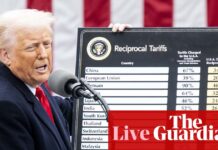
In a major blow to former President Donald Trump, the U.S. Supreme Court ruled Friday that his administration exceeded its legal authority by imposing sweeping tariffs under a law meant for genuine national emergencies. The decision struck down most of the disputed trade measures and clarified the limits of presidential power in economic policy.
The court held that Trump’s tariffs on goods entering the United States were not authorized under the 1977 International Emergency Economic Powers Act (IEEPA). However, the ruling does not eliminate all tariffs from his administration. Duties on steel and aluminum, which were imposed under separate legal authorities, remain in effect.
The decision does, however, overturn two major categories of tariffs, delivering significant relief to India’s more than $50 billion in exports to the U.S. These include the country-specific “reciprocal” tariffs, which had been capped at up to 50% on Indian goods (a 25% base rate plus a 25% penalty tied to Russian oil imports), as well as a 25% tariff on certain imports that the administration said was intended to pressure countries to curb fentanyl trafficking.
Earlier, a February 2026 US-India interim agreement had already reduced reciprocal duties to 18% and created zero-duty carve-outs for pharmaceuticals. The Supreme Court’s ruling now accelerates broader relief and could open the door to refunds from the roughly $130 billion collected under IEEPA as of mid-December.
Trump still has the option to attempt to reinstate similar tariffs using different legal authorities. According to the latest data from U.S. Customs and Border Protection, IEEPA-based tariffs had generated about $130 billion in revenue by mid-December. Trump, however, has cited much higher figures, up to $3 trillion, by including the value of trade agreements negotiated during his administration.
India-US interim trade agreement
The judgment came just days after the United States and India announced a framework for an interim trade agreement aimed at creating more balanced and mutually beneficial trade.
Under the proposed deal, India agreed to cut or remove tariffs on all U.S. industrial goods and on a broad list of American farm and food products. These include dried distillers’ grains (DDGs), red sorghum used for animal feed, tree nuts, fresh and processed fruits, soybean oil, wine and spirits, and several other items.
In return, the United States will impose a reciprocal tariff rate of 18% on Indian-origin goods under Executive Order 14257 (as amended). The affected categories include textiles and apparel, leather and footwear, plastics and rubber products, organic chemicals, home décor items, artisanal goods, and certain machinery.
The U.S. has also indicated that, once the interim agreement is fully finalized, it plans to remove reciprocal tariffs on a wide range of additional Indian products listed in the Potential Tariff Adjustments for Aligned Partners annex to Executive Order 14346 (as amended). These include generic pharmaceuticals, gems and diamonds, and aircraft parts.
Disclaimer : This story is auto aggregated by a computer programme and has not been created or edited by DOWNTHENEWS. Publisher: ZEE News