Victorian public school parents fork out the most cash for their schools in the country, paying more per child in voluntary contributions than those in other states and territories.
Families paid $410.3 million to Victorian government schools, the most in Australia, as part of voluntary fees, charges and contributions in 2024.
Parents are paying $620 per student on average – the second-highest amount after South Australia, where parents pay $686.
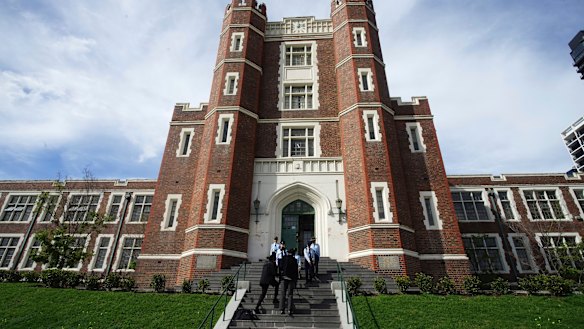
But at some of Melbourne’s public schools, parents paid four times as much in contributions, with Melbourne High School asking for $2884 per student. With 1402 enrolments, the selective school took in more than $4 million in one year.
Albert Park College parents paid an average of $2726 per student per year, putting more than $4.46 million extra in the school coffers. Caulfield Junior College parents paid $3023 in contributions per child in 2024.
Outside Melbourne, Leitchville Primary School – on the border of NSW – had only nine students in 2024, when parents paid $2105 each in contributions.
The Australian Curriculum Assessment and Reporting Authority data includes voluntary parental fees paid to schools for curriculum-related services and activities, as well as income from optional extracurricular activities, including excursions and camps.
The hike in parent contributions comes as Victoria records a fall in the government’s recurrent spending per student when adjusted for inflation. The state paid $14,314 per student in 2024, more than 2023 but the lowest in the country.
The state government’s spending on teachers and staff across all school levels in 2023-24 was also the lowest in the nation at $14,533 per student, well below the national average of $16,376.
Victorian Principals Association president Andrew Dalgleish said with CPI increasing, costs were going up.
“Schools are not immune from that, and neither are parents. It’s a difficult one, whether government, independent or Catholics, the fees and costs are going up,” he said.
Parent contributions must be voluntary, and clear guidelines prevent the payments from being used for a school’s curriculum.
Voluntary payments prop up extracurricular activities like camps, excursions or swimming programs.
Dalgleish said no child was excluded if they couldn’t afford contributions. Payment plans or donations from other parents were raised to ensure no child missed out.
“We understand there are financial pressures. It’s trying to meet the expectations of parents and their capacity to pay. We’d love all activities to be free of charge for our families, but that’s not possible,” he said.
Parents Victoria chief executive Gail McHardy said Victorian government schools were “systematically underfunded – well below nationally agreed benchmarks”.
“Asking parents to shoulder rising contributions simply to maintain basic programs is neither fair nor sustainable,” she said.
“It may be technically voluntary, but when the school budget is stretched, many families feel pressured to pay to ensure their child has access to essentials. Education isn’t truly free until families aren’t compelled by circumstance to pay for core teaching and materials.”
A Victorian government spokesperson said that since 2014-15, the state’s real recurrent funding per student had increased by 34 per cent for public schools – more than any other state or territory.
“We lead the nation in NAPLAN, and have delivered landmark senior secondary school reforms that have boosted year 12 completion rates to more than 97 per cent,” she said.
“Our record $18.5 billion investment in school infrastructure in the past decade is not included in the data reported today. This investment has seen more than half of all new schools built in Australia built right here in Victoria by our government.”
To ease the cost-of-living burden, there are Victorian government-funded programs including school breakfast clubs, affordable school uniforms, glasses for kids and sports, swimming and excursion funds.
Opposition education spokesperson Brad Rowsell said families were being hit from every angle in a cost-of-living crisis, including paying some of the highest school fees in the country.
“It’s state school families that are now being asked to pay for school essentials like maintenance and stationery,” he said.
Victorian Greens leader Ellen Sandell said it was deeply unfair that Labor was shifting the cost of public education onto parents and carers who were “having to dig deeper into their own pockets just so their kids’ schools can afford basics”.
Economist and public education advocate Trevor Cobbold said Victorian public school parents were confronted with an “absurd contradiction”.
“Public education is far from free in Victoria.”
Start the day with a summary of the day’s most important and interesting stories, analysis and insights. Sign up for our Morning Edition newsletter.
 Nicole Precel is an education reporter at The Age. She was previously an audio video producer. She is also a documentary maker. Get in touch at nicole.precel@theage.com.auConnect via X, Facebook or email.
 Jackson Graham is an education reporter at The Age. He was previously an explainer reporter.Connect via email.
From our partners
Disclaimer : This story is auto aggregated by a computer programme and has not been created or edited by DOWNTHENEWS. Publisher: www.smh.com.au