
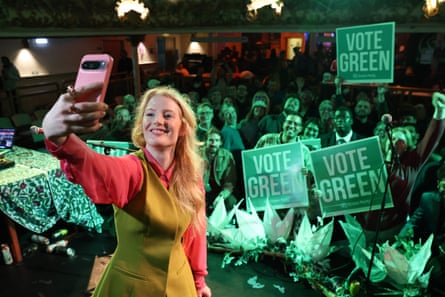
It is, as one Green activist put it, a never-ending series of “constantly good problems to have”. But how does a party adapt to the sudden trebling of its membership? And when a majority of people in an organisation are new, is it even the same thing anymore?
The basic facts alone are startling. Before Zack Polanski took over as leader last September, the Greens in England and Wales had around 66,000 members. They are now at 215,000, and still rising at speed.
This means the party has many more people to knock on doors and fold leaflets, as seen with the vast numbers of canvassers the party could call on in winning last month’s Gorton and Denton byelection.
But, according to some Greens, it also means the arrival of a sometimes quite different culture, particularly from those who have fled Labour or Jeremy Corbyn’s faltering Your Party.
“We are, in effect, a completely different political party,” one experienced Green organiser said. “The majority of people have been around for less than six months.
“It’s almost like when the Liberals and SDP merged to create the Lib Dems. In this case it’s the merger of a bunch of quite online people with the Greens. Some definitely have brought in this Corbyn-ish idea of seeming more concerned about winning the argument and factionalism than getting power.”
There have been some hiccups, for example new members putting Palestinian flags on leaflets then distributed to well-to-do and decidedly non-radical suburbs. And some outsiders argue the Greens need to be wary of what could amount to a de facto takeover by new members, particularly those from the traditionally well-organised left.
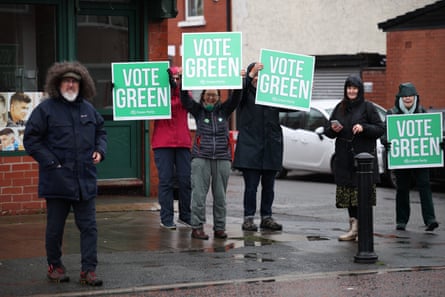
One Labour MP who saw the party finish second in their constituency at the last election said: “I was worried about the Greens but less so now. My local Greens now seem to be full of these ultra-factional Corbyn refugees. I can’t see it going well.”
But many within the party are more sanguine, not least because the Greens’ famously decentralised and democratic structures, not to mention a lengthy and sometimes Byzantine approach to deciding policy, makes any sort of takeover highly tricky.
Another Green party organiser said: “What entry-ism looks like for us is people attending conference and having their voices heard.
“Yes, if your membership triples, then by far the biggest cohort have been members for less than a year. So there will be some disagreements and tensions. But I’m really confident the culture of the party will remain.”
One party official reiterated this point: “Even if new members wanted to change party policy, it’s not easy. It isn’t a single motion, it’s an 18-month process. You do get some people going: ‘What have I just joined? This isn’t like the Labour party.’”
Some problems are purely logistical, for example, welcoming and finding roles for new members when some local parties are seeing as many as 500 new members a month. “In any sudden growth there are always adjustments,” said one senior Green, whose local party has more than doubled in size. “But there is a lot of extra energy. And it’s great to have friends who have never been especially political message me to say they have signed up.”
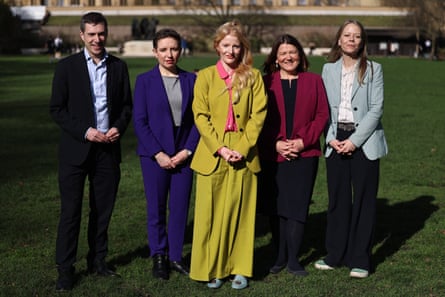
And some Greens argued a culture shift could be a good thing. “Before, we could be quite cosy as a party, with local meetings spending hours over the minutiae of nuclear policy,” one organiser said. “They were almost like a social group.
“Then suddenly you have 100 or 200 new members. People are being challenged. They are having to move away from what you could call the comfort blanket of being right, or feeling like a big fish in a small pond. It’s now a much bigger pond.”
More members does, of course, bring something else: more money. The party’s budget for 2026 is expected to more than double from the year before, with new media and policy officers arriving as part of a professionalisation process.
“Currently all our policy groups are chaired and staffed by volunteers,” one official said. “Some are real experts. But others are nightmares. With the extra money we can get the process overseen properly.”
Some things, however, are not changing. “We’ve had some councillors defect from Labour recently, and they all seem surprised about the way we work together,” one organiser said. “One told me: ‘You’re all so nice to each other. Someone even brought a cake to a meeting.’”
Disclaimer : This story is auto aggregated by a computer programme and has not been created or edited by DOWNTHENEWS. Publisher: theguardian.com






