
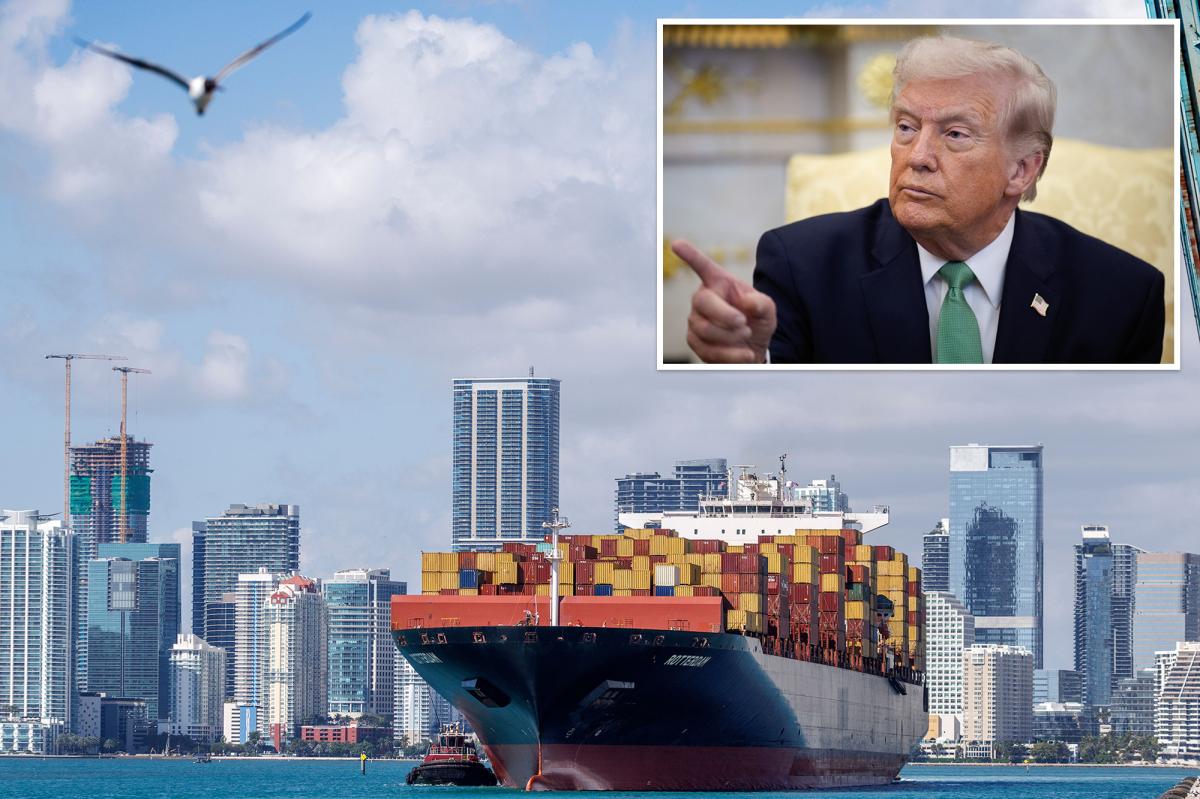
In an attempt to ease soaring gasoline prices amid the war in Iran, President Trump on Wednesday announced a 60-day waiver on the Jones Act – a US shipping law that traces back more than a century and has been criticized for keeping energy prices sky-high.
White House press secretary Karoline Leavitt said Wednesday that the waiver would help “mitigate the short-term disruptions to the oil market” during the war in Iran and “allow vital resources like oil, natural gas, fertilizer, and coal to flow freely to US ports.”
The White House signaled last week that it was looking into a temporary suspension of the law, which Trump called “restrictive” – but what exactly is the Jones Act, and how much of an impact could it have on prices at gas pumps?
What is the Jones Act?
The Jones Act was signed into law by then-President Woodrow Wilson as part of the Merchant Marine Act of 1920 in an attempt to bolster the American shipping industry in the wake of World War I.
It bans foreign-flagged ships from carrying cargo between US ports, instead requiring that American goods are shipped between stops by vessels that are US-built, owned by US citizens and registered in the US, which means they operate with an American crew.
The longstanding US shipping law was an effort to ensure the US had a strong fleet in case of war, after Germany decimated America’s merchant ships and the domestic economy slipped into a recession.
Why is the Jones Act relevant today?
The Jones Act restricts foreign-flagged vessels from transporting all kinds of goods between US ports – including energy and petroleum products, which have become especially important amid the US and Israel’s war with Iran.
Following joint US-Israeli air strikes on Iran on Feb. 28, Tehran has blocked access to the Strait of Hormuz – a vital maritime route that transports 20% of the world’s oil supply. It has reportedly set several oil tankers ablaze and threatened to attack vessels that dare to traverse the waterway.
That has sent energy prices soaring, with Brent crude oil hitting $108 a barrel and West Texas Intermediate at $98 as of Wednesday.
National average gasoline prices jumped to $3.84 a gallon, according to AAA, and analysts have warned that Americans could feel further pain if the war rages on.
Diesel prices have also skyrocketed above $5 a gallon, threatening to hammer the US transportation industry and send prices higher on everyday goods like food and apparel, according to energy experts.
Why does Trump want to waive the Jones Act?
Trump’s waiver of the Jones Act is his latest attempt to ease pressure on the energy industry as the world has been scrambling for alternative shipping routes as Iran maintains its chokepoint in the Persian Gulf.
Shippers have been able to request Jones Act waivers, but it is incredibly rare for them to actually be issued since they must be approved by the Secretary of Defense on national security concerns, according to the US Department of Transportation.
There have been some short-term waivers granted in the past on specific items, like petroleum products, following natural disasters.
Waivers were granted following Hurricane Katrina in 2005; after Hurricane Maria devastated Puerto Rico in 2017; and when an energy pipeline was shut down by a cyberattack in 2021.
Meanwhile, some critics have called for the Jones Act to be tossed out altogether, arguing it is overly protectionist and impedes domestic trade.
It has faced criticism for making goods more expensive – specifically gasoline – since US vessels are more expensive to operate than foreign ones.
Opponents have argued the shipping law is what makes goods so pricey in states that get most of their supplies by water, like Hawaii, Puerto Rico and Alaska.
The Jones Act has also faced blowback for slowing the delivery of goods during emergencies.
How are people reacting to Trump’s waiver?
Earlier this week, amid rumors that the White House was considering a waiver, some social media users questioned why the law would not be permanently ended.
Jo Jorgensen, the libertarian nominee for president during the 2020 election, called for the Trump administration to axe the shipping rule.
“If suspending the Jones Act lowers oil prices, that tells you everything you need to know about the damage it causes when it is in force,” she wrote in a post on X. “Don’t just suspend it. End it.”
Peter Schiff, chief global strategist of Euro Pacific Capital, also called for a complete end to the law.
“To lower gas prices, Trump will issue 30-day waivers for the Jones Act, allowing foreign tankers to supply refiners on the East Coast with fuel from the Gulf Coast & other US locations,” Schiff wrote in a post on X. “Since this is an admission that the Jones Act raises gas prices, why not repeal it entirely?”
How will gas prices be impacted if the Jones Act is waived?
Trump’s move to open up domestic shipping routes to foreign-flagged vessels could bring some relief to gasoline prices, though experts have warned the changes could be minimal.
The waiver could decrease gas prices on the East Coast by roughly three cents per gallon, according to the Center for American Progress. Refineries stock up on oil, so it takes time for energy price shifts to work their way into consumer prices.
But the waiver could also sideline American shippers while the oil industry rakes in huge profits, the think tank said.
And oil and gasoline prices stand to soar far higher amid a prolonged conflict in Iran.
While the US is a major exporter of oil, it is still vulnerable to global supply shocks.
The nation mostly produces light, sweet crude, while its refineries along the East and West coasts are made to process heavier, sour oil – so it still needs imports.
What happens next?
It’s unclear how quickly the waiver on the Jones Act could impact gasoline prices at the pump, or how much of a difference it will make.
Oil benchmarks and gasoline prices have continued to climb despite other actions taken by the Trump administration, including a temporary lift on Russian energy sanctions.
The International Energy Agency last week agreed to release a record 400 million barrels of oil in an attempt to lower prices amid severe supply disruptions.
Trump pledged to release 172 million barrels from the US Strategic Petroleum Reserve.
Disclaimer : This story is auto aggregated by a computer programme and has not been created or edited by DOWNTHENEWS. Publisher: nypost.com



