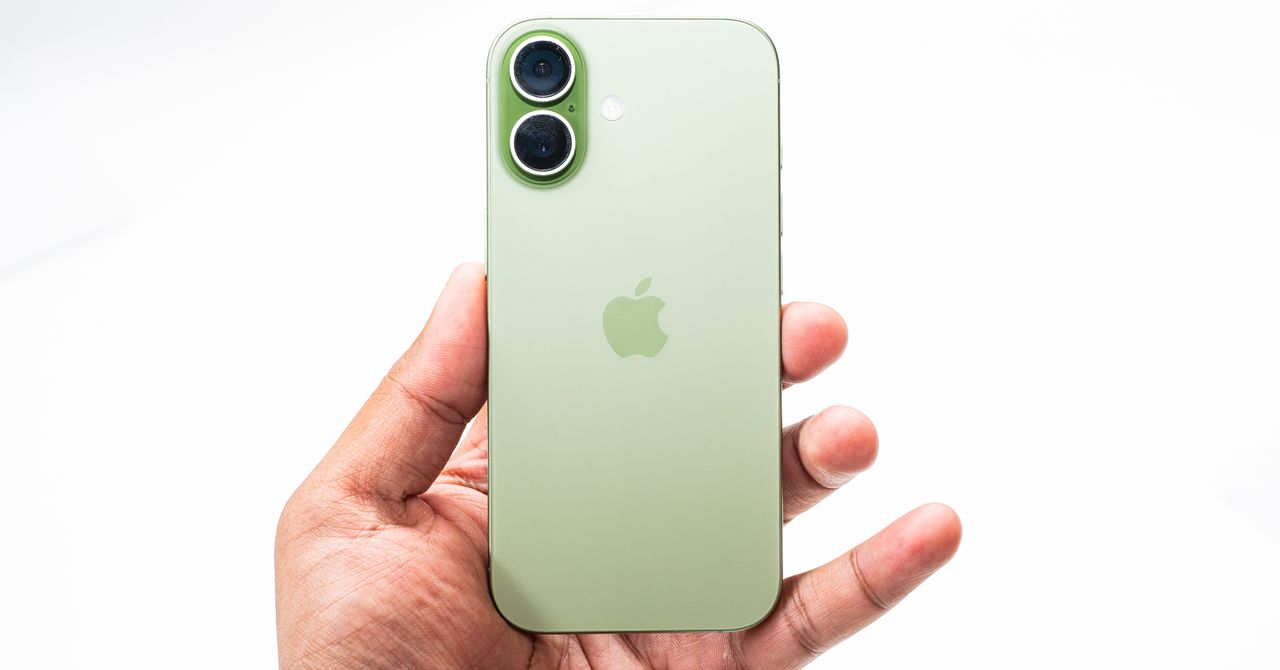
The iPhone Air (7/10, WIRED Recommends) is the first model of its kind. Borrowing from other “Air” models—the original MacBook Air and iPad Air—it’s the thinnest iPhone ever made at a mere 5.6 mm thick and one of the lightest at 165 grams. The difference is palpable, especially considering its large 6.5-inch screen. Use the iPhone Air for a day, and the iPhone 17 Pro will feel like a brick.
It’s not for everyone. Think of it like an early-adopter iPhone, as the design innovations here may very well lead to a folding iPhone in the future. But there are a few too many compromises considering the price. Namely, the camera system. We’re all used to multi-camera setups on our smartphones, and a single-lens design for a $999 handset in 2025 is too limiting. It sports the same 48-MP main camera as the iPhone 17, though the cheaper iPhone sometimes delivers sharper results. You can use the 2X “optical-like” zoom, but that’s it. There’s no ultrawide and no telephoto camera. I even tried to take a close-up photo of a flower, and the lack of a macro mode meant I couldn’t move the iPhone Air as close to the subject. Thankfully, it has the same great 18-MP selfie camera as the rest of the iPhone 17 lineup.
The other major compromise is battery life, though this depends on how you use your phone. I was pleasantly surprised by the iPhone Air’s runtime, which often hit more than five hours of screen-on time. That’s better than I expected. With average use, it lasted me a full day, and I didn’t feel too anxious about it dying on me. However, on busier days, I needed to top it up in the afternoon. If you’re a heavy user, relying on various battery-sucking apps like Maps or gaming, the iPhone Air’s battery won’t impress.
This, alongside the iPhone 17e, is the iPhone with Apple’s custom C1X modem, which is more power efficient, and one of the ways Apple can max out the battery life on the Air. The downside is that it doesn’t support millimeter-wave 5G (mmWave). It won’t impact you much since the dominant form of 5G is sub-6 (we have an explainer here), but mmWave is deployed in dense urban areas and high-traffic areas like airports and stadiums. It’s weird to not have it on a flagship smartphone in 2025.
If you barely use the camera and are regularly near a charger, there are plenty of cheaper smartphones that will serve you well. But if you must have an iPhone and want to try a super-thin and lightweight device, I think you’ll be happy with the iPhone Air.
| Specs |
|---|
| Display: 6.5 inch, 120 Hz, OLED |
| Processor and RAM: A19 Pro (5-core GPU) with 12 GB RAM |
| Storage: 256, 512 GB, or 1 TB |
| Cameras: 48-MP Fusion Camera, 18-MP selfie camera with Center Stage |
| Features: Qi2 20W (MagSafe) wireless charging, Face ID, Dynamic Island, Ultra Wideband (2nd Gen), IP68, Ceramic Shield 2, N1 networking chip, Apple C1X modem, Dual Capture, Center Stage |
Disclaimer : This story is auto aggregated by a computer programme and has not been created or edited by DOWNTHENEWS. Publisher: wired.com