
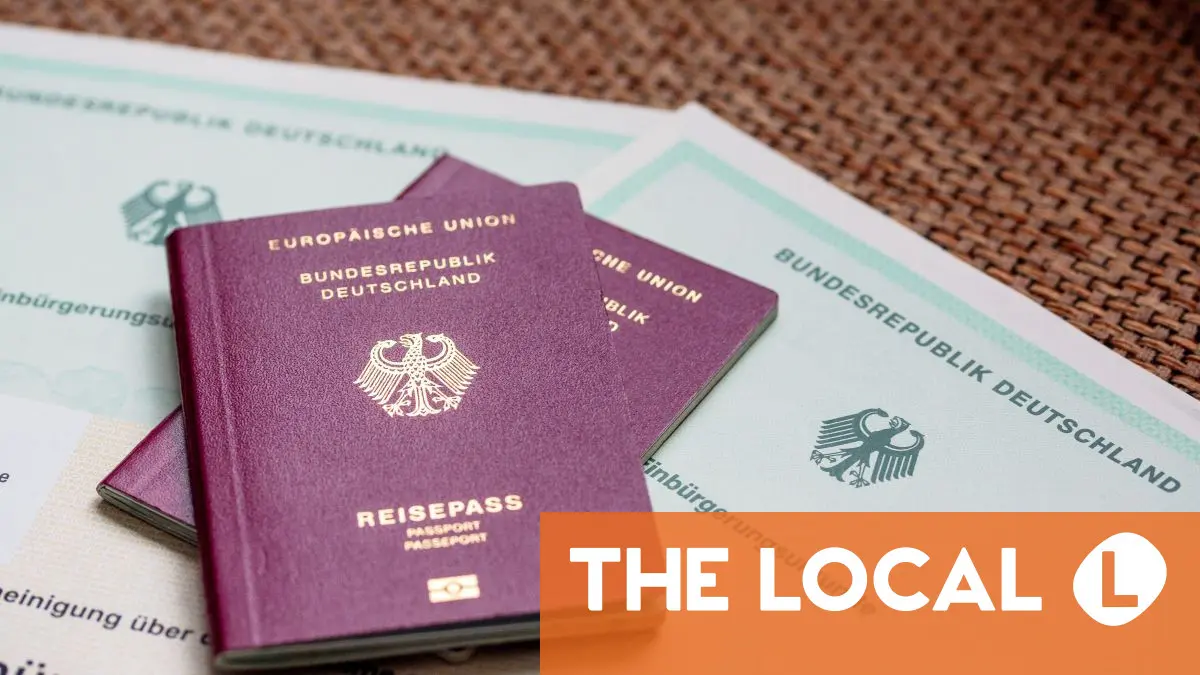
Germany’s immigration authorities are notoriously slow to process naturalisation applications. Here’s where average wait times are fastest and where they are slowest.
Let’s say you’ve lived in Germany for five years and you’re planning to naturalise as German based on residency.
You’ve obtained your B1 level German language certificate, you passed the Einbürgerungstest, you’ve gathered the proof you need to show you support yourself financially, the record showing you’re clear of serious crimes and compiled all of this alongside your citizenship application.
CHECKLIST: What do I need to apply for German citizenship?
Now all that’s left to do is submit this pile of papers to your local immigration authority at the Ausländerbehörde, and await the decision on your case.
Unfortunately, that doesn’t mean you should expect to get your German passport quickly. Depending on where you live, you might have to wait anywhere between six months and four years to receive the final decision on your citizenship application.
Here’s where the wait times are shortest in Germany right now, and where they’re longest.
A slow process
Around the country, application processing times have spiked since mid-2024 when a major reform to the naturalisation act triggered a surge in the number of applicants.
At the beginning of 2025, spokespersons from 10 different municipal immigration authorities shared figures for average citizenship processing times with The Local. At that time applicants in some cities, like Leipzig or Dusseldorf, could expect a wait time of up to nine months, whereas those in cities like Stuttgart, Munich or Frankfurt would have to expect a wait of a year and a half or more.
Just a few months later, in June, some related figures from Germany’s Ministry of the Interior (BMI) showed that wait times had not improved in most cities.
According to those figures, which were first reported by the German Press Agency, applicants not just in Stuttgart but in the entire state of Baden-Württemberg were left waiting around 18 months on average.
The average wait in Frankfurt at that time was said to be 20 to 30 months. In contrast, in Hamburg the wait remained steady at 13 months.
Where in Germany currently has the shortest or longest waits?
Law firm Migrando, which specialises in immigration law and helps clients with the naturalisation process has also compiled their own data on wait times in various German cities.
Asked about the processing times for citizenship applications around Germany, Christin Schneider, a spokesperson for Migrando, told The Local that “there is currently hardly any government agency that stands out as reliably fast.”
They added that the trend across the board is toward growing backlogs.
That said, Schneider suggests that some of the shortest wait times for citizenship in Germany right now are found in Nuremberg and Aschaffenburg. According to Migrando’s data, in these two Bavarian cities an applicant for naturalisation can expect to wait between six and 15 months to hear back about their application.
READ ALSO: Five reasons foreigners should move to Nuremberg
Meanwhile, Migrando suggests that some of the longer wait times are seen in Eastern Germany – including Leipzig, Dresden and Potsdam.
In particular, applicants in Dresden reportedly wait two years on average to hear back about their applications. And those in Leipzig are forced to wait as long as 50 months on average.
The team at Migrando told The Local that their data on wait times comes from clients’ experiences as well as from feedback from people on social media.
“Our figures therefore reflect actual processing times, not official estimates,” Schneider said.
Individual wait times vary immensely, because processing times depend on a variety of factors and each case is unique.
If your own citizenship application has met severe delays, you might want to consider bringing a lawsuit for a ‘failure to act’ (Untätigkeitsklage), usually with the help of a lawyer.
READ ALSO:
Disclaimer : This story is auto aggregated by a computer programme and has not been created or edited by DOWNTHENEWS. Publisher: thelocal.de



