
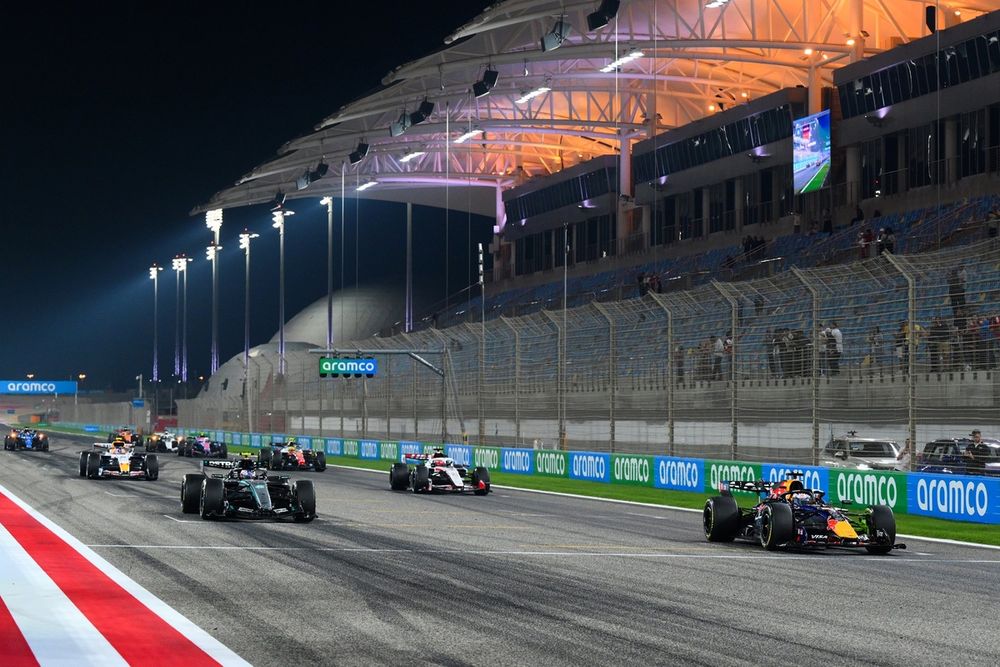
Someone made the mistake of suggesting to Max Verstappen in the post-race media ‘pen’ in China that some of the racing seemed less ‘artificial’ this weekend, at least enough to get the people in the grandstands energised and cheering.
“It’s terrible,” he fired back. “If someone likes this, then you really don’t know what racing is about.
“It’s not fun at all. It’s playing Mario Kart. This is not racing.”
The 2026 Formula 1 season continues to heap indignity upon ignominy for the four-time world champion. Having already declared the new technical rules a complete bust, he crashed in qualifying for the season opener, then became one of several drivers to be slow away from the lights when he arrived on the grid with a depleted battery.
Racing through to sixth place might have seemed impressive to those watching a ‘sizzle reel’ of Max passing cars to get there, but Verstappen shrugged it off, describing the process of overtaking cars “two seconds slower” as “just clearing traffic”.
He’s already begun pivoting towards styles of racing that engage him more, including a Nurburgring 24 Hours entry in a GT3 Mercedes. But his competitive plight in F1, and the state of the racing, clearly still occupy much of his mental bandwidth: usually you might get a minute or two out of him in the pen, but recently he’s been so keen to vent spleen that he may as well bring a chair and make an afternoon of it.
For Verstappen the Chinese GP was a midfield wrestle with the likes of Oliver Bearman’s Haas
Photo by: Andy Hone/ LAT Images via Getty Images
In China, he declared Friday’s practice and sprint qualifying “a disaster”. This was but the prologue for a Saturday in which another slow start dropped him well out of the points in the sprint – and this time, despite pitting under the safety car, he was unable to fight his way back.
Then in qualifying proper he made it to Q3, but was nowhere near the frontrunning pace in the top-10 shootout. As with Friday, he and team-mate Isack Hadjar were battling for position with Pierre Gasly‘s Alpine and Oliver Bearman‘s Haas, teams which had propped up the order in last year’s constructors’ championship.
“We changed a lot on the car and it makes zero difference,” Verstappen fulminated afterwards.
“The whole weekend we’ve been off – the car is completely undriveable. I cannot even put a bit of a reference in. Every lap is like survival.”
This latter phrase is one he used several times across the course of his many media engagements, as if the last record he listened to before bedtime was Culture Club’s Karma Chameleon and one of the lyrics stuck in his head. Perhaps the first step in securing a better night’s sleep would be to listen to something else before questing for the Land of Nod.
It’s becoming apparent that the balance of Red Bull’s shortcomings lie on the chassis side rather than in the engine bay, and the few encouraging signs in Melbourne (such as Hadjar qualifying fourth and Max fighting his way through to sixth from the back of the grid) were a factor of outlier circuit characteristics. While the jury is still out on the RBPT-Ford’s start-line performance – Hadjar got away fine in Albert Park, after all – it’s possible to infer, based on testing and race form so far, that the power unit is highly effective in terms of energy harvesting, but perhaps lacking in outright punch.
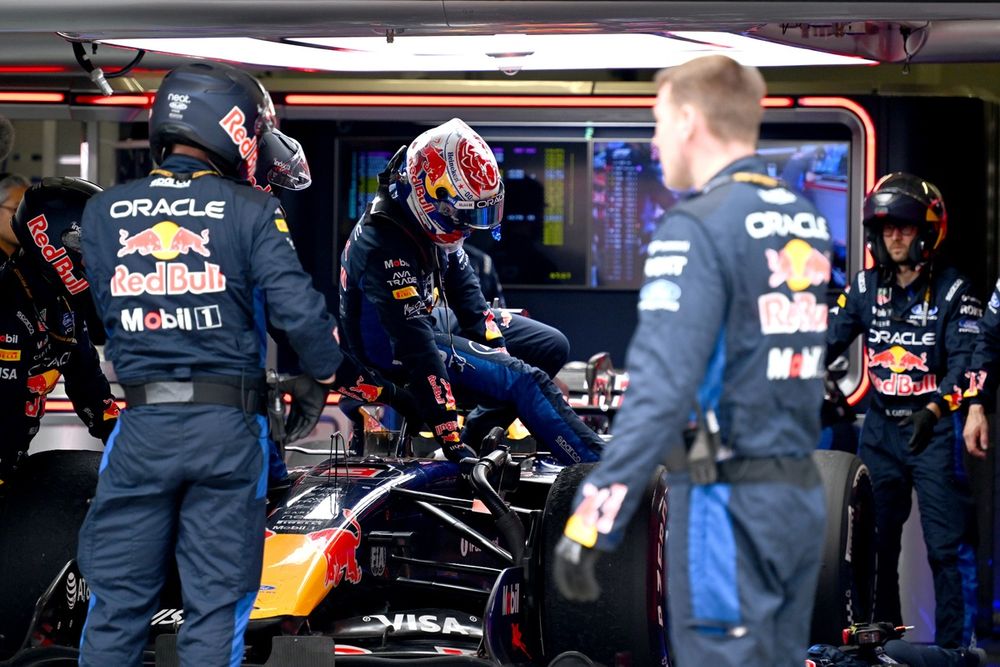
Verstappen had to retire from the Chinese GP mid-race
Photo by: Mark Sutton / Formula 1 via Getty Images
That would explain Red Bull’s relatively competitive pace around Albert Park, one of the three ‘worst’ tracks for harvesting, followed by a drop towards the midfield in Shanghai, where energy recovery is more straightforward. Efficiency is a nice thing to have, but energy-rich tracks outnumber energy-poor ones on the calendar, so it’s not a killer advantage.
When asked to put his finger on where the malaise in the car package lies, Max was typically unequivocal.
“A little bit on the engine side, but that’s not probably the biggest side,” he said.
“We lose so much with the car at the moment around here. Plus also I cannot push at all because the car doesn’t let me. So that’s why also I don’t really feel in control of the car. It’s just really not how it should be.
“From lap one of this new regulation I’ve not enjoyed this car, for sure.”
What’s most discombobulating for Verstappen is that he is facing a largely different set of problems from last year, at least in terms of where the car was from mid-season onwards. He talks of the front and rear being “disconnected”, the car lurching unpredictably between understeer and oversteer, but this is something the team could often resolve by making massive setup changes between practice, in qualifying, or after intensive simulator sessions back at the factory. No longer, it seems.
“In the past, sometimes we would throw it [the car] upside down and it would work,” he said. “Now, nothing works.”
To illustrate how disconnected and disillusion Verstappen himself is feeling, take his response to a direct question about whether the team had identified the cause of his startline problem in the sprint, and fixed it.
“Honestly, I didn’t even ask,” he said with a dismissive shrug of the shoulders. “They said they would fix it.”
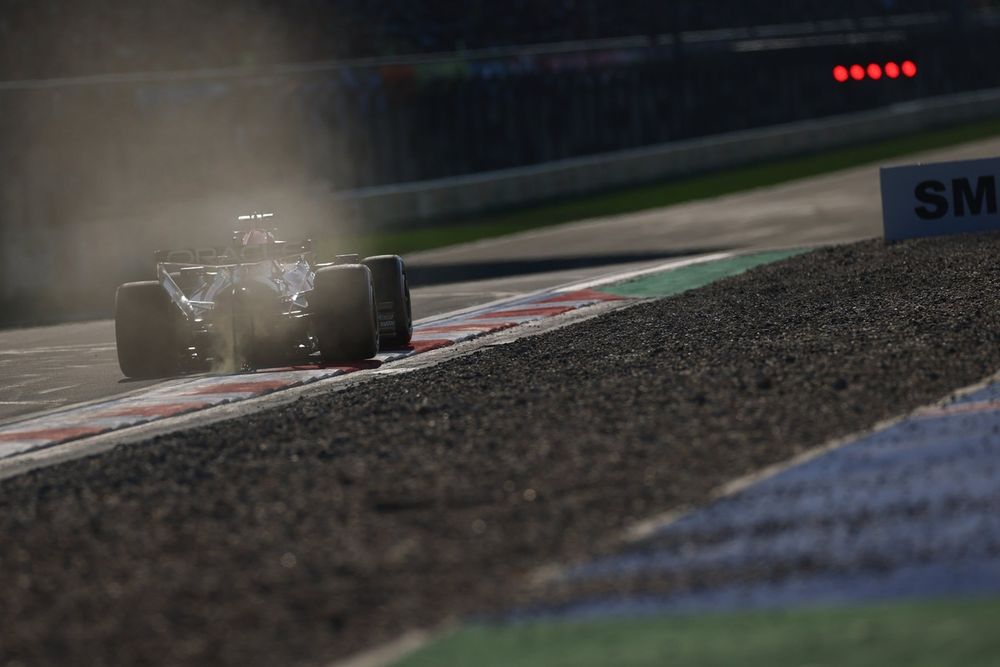
“Disconnected” Red Bull lurches between understeer and oversteer
Photo by: Alastair Staley / LAT Images via Getty Images
On Sunday in China the rear of Verstappen’s car was a hive of activity in the moments before the start. When the lights went out, he bogged down once more – a different issue to the battery one in Australia, he explained later, but essentially the same as in the sprint race: a request to the throttle for maximum power was delayed in transit.
Then, having dropped to 16th place, he parlayed his way back into the top 10, only to be told to retire the car mid-race. Nothing about the event appeared to have given him any satisfaction at all.
“We were fighting Haas and Alpine the whole race,” he harrumphed.
“Of course, some other cars, yes. Look at the racing. You are boosting past, then you run out of battery the next straight, they boost past you again. For me, it’s just a joke.”
And there you have it. Max is wealthy enough already to not have to ‘do’ F1 for a living. He just loves to race, and the present generation of cars aren’t doing it for him.
What will likely be keeping him awake at night are thoughts along the lines of the famous last words of the comic actor Kenneth Williams: “Oh, what’s the bloody point?”
Exasperation is setting in. Having spent the past two seasons warning about the implications of the new technical rules, and seeing it come to pass anyway, Verstappen will be wondering whether “Mario Kart” F1 is worth his time.
As he said in Australia, “I love racing – but you can only take so much, right?”
We want your opinion!
What would you like to see on Motorsport.com?
– The Motorsport.com Team
Disclaimer : This story is auto aggregated by a computer programme and has not been created or edited by DOWNTHENEWS. Publisher: motorsport.com



