A high-profile case has brought the topic of deepfakes and online sexual harassment to Germany’s frontpage headlines. Here’s the story that grabbed the nation’s attention, and what lawmakers are doing about it.
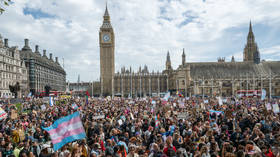
Across Germany protestors are rallying against sexual violence online, and specifically against the creation and distribution of deepfakes, or AI-generated images that bear the likeness of real people.
German leaders have also brought the issue to parliament, with both the Greens and the Social Democrats pushing proposals to criminalise certain acts of digital violence.
While the problem of deepfake porn targeting women has been known for some time, it has suddenly become a major focus in Germany – triggered by a high-profile case that showed both how traumatic these cases can be and how ill-prepared German law is for handling them.
The case
The issue of digital sexual violence was pushed into the spotlight recently when Der Spiegel published an investigation into the case of German TV presenter and actress Collien Fernandes.
Fernandes had for years been targeted online. She fought against fake online profiles sharing deepfake pornography of her likeness, trying in vain to have them removed from online platforms and ultimately filing a criminal complaint with the police.
Then, as she explained to Der Spiegel, she learned that one of the primary perpetrators was her husband, the well-known actor Christian Ulmen.
Ulmen is accused of having made fake LinkedIn profiles under his now ex-wife’s name, and using them to initiate chats with hundreds of men, also sending them deepfake sexualised images. These images, and others like them, have spread far and wide on online platforms and pornographic websites.
Fernandes detailed her struggle to get justice. Crucially, she brought charges against Ulmen in Spain because legal protections for victims of digital and gender-based violence are significantly stronger there. German law does not yet have a specific statute explicitly dealing with the creation of deepfakes.
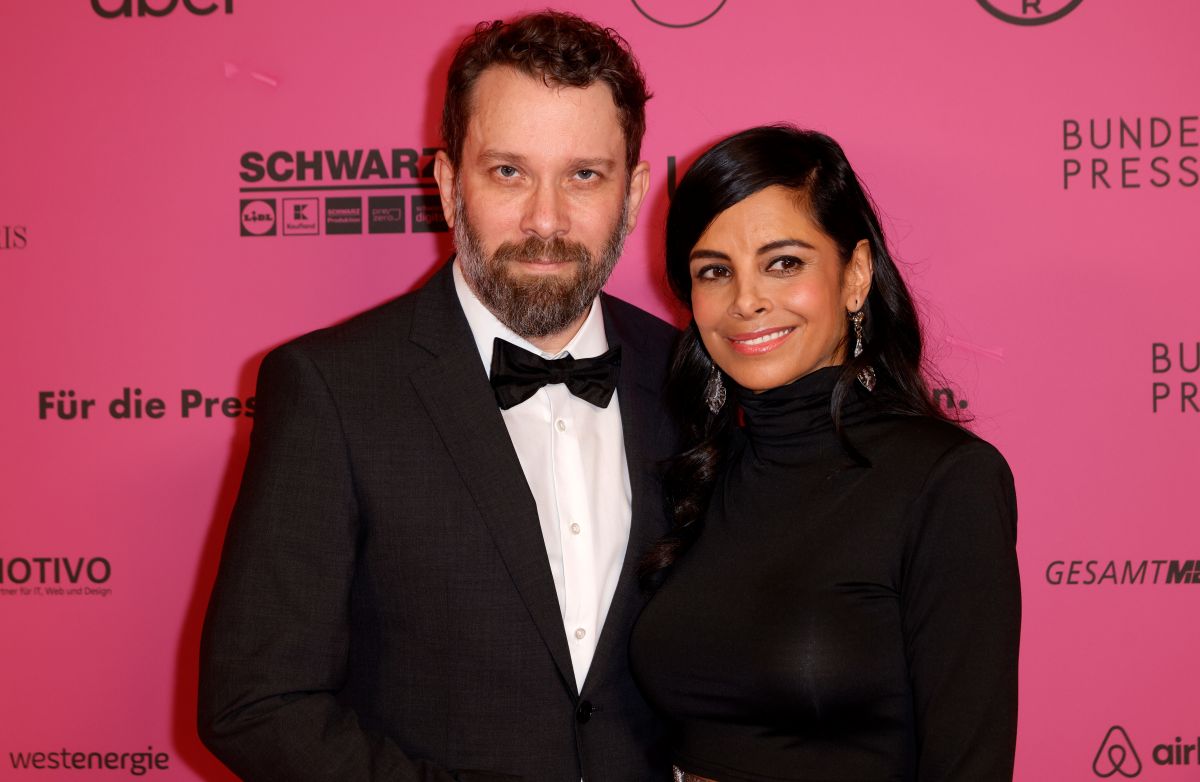
Collien Fernandes seen with her former partner Christian Ulmen who stands accused of creating deep fake images of her and sharing them online. Photo: picture alliance/dpa | Carsten Koall
In this case, Fernandes was able to seek justice in Spain because she had lived with her ex-husband in Mallorca. But her story highlights the grim reality that, for most victims of this kind of sexual violence in Germany, there is little hope of gaining legal justice under the country’s current law.
Public Outcry
Some activists and politicians had already been rallying against digital sexual violence in Germany: more and more in recent months as various AI tools and platforms, like the chatbot Grok on X, made it extremely easy for anyone to create deepfake images with a few clicks.
Fernandes’s story, with its celebrity characters and appalling details, brought the issue to the front pages of German newspapers, and sparked immediate and widespread protest.
Several thousand joined a demonstration “Against sexualised digital violence – solidarity with all victims” in Berlin last weekend.
READ ALSO: What to know about dealing with domestic violence in Germany
As of Thursday at midday, another large protest was set to take place in Hamburg at 5:30pm. Police expected more than 7,000 demonstrators to attend.
Fernandes, herself a Hamburg native, wrote on Instagram that she had wanted to speak at the demonstration there but decided not to due to security concerns related to death threats against her.
On Wednesday a protest under the motto “Stop sexualised violence” attracted a couple of thousand people in Hanover. Green party politician Ricarda Lang delivered a speech there, suggesting that the lack of legal protections in Germany for these cases makes the country a “perpetrator’s paradise”.
“We now need a change in the legal system to protect all these women,” Lang said.
Lang, together with other activists, put forward 10 demands to the federal government. At least 250 women from politics, business and culture in Germany have signed on.
Two proposals
The political response has also been swift.
In fact, in both the Green party and the Social Democratic Party (SPD), lawmakers had already been working on proposals for draft laws aimed at criminalising certain acts of digital violence. With the topic suddenly in the limelight, political leaders now have a clear motive to update German law around the issue quickly.
Germany’s Justice Minister, Stephanie Hubig, brought forward a proposal on behalf of the SPD. In an interview with Der Spiegel, she said she intends to present a digital violence protection law this spring.
Meanwhile Green party member Lena Gumnior is at the forefront of a similar effort within her party.
The two proposals both aim to explicitly criminalise the unauthorised creation and distribution of sexual images, and particularly AI-generated deepfakes. They both recommend a punishment of up to two years in prison for doing so, but they differ on other details.
The Green party proposal would also introduce harsher penalties – up to three years in prison in severe cases – when the perpetrator exploits a position of power, for example if they were a public official, a caregiver or an employer taking advantage of a subordinate.
The proposal also notes that crimes should generally only be prosecuted at the request of the victim, or when there is a “special public interest” in doing so.
The SPD’s proposal casts a wider net in some areas, aiming to criminalise a wider variety of digital abuses. It also wants to empower victims to be able to obtain judicial orders to block social media accounts and introduce a legal framework to help trace anonymous perpetrators (through IP address retention).
READ ALSO: ‘Phishing, quishing and vishing’ – How to protect yourself online in Germany
What’s next?
Both the Green and SPD parties are now moving quickly to try and bring their proposals forward.
The Green’s bill was set to be discussed in the Bundestag on Thursday. Meanwhile Justice Minister Hubig arranged for a topical discussion of the issue in parliament on Wednesday – her bill is reportedly set to be submitted to the federal cabinet for review this week.
With the issue now at the forefront of breaking news and political debate, some version of these proposals can be expected to come forward as a draft law relatively quickly.
The question now is how smooth that process will be. With two parties both vying to bring their version of the solution forward, there is a chance that the process gets bogged down by political bickering.
In the worst case, debate around minor details in the proposals could amount to significant delays and also distract from the fact that both parties primarily want to better protect women.
Disclaimer : This story is auto aggregated by a computer programme and has not been created or edited by DOWNTHENEWS. Publisher: thelocal.de