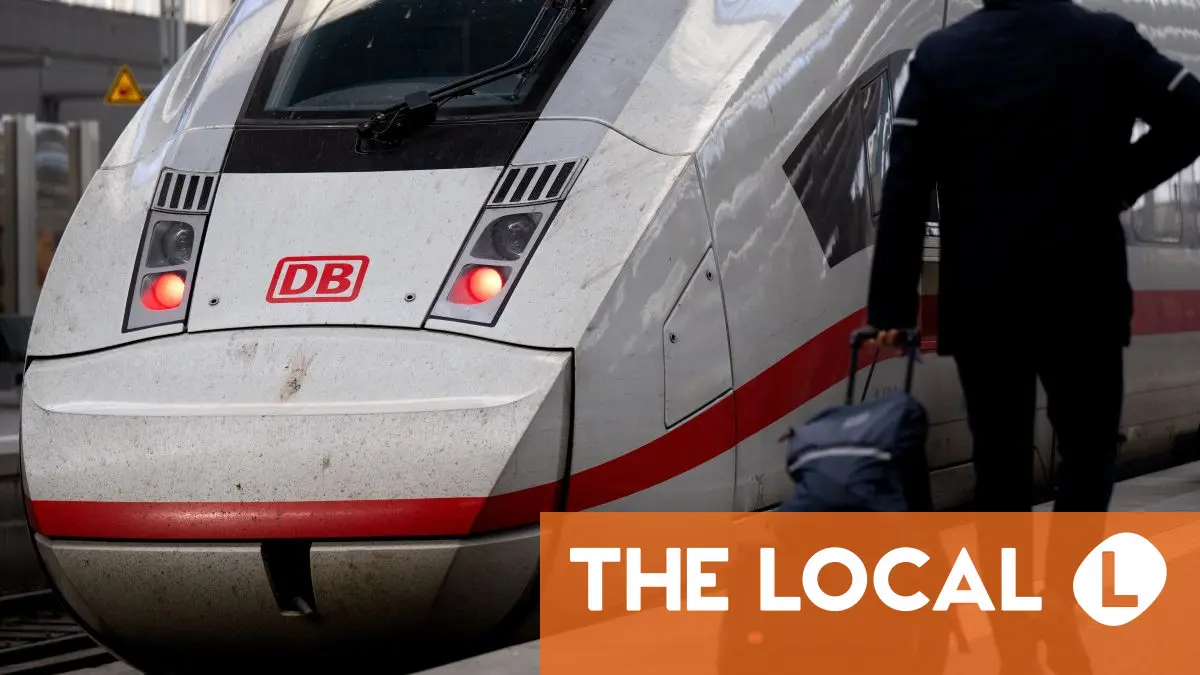
Wage negotiations between Deutsche Bahn and railway workers are reaching a pivotal moment this week. If an agreement is not secured by Friday, passengers can expect disruptive railway strikes next month.
This week is set to be a decisive one for Deutsche Bahn (DB) and its passengers: the railway company and the Union of German Locomotive Drivers (GDL) are meeting for the last round of collective bargaining before the end of the peace obligation.
Basically DB’s train drivers are demanding better terms and a higher wage hike than Germany’s national railway company has so far been willing to agree to.
If the two sides can’t reach an agreement by Friday, March could be marked by a series of DB railway strikes that would cause widespread disruptions for both local and national train traffic.
If a compromise is reached, it would be the first collective bargaining since 2018 in which the GDL does not shut down nationwide rail traffic with industrial action.
This week marks the fifth round of negotiations in the ongoing wage dispute.
The previous collective agreement expired at the end of December. Up to and including February, there is a peace obligation period during which the GDL cannot call for strikes or warning strikes.
How would passengers be affected?
If the GDL calls for DB warning strikes, passengers in Germany can expect severe disruptions to train travel around the country.
During strikes a large number of scheduled trains are often cancelled or delayed, including high-speed intercity trains (ICE, IC and EC) as well as regional trains (RE and RB) and local S-bahn trains in many German cities.
Warning strikes are typically announced at least 24 hours in advance, so if you depend on a train to get to work or have train travel plans in the month of March, you’ll want to keep an eye on The Local for the latest strike and travel news.
Q&A: What are the rules in Germany for being late to work due to strikes?
What are workers demanding?
The union’s main demand is eight percent more money for employees, with at least 3.8 percent of this is to be achieved through a pay increase.
The union wants to achieve the further increases through restructuring the collective bargaining system, for example with the introduction of a new wage level.
DB had submitted an initial offer which provided for a 3.8 percent increase in wages in two steps, and a further increase of 2.2 percent through adjustments to the collective bargaining system. Additionally, DB offered a one-off payment of €400.
OPINION: Deutsche Bahn’s problems are too big for a new boss to fix
One major sticking point in the negotiations so far is how long the collective agreement term should last. The employers’ side is pushing for 30 months, whereas the GDL is sticking to 12 months.
What is collective bargaining?
If you’re new to Germany, and have come from a country without strong labour unions, “collective bargaining” may be an unfamiliar term. But it’s one that will be very familiar to most workers in Germany as well as anyone who follows the news around strikes, whether in public transportation or other sectors.
Collective bargaining refers to the structured negotiation process when a group of employees, often represented by a union or workers council, negotiates wages and other employment terms with their employer.
The main goal is to reach a collective bargaining agreement, which is a legally binding contract that sets the terms and conditions of employment, including pay, hours, benefits and workplace rules.
This process ensures that workforce standards are determined collaboratively rather than solely by employers or management.
Germany maintains a strong collective bargaining tradition, with more than 40 percent of workers in the country covered by a collective bargaining agreement as of 2021.
According to the German Ministry of Labour, more than 6,000 new collective agreements were registered in 2024 which benefitted over 20.6 million employees.
Disclaimer : This story is auto aggregated by a computer programme and has not been created or edited by DOWNTHENEWS. Publisher: thelocal.de