
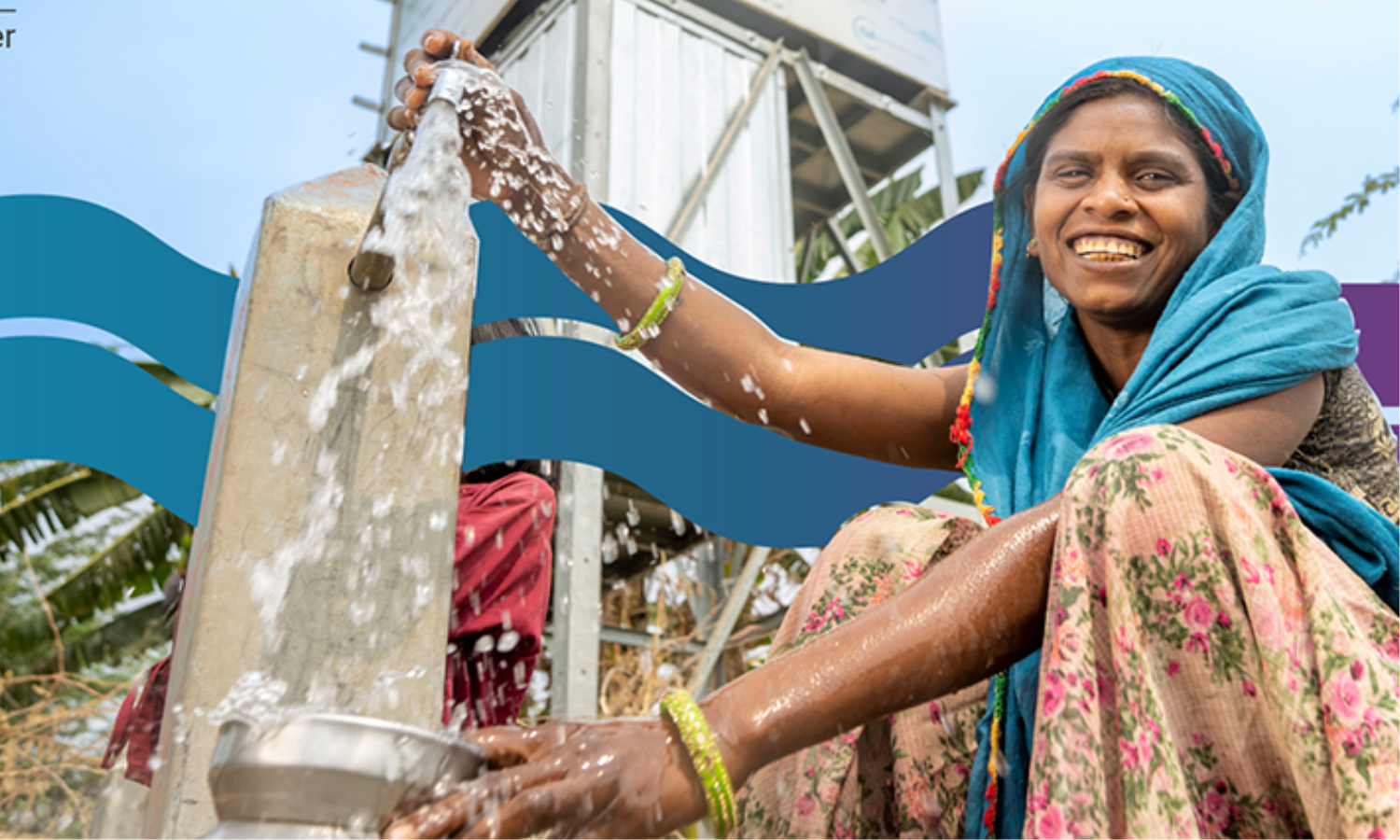
March 22 is observed as World Water Day every year — a day dedicated to highlighting the importance of freshwater and calling for action to ensure its sustainable management.
The United Nations, which established World Water Day in 1993, has warned of a deepening global water crisis that threatens billions of lives and livelihoods.
According to the UN, over 2.1 billion people — including more than 1 billion women — still lack access to safe drinking water. Around 4 billion people experience severe water scarcity for at least one month each year.
World Water Day 2026 theme
The United Nations has chosen “Water and Gender” as the theme for World Water Day 2026, highlighting the link between water access and gender equality. The global body noted that women and girls bear the brunt of the lack of safe drinking water.
“They collect water. They manage water. They care for people made sick by unsafe water. They lose time, health, safety, and opportunities. And too often, the systems that govern water leave women and girls out of decision-making, leadership, funding and representation. This makes the water crisis a women’s crisis,” the UN stated.
Women and girls spend 250 million hours per day collecting water, which is three times more than men and boys, the UN reported, citing data from 53 countries.
This underscores the urgent need to include women in water management and decision-making.
The water crisis also affects children. According to the World Health Organization, unsafe water, sanitation and hygiene are responsible for the deaths of 1,000 children under the age of five every day.
“Global water bankruptcy”
In January 2026, a UN report warned that the world has entered a state of “global water bankruptcy.” “What is now emerging in many regions, however, is a persistent shortage whereby water systems can no longer realistically return to their historical baselines,” the report said.
“For much of the world, ‘normal’ is gone,” said Kaveh Madani, Director of the UN University Institute for Water, Environment and Health.
Climate change
Climate change is also one of the key drivers of the crisis. Prolonged droughts, erratic rainfall and severe floods are disrupting water availability and quality. Drought impacts alone cost an estimated $307 billion annually.
Water scarcity is now a daily reality rather than a distant threat, and without urgent action, the gap between water demand and supply will continue to widen.
What should be done?
The United Nations has called on countries to:
• Invest in water infrastructure
• Protect ecosystems such as rivers and wetlands
• Promote water conservation
• Adopt sustainable policies
The message is clear: urgent, collective action is needed to tackle the global water crisis.
Disclaimer : This story is auto aggregated by a computer programme and has not been created or edited by DOWNTHENEWS. Publisher: deccanchronicle.com


