
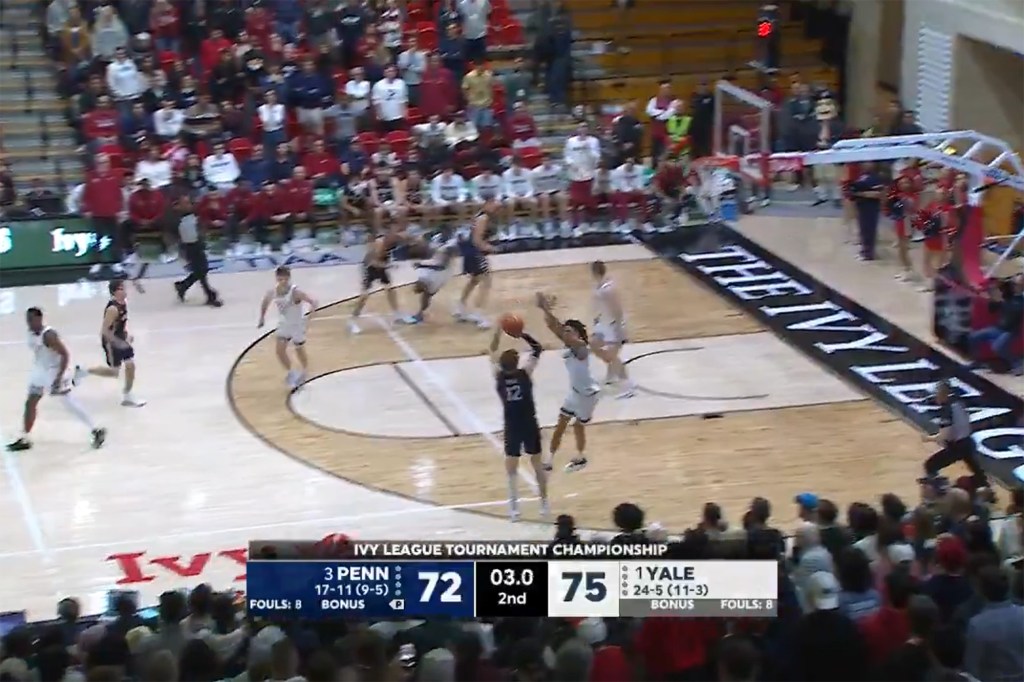
Yale didn’t foul Penn while up three points late in regulation Sunday — and it’ll be a decision that haunts the Bulldogs for their entire offseason.
TJ Power’s 3-pointer with one second remaining tied the Ivy League Tournament championship at 75, and the Quakers ultimately won, 88-84, in overtime behind 44 points from Power to secure the conference’s automatic March Madness bid.
It marks Penn’s first NCAA Tournament berth since 2018, with this one coming as the No. 3 seed in the Ivy League and defeating No. 2-seed Harvard and top-seeded Yale — by a combined six points — across consecutive days to win the conference tournament.
And at the center of that victory was Power, especially when Yale opted to not follow the common strategy of fouling intentionally when leading by three points late — which would’ve forced Penn, who was in the bonus, to make both free throws and then somehow get the ball back again with just seconds remaining.
Instead, Yale guard Casey Simmons defended Power as he brought the ball up the court and closed out when he elevated for the 3 from the right wing.
The Bulldogs nearly had a chance to win the game in regulation after the gaffe, too, but a final heave from Trevor Mullin — before he even came close to cross the half-court line — bounced off the back rim.
Penn then did just enough to escape in overtime, with Power adding another four points to finish 14-of-26 from the field with 14 rebounds.

Power, a junior who previously played at Duke and Virginia in his first two seasons of college basketball before transferring to Penn ahead of the 2025-26 campaign, entered Sunday’s championship game averaging 15.8 points per game — with his season-best output occurring against Dartmouth on Feb. 27, when he dropped 38.
In two matchups against Yale during the regular season, Power managed just 30 points combined.
Then, one game and one shot — and one puzzling decision by the Bulldogs to not foul — changed everything.
Disclaimer : This story is auto aggregated by a computer programme and has not been created or edited by DOWNTHENEWS. Publisher: nypost.com



